General meaning
⌄
You hold on, but you bear a burden. Stability becomes heavy when it transforms into obligation, and an end of cycle approaches that calls for clarity.
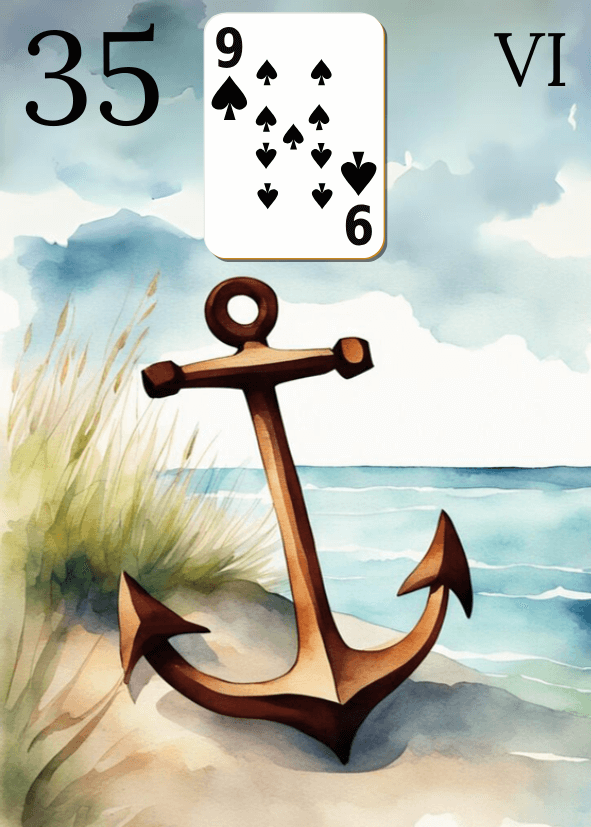
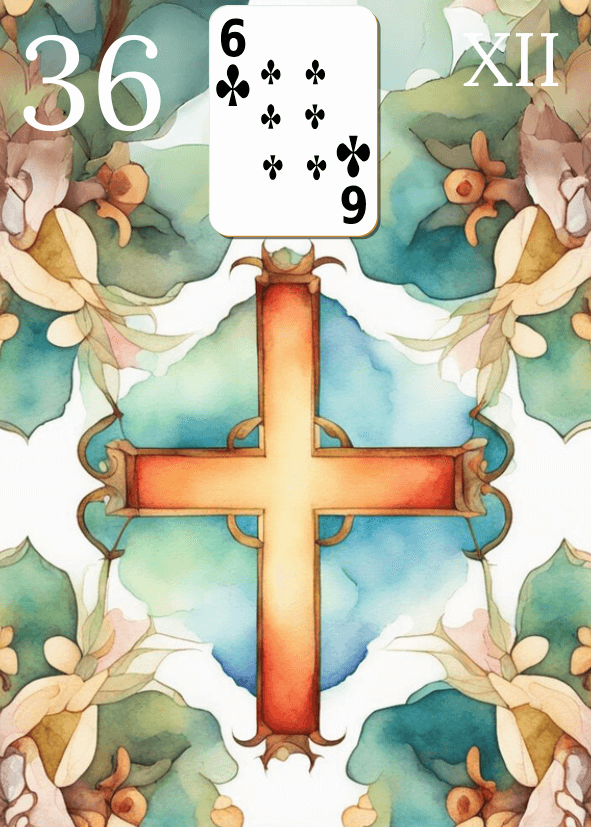
Anchor signifies stability, security, duration, and what you maintain over time. Cross indicates a trial, a burden, a constraint, and often an unavoidable conclusion. Together, these cards depict a solid framework that is overloaded. You can be established, committed, reliable, and yet fatigued. The duo emphasizes loyalty that has become too burdensome, as if stability is no longer supportive but a demand that drains your life force. In practical terms, this combination urges you to differentiate persistence from self-sacrifice. The future opens when you accept to conclude what weighs you down, to set aside what is no longer sustainable, and to rebuild a stability that feels vibrant.
Love and relationships
⌄
Heavy attachment. The bond remains, but the emotional or moral load increases, and a decision becomes necessary to preserve the dignity of the heart.
In love, Anchor points to attachment, loyalty, and a desire for permanence. Cross adds weight, guilt, obligation, emotional fatigue, or the conclusion of a cycle. This can describe a relationship that continues out of habit, duty, or fear of losing everything, while joy has diminished. It can also illustrate a couple where one partner bears too much, where you feel responsible for the other, and love begins to feel like a burden. The guidance is straightforward. Reestablish truth at the center. Express what is too heavy, set boundaries, and choose a clean conclusion or a clear reset. Emotional stability is not built on guilt; it is built on a free agreement.
Work and vocation
⌄
Solid framework, heavy pressure. The situation is stable, but the load becomes excessive, and you must clarify what can continue and what must end.
At work, Anchor represents a stable position, structure, organization, and the ability to endure. Cross indicates heavy constraints, responsibilities, overload, and sometimes the conclusion of a professional cycle. This can signal a secure job that drains you, a task that drags on, or an environment where you carry too much. It can also herald the end of a cycle, not by whim, but by necessity, because the weight becomes incompatible with health, energy, or personal life. The message is pragmatic. Clarify responsibilities, reduce overload, and make decisions. If the framework no longer protects you, it must be adjusted or abandoned. The future is built when stability does not suffocate.
Money and material security
⌄
Costly security. The foundation holds, but charges and obligations weigh down, and you must conclude a chronic expense or an agreement that has become too burdensome.
With money, Anchor points to security, a stable foundation, regular income, and the will to maintain stability. Cross points to charges, debt, obligations, and periods when you endure. This can refer to a budget that is stable but too tight, a heavy loan, a fixed cost that restricts freedom, or a financial commitment that must be renegotiated. It urges you to consider what costs you not only in currency but also in fatigue. The guidance is pragmatic. Lighten and secure differently. Cut a leak, renegotiate a burden, conclude a commitment, or shift strategy. True financial security is a foundation that allows you to breathe.
Health and energy
⌄
Endurance at the limit. The body holds, but fatigue sets in, and you must lighten the load to avoid long-term burnout.
For health, Anchor indicates the need for rhythm, regularity, and stability. Cross signals moral fatigue, heaviness, and a challenging period. This can correspond to a sense of weariness, as if you are holding on over time at the cost of constant effort. The body may be asking for a pause, a slowdown, and a clear reduction of the load. The message is pragmatic. Stabilize, yes, but by lightening. Rest, set boundaries, seek support. Recovery often begins the moment you stop carrying the burden alone.
Objects
⌄
Objects linked to responsibilities and duration, with a concrete theme of burdens, organization, and conclusions to be formalized.
- Contract, payment schedule, or document tied to a long-standing burden
- Planner, calendar, or tool tracking heavy obligations
- Binder, file, or archive for a chapter to close
Places
⌄
Stable places where the burden is experienced daily. Fixed spaces, institutions, and locations where you carry, then conclude.
Company, office, home, or any place where you maintain a long-term framework. Cross can evoke a place of procedures, closure, or reflection, where you sign, end, or accept a necessary conclusion.
Personality
⌄
A reliable, enduring person who may carry too much out of loyalty and needs to learn to set things down without guilt.
This duo describes someone stable, serious, and capable of holding. They inspire trust, yet they can become trapped in the role of the one who bears the burden. The key risk is guilt and the belief that stepping away equates to betrayal. The strength lies in clarity. When they accept to conclude what weighs them down, they regain a healthier stability and freer energy.
Profession
⌄
Roles where you hold over time with significant responsibilities. Stability, heavy load management, and the ability to conclude matters cleanly when it becomes too much.
- Management or coordination carrying chronic responsibility
- Administration handling long demanding files
- Care or support work holding others without burning out
- Leadership protecting the framework and setting limits
Archetype
⌄
The pillar learning to set things down.
This archetype knows how to hold. But sooner or later, it learns that holding is not the same as living. The future lightens when it chooses stability that supports rather than crushes, and when it accepts to conclude what is no longer sustainable.
Shadow work
⌄
Clinging to the heavy. Staying out of fear, duty, or guilt, confusing stability with a cage until exhaustion.
In shadow, Anchor clings and Cross weighs down. You convince yourself it is normal to carry, that it is life, and you deplete yourself. The correction is pragmatic. Set down a part now. Renegotiate, delegate, reduce, or conclude. Stability becomes power when it safeguards the future, not when it consumes it.
Calibration questions
⌄
What are you holding onto out of loyalty even though it exhausts you, and what simple conclusion could restore your breath without destroying what you truly want to preserve?
- Which obligations are truly necessary, and which have become burdensome habits?
- Where do you sacrifice yourself out of fear of losing stability, and what readjustment would be fairer?
- What concrete decision can you make this week to lighten part of the load?