General meaning
⌄
Seemingly minor worries amplify a period of trial, weighing heavily on morale.
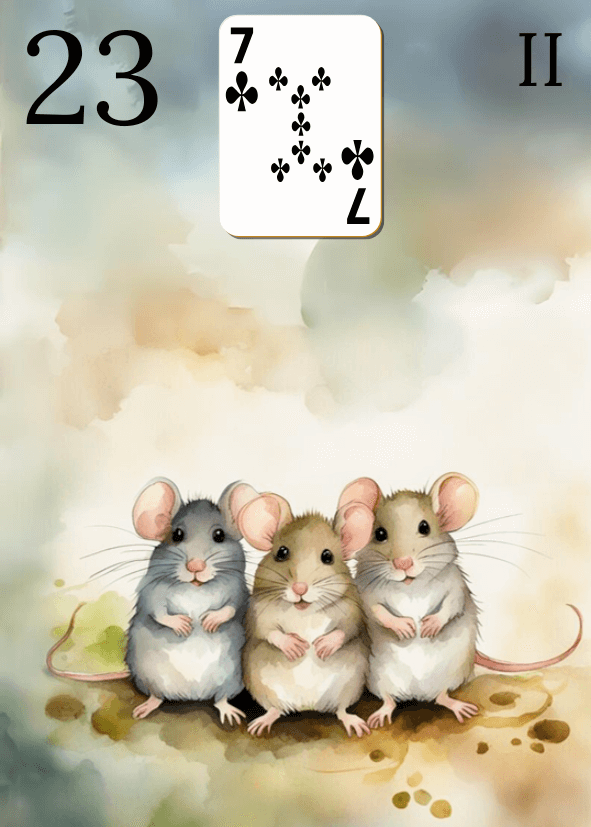
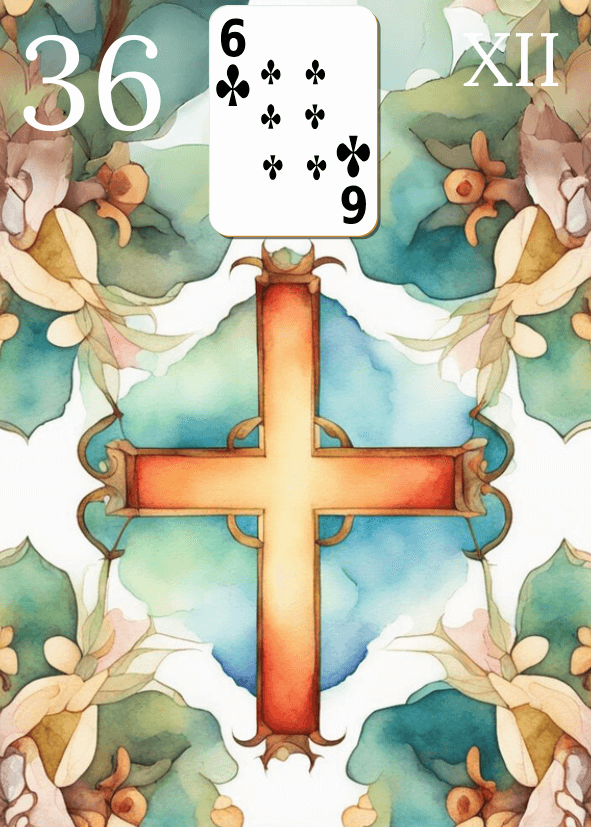
When Mice precede Cross, the focus is on everything that gradually gnaws away: worries, losses, small disappointments, daily stress. The Cross adds the dimension of trial, karmic burden, a period where one feels they are paying a steep price. Together, these cards depict a moment where nothing is straightforward: underlying fatigue magnifies every difficulty, and problems appear to accumulate rather than resolve. One may feel punished, overwhelmed, or condemned to endure. This combination encourages one to identify what constitutes the inevitable weight of the situation and what aspects of gnawing can be addressed to alleviate it.
Love and relationships
⌄
The relationship undergoes a trial, exacerbated by small repeated wounds that are never truly healed.
In love, Mice and Cross can describe a committed couple experiencing a heavy period: crisis, illness, contemplated separation, family burdens, external difficulties that test the relationship. Mice indicate that it is not only the major events that weigh heavily, but also the sharp remarks, oversights, small acts of cowardice, or missed gestures of support. Partners feel fatigued, sometimes resigned, as if the relationship is gradually losing its joy. This reading suggests examining with clarity how daily life impacts the trial and identifying what could be lightened, clarified, or forgiven to prevent everything from collapsing.
Work and vocation
⌄
The professional context resembles a cross to bear, and recurring small troubles worsen exhaustion.
In terms of work, this duo often refers to overload, latent burnout, and heavy responsibilities that seem never to ease. Mice signal late emails, detail errors, organizational hiccups, and small time losses that erode one's strength. Cross reinforces the notion of duty, constraint, and moral or hierarchical pressure that leaves little room for escape. One may feel as though they do not have the right to let go, even when fatigue becomes concerning. This combination invites recognition of the sacrificial nature of certain attitudes and consideration of clearer limits, reorganization, or a request for help before everything collapses.
Money and material security
⌄
A financially challenging period is complicated by a succession of small losses and unforeseen expenses.
For finances, Mice and Cross often indicate a delicate moment: debt to repay, significant expenses, a period of scarcity, or a blocked situation. Mice accentuate this climate with additional costs, payment oversights, interest, penalties, or survival expenses that undermine stabilization efforts. One may feel trapped in a cycle where each small loss exacerbates the weight of the situation. This reading advises meticulously reviewing details, seeking possible relief, and distinguishing what is part of a difficult passage from what can actually be corrected in daily management.
Health and energy
⌄
A weakened condition faces a trial that requires courage, patience, and caution.
In health, this combination may evoke a physical or mental state already weakened by stress, fatigue, poor habits, or lack of care, onto which a heavier difficulty is added: illness, convalescence, a serious diagnosis, or demanding treatment. Mice remind us that a prolonged period of small sacrifices to well-being has set the stage, while Cross points to the necessity of navigating a demanding phase. The message is not to induce guilt, but to recognize that each small act of care can lighten the burden, and that one needs solid support to avoid further deterioration in the process.
Objects
⌄
Objects testify to a period of trial marked by small losses or damages.
- Medical papers, insurance files, or administrative documents that are lost or incomplete
- Items repaired multiple times instead of being replaced, symbolizing the effort to endure at all costs
- Personal belongings damaged during a period of crisis or hasty relocation
Places
⌄
Living or transit places bear the marks of a trial accompanied by neglect or wear.
One might envision an apartment left in disarray due to lack of strength, a sickroom where everything accumulates, or a workplace where collective fatigue is evident in the details: broken equipment, faded posters, areas never tidied. Mice illustrate the gradual degradation, while Cross emphasizes the dimension of trial, sacrifice, and sometimes guilt. The combination invites one to see how the environment reflects what one is experiencing, and how a few concrete gestures can already lighten the atmosphere.
Personality
⌄
An anxious and highly conscientious temperament easily feels crushed by the slightest additional constraint.
This combination may describe someone who carries a lot on their shoulders, often beyond reason. Mice indicate a tendency to worry about everything, to ruminate, to monitor every detail, while Cross reveals a very strong sense of duty, sometimes tinged with guilt or fatalism. This person may silently sacrifice for others, wearing themselves down from within. The path consists of recognizing that value is not proportional to the weight of the burden one bears, and that it is legitimate to ask for support, set boundaries, and preserve mental health.
Profession
⌄
Jobs involving suffering or precariousness expose one to underlying wear.
- Care, support, or social professionals facing heavy and repetitive cases
- Workers in a crisis sector who absorb the worries of the team or clientele
- Individuals responsible for managing emergencies, disputes, or sensitive cases that offer no respite
Archetype
⌄
The cross gnawed by doubt.
This archetype represents the moment when one doubts not only the situation but also their own ability to continue. It is no longer a clear-cut trial, but a suffering weighed down by worry, fear of making mistakes, and guilt for not doing enough. It reminds us that what matters is not to bear all the weight, but to discern what truly belongs to you and what you can set down.
Shadow work
⌄
Allowing oneself to be trapped in a discreet martyr role, letting daily wear justify resignation.
In its shadow, the combination encourages one to believe they are condemned to suffer, to accept as inevitable situations that could evolve. One becomes accustomed to being the one who endures, who repairs, who compensates, until they can no longer envision another scenario. Small losses become almost a norm, a silent language of sacrifice. This reading invites recognition of this posture, not to judge it, but to consider the possibility of relief, sharing the burden, or even a deeper change when the time is right.
Calibration questions
⌄
To what extent do you confuse endurance with the obligation to suffer?
- What small signs of wear have you normalized in this trial, when they deserve to be taken seriously?
- Where could you ask for help, even modest, to no longer bear alone all that weighs you down?
- How does continuing to take everything on prevent you from opening up to a new chapter that is lighter and more just for you?