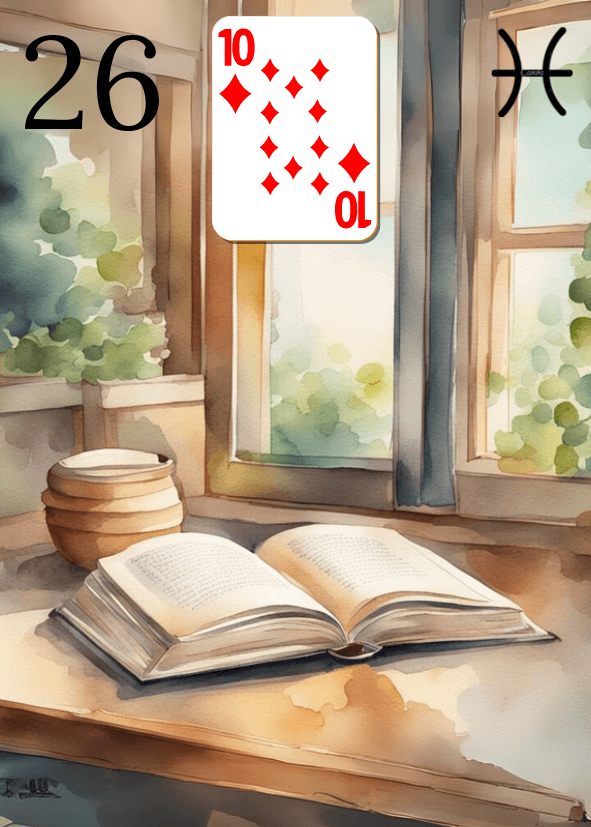
General meaning
⌄
Small losses and recurring worries erode the solidity of important information or secrets.
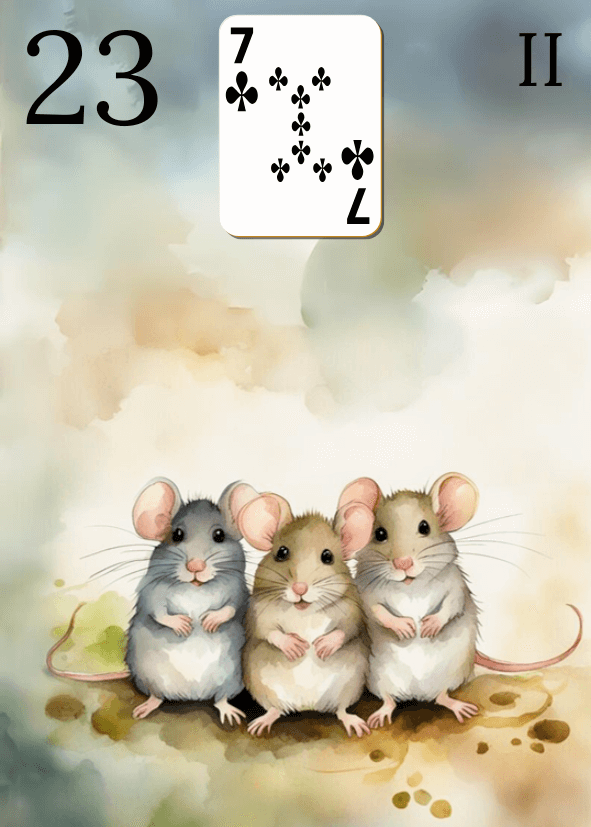
Mice symbolize what crumbles, gets lost, or goes awry in small increments, often manifesting as a dull worry. Associated with Book, they indicate that this deterioration focuses on hidden elements, files, studies, or truths that are not fully revealed. Forgetfulness, detail errors, poorly organized documents, or misunderstood information can ultimately compromise the reliability of knowledge or the security of a secret. It is not a dramatic scandal, but a persistent gnawing that, over time, can significantly weaken the initial position.
Love and relationships
⌄
Unspoken issues and minor worries undermine trust surrounding a sensitive topic.
In the emotional realm, the combination may evoke couple secrets, unclear stories, or shadowy areas that gradually fuel anxiety. One partner may dwell on a phrase, a message, or a past incident, without daring to ask the straightforward questions that would alleviate the discomfort. Avoided conversations, unresolved past issues, or poorly kept confidences create an atmosphere of diffuse mistrust. The dynamic speaks less of spectacular betrayal than of a bond that weakens because assumptions are allowed to replace open dialogue.
Work and vocation
⌄
Neglected files, incomplete notes, or delays in archiving undermine the reliability of work.
On a professional level, Mice and Book emphasize the management of information: documents, reports, databases, written instructions. Small mistakes, repeated approximations, or incomplete archives ultimately tarnish the overall quality of a project. There may be stress related to an audit, an examination, a compliance check, or the submission of a thesis. The draw suggests returning to basics, verifying sources, organizing papers, and clarifying procedures so that anxiety does not continue to erode confidence in the work completed.
Money and material security
⌄
Poorly managed or incomplete financial documents create a climate of material insecurity.
Here, the combination highlights unkept receipts, misplaced invoices, unchecked bank statements, contracts read too quickly. Mice indicate small losses of money or rights, sometimes due to not having the necessary documents at the right time. The Book reminds us that the key lies in what is written, archived, and recorded. The feeling of being overwhelmed by paperwork can generate a background anxiety, as if one is constantly fearing an unpleasant fiscal, banking, or administrative surprise. The draw encourages organizing files to regain control over the situation.
Health and energy
⌄
Stress related to results, diagnoses, or lack of information weighs heavily on morale and health.
In health, this duo can refer to anxious waiting for analysis results, an incomplete medical file, or contradictory information that fuels fears. Mice signal recurring nervousness, a tendency to imagine the worst in the absence of clarity. The Book evokes what is not yet fully articulated or understood: report pending, specialized opinion, technical information that is difficult to grasp. The combination encourages seeking explanations, recording important elements, and avoiding compulsive searches that generate more anxiety than genuine understanding.
Objects
⌄
Everyday objects reflect the silent wear of information management.
- A dog-eared, crossed-out notebook containing scattered and difficult-to-read information
- Cardboard folders or plastic sleeves on the verge of giving way under the weight of accumulated papers
- A book, manual, or binder with some pages damaged, torn, or covered in stressed annotations
Places
⌄
The spaces where papers are stored become the stage for an anxiety-inducing disorder.
One might envision a cluttered desk where files accumulate, a cabinet of administrative papers that one dreads to open, an archive or storage room that always gives the impression that a crucial document is missing. The combination suggests places where one feels overwhelmed by written material, accompanied by a vague sensation that something has been lost or misplaced.
Personality
⌄
An anxious temperament that doubts its memory, knowledge, or ability to manage documents.
This combination can describe someone who learns a lot, reads, and documents themselves, but tends to undervalue themselves when it comes to recalling or proving what they know. Mice indicate a persistent self-criticism, while the Book signifies a need for mental structure or method. The person may fear forgetting an important detail, incorrectly filling out a form, or not being 'organized enough'. The path to growth involves simple organizational systems and accepting to progress step by step rather than striving for perfection from the outset.
Profession
⌄
Jobs where documentary rigor is challenged by overload and fatigue.
- Archivist, librarian, or administrative assistant overwhelmed by the volume of files to process
- Student or researcher who must manage multiple notes, references, and sources without getting lost
- Accounting or compliance professional concerned about missing a detail in supporting documents
Archetype
⌄
The tattered manuscript.
The archetypal image is that of a book whose edges are nibbled by small invisible teeth. The content remains, but it is increasingly less intact and less readable. This archetype reminds us that knowledge, secrets, and documents need to be maintained, protected, and updated. It invites you to examine where you allow your knowledge, papers, or memory to deteriorate due to a lack of regular attention.
Shadow work
⌄
Allowing oneself to be overwhelmed by the fear of making a mistake to the point of no longer daring to open files.
In its shadow, the combination can lead to a form of avoidance: one knows there is something to verify, to file, or to correct, but the fear of discovering a problem causes one to continuously retreat. Mice then continue their work in silence. The risk is to let a small irregularity, an administrative detail, or a misunderstanding grow until it results in a more serious difficulty. The draw encourages calmly confronting what is written, even if it requires an effort of organization or courage.
Calibration questions
⌄
What small neglects regarding your papers or knowledge worry you more than you admit?
- Is there a file, a book, or a document that you avoid opening for fear of finding a problem?
- How could you simplify your note-taking and archiving system so that it reassures you instead of stressing you?
- What missing information would you need to alleviate your current concern?