Petit Lenormand combinations

Child and Cross

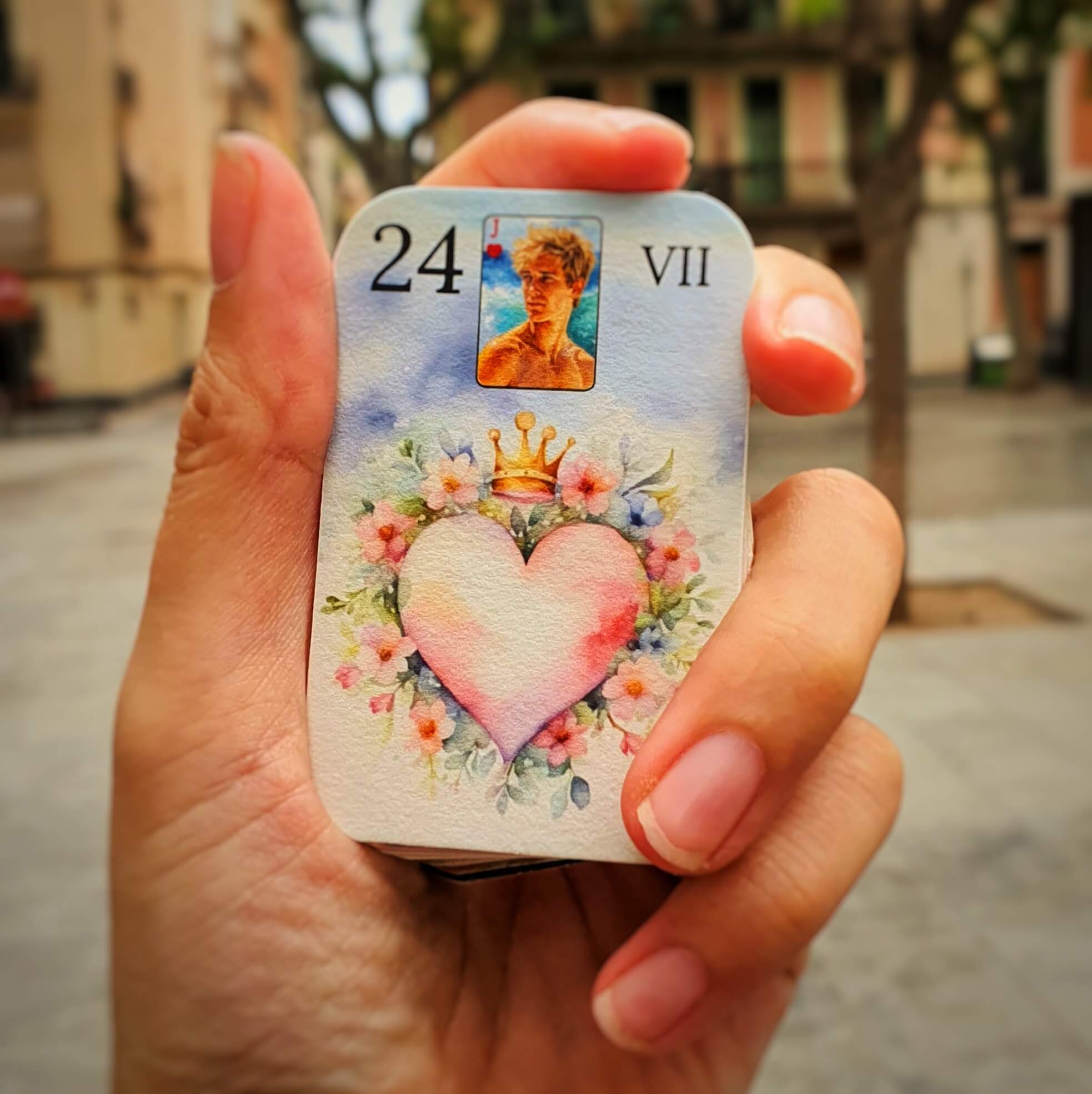
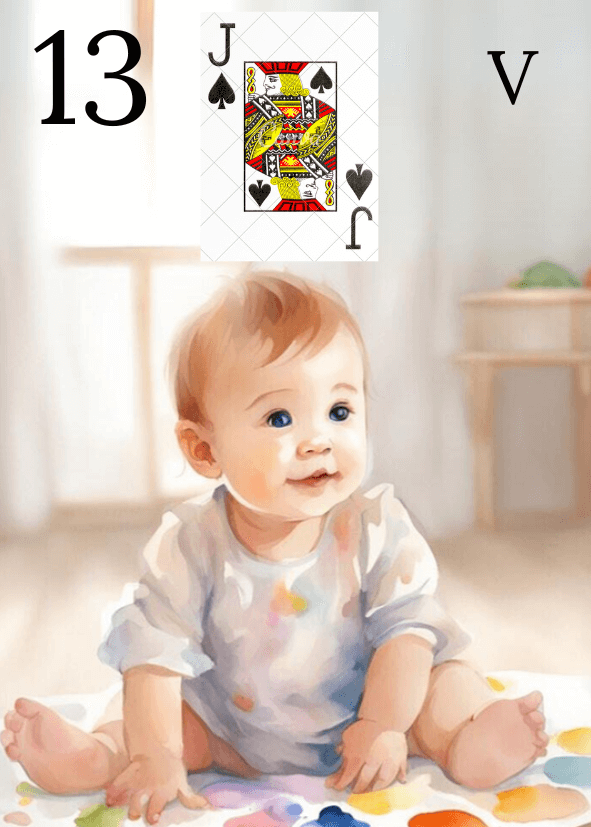
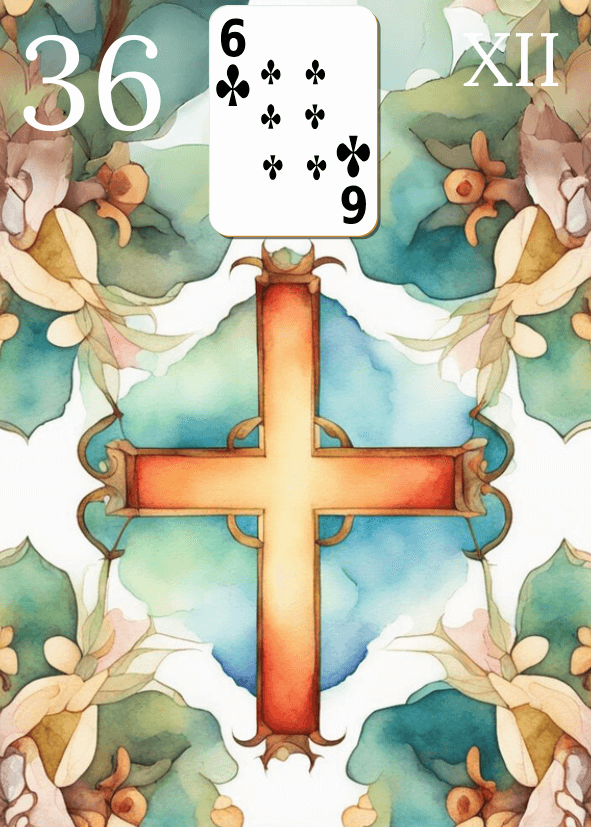
Here you see the two possible orders of the pair Child and Cross. On the left, Child acts on Cross. On the right, Cross sets Child in motion. The concrete scenes help you feel what shifts as soon as the order shifts.

Combination
13 Child → 36 Cross

General meaning

A harsh reality collides with a still naive, budding, or fragile foundation.

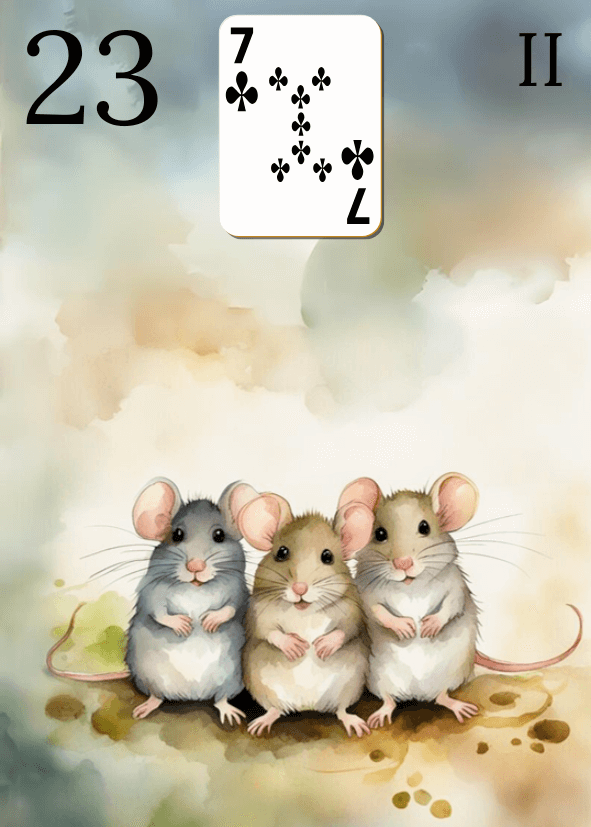
When Child meets Cross, the image is that of carefreeness caught up in a trial that far exceeds usual coping mechanisms. This can be a young age, a beginning journey, a still naive heart facing a heavy constraint, a family burden, an emotional shock, or a karmic situation that leaves no room for play. Cross signifies seriousness, gravity, and the dimension of inevitability. Yet, Child reminds us that something within you is still at the stage of first steps. Mice, in the background, reveal how anxiety, small fears, and daily wear can seep into the cracks, gnawing at confidence. The quintessence refers back to Child itself: beyond the harshness, the central question remains that of protection, repair, and the permission to remain human, sensitive, and vulnerable amidst trial.

Love and relationships

In love, a bond or a heart still inexperienced is confronted with profound suffering.

On the sentimental level, Child and Cross can refer to a first love that causes deep pain, a brutal disappointment that shatters the illusion of security, or a bond where one partner is significantly more fragile than the other. It may involve a budding relationship that quickly encounters serious obstacles, such as a complicated family context, a heavy secret, imposed distance, or an early but significant breakup. Sometimes, it is the discovery of love's darker side: betrayal, guilt, or the impossibility of staying together despite a pure attachment. Child illustrates the naive, idealistic side, ready to forgive everything. Cross reminds us that certain lines have been crossed, and that an emotional price is truly paid. Mice highlight the risk of developing a fear of rejection or a tendency to judge oneself harshly as soon as a feeling arises again.

Work and vocation

In work, a heavy context weighs on shoulders still in training.

In professional terms, this combination evokes a position taken too early in an environment already saturated with tensions. A young recruit facing an excessive workload, an intern exposed to a crisis climate, or a beginner entrusted with overly heavy or sensitive tasks. Child illustrates the lack of experience, the need for guidance, supervision, and training. Cross symbolizes pressure, impossible deadlines, decisive stakes, and responsibilities that affect morale, health, or reputation. Mice, in the background, speak of chronic stress, lack of sleep, and a gradual draining of one's energy. The question then is whether this situation is initiatory, meaning formative but manageable, or frankly abusive to the point of requiring protection or radical change.

Money and material security

In financial terms, a situation of dependence or limited resources confronts a heavy burden.

In financial matters, Child with Cross can signify modest, unstable, or beginner income facing a debt, a burden, or an unavoidable expense. It may involve medical fees, family charges, a loan, a pension, or a bill that arrives at an inconvenient time. This combination can also evoke a painful learning experience about the value of money, such as a first major financial failure or a management error that leaves a lasting mark. Child shows innocence, lack of foresight, and sometimes trust given too quickly. Cross reminds us that there are real consequences and that a certain seriousness is now imposed. Mice, in the background, highlight small deficiencies, invisible leaks, and repeated expenses that end up weighing as much as a single major shock.

Health and energy

For health, significant fragility requires serious support and long-term vigilance.

In physical or psychological terms, Child associated with Cross can refer to a fragile condition confronted with an illness, a difficult recovery, or a very heavy emotional context. This may concern a child, a very sensitive person, or a life moment where one is particularly vulnerable. Child evokes a developing body, a psyche still under construction, and the difficulty in understanding and verbalizing what one feels. Cross signals a trial that does not resolve in a few days: a long protocol, recurring pain, periods of intense fatigue, or an existential crisis. Mice, in the background, draw attention to everything that silently wears one down: shortened nights, constant anxiety, and feelings of fear or guilt. This combination emphasizes the need for protection, support, and attentive listening, rather than asking the person to 'hold on' like a seasoned adult.

Objects

The associated objects bear the trace of a vulnerability confronted with heavy stakes.

  • Medical or psychological file concerning a child or a very young person
  • School notebook, drawing pad, or toy marking a period of trial in a child's life
  • Official correspondence imposing a heavy constraint on someone who is just starting out (reimbursement, decision, summons)
  • Bracelet, medal, or symbolic object kept as protection in a difficult context
  • Documents of procedure or care associated with a situation of early suffering

Places

The concerned places blend the world of childhood with spaces of trial.

One might think of a pediatric hospital, a social service dedicated to minors, a school where serious stakes are concentrated, or a home where lightness coexists with heavy tensions. This combination may also point to a modest living space where overly large responsibilities weigh on the youngest. Sometimes, it refers to a therapy space, catechesis, or spiritual support where one comes to unload the weight of what has been experienced too early. Cross emphasizes the serious, sometimes tragic nature of what unfolds there. Child reminds us that amidst all this remains a need for play, gentleness, and a reassuring presence.

Personality

The described personality carries a mix of candor and old wounds.

This combination may describe someone who retains a young, gentle, sometimes naive appearance, but whose gaze reveals an experience of trial disproportionate to their age. He or she may minimize what has happened, joke about serious matters, or conversely feel guilty for not being able to 'act like others'. Child shows the ability to still marvel, to laugh, and to dream. Cross reminds us of an experience of sacrifice, heavy responsibility, or silent suffering. Mice, in the background, indicate diffuse fears, implicit mistrust, and small crises of anxiety or devaluation that recur regularly. The person needs their sensitivity to be respected rather than being judged as 'too fragile'.

Profession

The associated roles are where one protects or supports beginnings immersed in trial.

  • Social worker with children in difficulty or families in great precariousness
  • Psychologist, therapist, or educator specialized in early traumas
  • Teacher in a challenging school context (sensitive area, crisis context)
  • Professional supporting young sick or disabled individuals in an institutional setting
  • Career advisor helping young people marked by a heavy history to envision a future

Archetype

The archetype is that of the innocent put to the test.

Symbolically, this combination embodies the moment when life imposes on a very young part of you a reality it is not ready to absorb. It may be the inner child confronted with a loss, a separation, a climate of guilt, or sacrifice. Child is the part of you that needed to be protected, surrounded, and reassured. Cross represents the raw experience, the burden, the obligation, that which you were not necessarily asked for your opinion on. Mice reveal how these experiences can continue to gnaw at self-esteem, trust in life, and the ability to feel safe. This archetype invites less judgment of oneself and more recognition: yes, it was heavy, and yes, it deserves compassion and repair.

Shadow work

The shadow side points to the risk of remaining trapped in a role of the sacrificed child.

In its most delicate dimension, this combination can maintain a scenario where one feels condemned to endure, never fully developing their adult power. One may endlessly replay the position of someone who has no right to say no, who must always carry for others, or who feels inferior because they are 'too fragile'. Sometimes, one adopts childish behaviors in the face of trials, hoping that an authority figure will come to resolve everything in their place. The Mice then show discreet self-sabotage, small decisions made against oneself, and the tendency to deprive oneself or minimize oneself. The question is to identify this scenario to begin transforming it.

Calibration questions

The questions invite you to revisit your beginnings marked by a burden that is too heavy.

  • In which area do you still feel like a beginner while already carrying a very significant weight?
  • What difficult experience shattered a part of your innocence or trust too early?
  • What concrete protection do you need today to no longer face this type of trial alone?
Combination
36 Cross → 13 Child

General meaning

A heavy ordeal is coming to an end, allowing for the emergence of a modest beginning full of life.

With Cross in the first position, the situation indicates a phase of intense pressure, suffering, or constraint that marks the background. The arrival of Child as the second card nuances this setting: it is no longer just about carrying, enduring, or suffering, but about relearning to start, to try, and to play a little with life. This is not a total deliverance; rather, it is a small hatch of renewal opening in an environment still marked by gravity. Mice, in the hidden position, remind us that wear does not disappear all at once, that fears remain present, and that it will take time for them to dissipate. The quintessence refers to Child: the key lies in the ability to give oneself permission to be a beginner, to make mistakes, and to rebuild without demanding immediate performance after the storm.

Love and relationships

In love, a tested relationship attempts to find a fresh and simpler breath.

In the emotional realm, Cross and Child can signal a couple that has just emerged from a crisis, a narrowly avoided separation, a heavy external ordeal, or a painful period of silence. The desire to restart exists, but it presents itself in the form of simple gestures: lighter messages, more modest meetings, and small-scale projects. Sometimes, it involves a new encounter after a significant story, experienced with caution and surprise. Cross reminds us of what has hurt and what should not be repeated. Child proposes to relearn to build without immediately loading everything with huge expectations. However, Mice show the tendency to be wary, to anticipate disappointment, and to judge oneself at the slightest misstep. The challenge is to accept this process as a re-education of the heart rather than as an exam to pass.

Work and vocation

At work, a phase of overwork or heavy responsibility opens up to a period of lighter learning.

On a professional level, this combination can announce the end of an exhausting file, a burdensome position, a painful conflict, or a toxic environment. The follow-up is not necessarily triumphant, but it takes the form of a simpler role, an initiation mission, a gradual transition, or a training period. The Cross reminds us of what has weighed heavily: burnout, overload, guilt, and excessive demands. The Child evokes the possibility of becoming a learner again, even after years of experience, or accepting a less prestigious but more livable position. The Mice, in the hidden position, invite us to monitor self-devaluation, the fear of not being 'up to the task,' or the reflex to expose oneself too quickly to new heavy burdens. This period requires modesty and kindness towards oneself.

Money and material security

On a material level, a significant financial burden begins to give way to a more manageable budget.

For finances, the Cross followed by the Child can speak of a debt being resolved, a repayment nearly completed, a precarious situation easing, or finally obtained assistance. This does not necessarily mean abundance, but rather a first breath, the possibility of starting again on less crushing foundations. One can begin to set aside small amounts to finance training, a hobby, or a modest project. The Cross also indicates a vigilance to maintain regarding heavy commitments, contracts, or fixed charges. The Child suggests learning to manage, to count, and to gently experiment with a different relationship to money. The Mice remind us that old fears, related to lack or shame, can push one to excessively tighten their belt or to rush into new compensatory expenses.

Health and energy

For health, convalescence or crisis exit opens onto a phase of re-learning daily life.

On a physical or psychological level, the Cross and the Child often evoke a post-crisis period: the end of a heavy treatment, stabilization after a depressive episode, remission, discharge from hospitalization, or a context of great suffering. The body remains marked, tired, and sometimes wary, but it wants to test small new things: walking a little further, seeing people again, resuming a hobby, or re-enrolling in a gentle activity. The Child speaks of not very modest steps, sometimes frustrating because they seem tiny in comparison to what has been endured. The Cross reminds us that one does not come back from such a trial as if nothing happened. The Mice emphasize the importance of not letting fears, ruminations, or habits of self-deprivation gnaw at this fragile movement back to life.

Objects

The objects in play translate both the memory of heaviness and the concrete signs of a new beginning.

  • Documents marking the end of a procedure, treatment, or contract accompanied by a new notebook, a planner, or an idea notebook.
  • An old medical file stored next to a kit of materials for a gentle or creative activity.
  • Symbolic objects related to the trial (photo, medal, souvenir) alongside an initiation book or a beginner's manual.
  • Cards, letters, or emails marking the end of a difficult period and the opening to a new stage.
  • A toy, child accessory, or learning material appearing in an environment that has been very serious until now.

Places

The places evoked are spaces where one transitions from an atmosphere of gravity to a simpler and more vibrant climate.

One can visualize a medical or legal office that one leaves to then go to a learning place, a workshop, a school, or a leisure space. Sometimes, it is a home that has long been marked by illness, mourning, or worries and that gradually regains laughter, play, and modest but joyful projects. The Cross represents the corridors, offices, and waiting rooms where time seemed suspended in heaviness. The Child shows the rooms where one begins to tinker, to study, and to discover. The Mice, in the hidden position, remind us that certain corners of these places remain charged with old memories and that renewal will require conscious cultivation.

Personality

The personality described is that of someone who has carried a lot and who finally allows themselves to become a beginner again.

This combination can describe a person matured by the trial, sometimes very serious and very responsible, who begins to feel the need to breathe, to play, and to try something else. They may accept a lighter role, embark on a learning journey without mastering everything, or allow a part of long-repressed fantasy to emerge. The Cross shows their sense of duty, their experience of difficult situations, and their ability to endure. The Child reveals the more spontaneous, curious, and creative part that has not completely disappeared. The Mice, in the hidden position, however, point to the temptation to apologize for existing, to minimize one's desires, or to feel guilty as soon as they are no longer sacrificing themselves constantly.

Profession

The associated roles accompany a post-crisis phase and a gradual return to lighter forms of participation.

  • Professional or professional of reintegration helping to resume activity after a long trial.
  • Trainer welcoming people in transition after a burnout or a career break.
  • Facilitator offering simple workshops to audiences who have experienced heavy situations.
  • Coach or support worker specifically working on post-crisis and gradual reconstruction.
  • Manager of an initiation space or a pilot program within a structure marked by history.

Archetype

The archetype is that of the cross lightening to let through a ray of childhood.

Symbolically, the Cross represents weight, debt, karma, and deep wounds that mark a life cycle. The Child arrives as a sign that this cross is not meant to crush you forever, but that it can become the foundation of a new relationship with life, more humble, simpler, and truer. It is not about erasing what has been experienced, but about adding the possibility of trying again, differently. The Mice, in the hidden position, remind us that this passage requires gentle vigilance: nothing prevents a part of you from plunging back into fear, guilt, or self-sabotage. The archetype invites you to honor what has been carried while accepting that the next chapter has the right to be less dramatic.

Shadow work

The shadow side reveals the risk of minimizing renewal or sabotaging it out of loyalty to past suffering.

In its most deceptive form, this combination can lead to unconsciously refusing lightness out of loyalty to what has been experienced. One may struggle to laugh, to play, or to embark on new projects, as if betraying the ordeal faced. Sometimes, one sabotages their beginnings out of fear of success, or surrounds themselves with complicated situations to remain in a familiar setting of difficulty. The Mice then show the small daily decisions that gnaw away at the possibility of starting anew more serenely. The challenge is to recognize that one has the right to feel better, even if everything is not 'resolved', and that the inner child deserves to experience something other than the Cross.

Calibration questions

The questions invite you to explore how you welcome this renewal after the ordeal.

  • In which area is a small beginning currently opening up for you, simple yet different, after a difficult period?
  • In what ways do you continue to behave as if you are still at the heart of the crisis, while something is already lightening?
  • What space could you give to your desire to learn, to play, or to start over without feeling guilty?
A wink for advanced readers

Quintessence and the hidden card of the pair

Each combination is carried by a Quintessence that gives the overall direction, and a hidden card that works in the background. These two cards illuminate the scene without replacing the main reading.

Lenormand card 13 Child
Quintessence

13 Child

The essence of this combination highlights an exposed vulnerability in the midst of trial.

fragility wounded naivety need for protection
Lenormand card 23 Mice
Hidden card

23 Mice

Deep down, slow erosion and persistent fears undermine inner security.

diffuse anxiety insecurity progressive loss