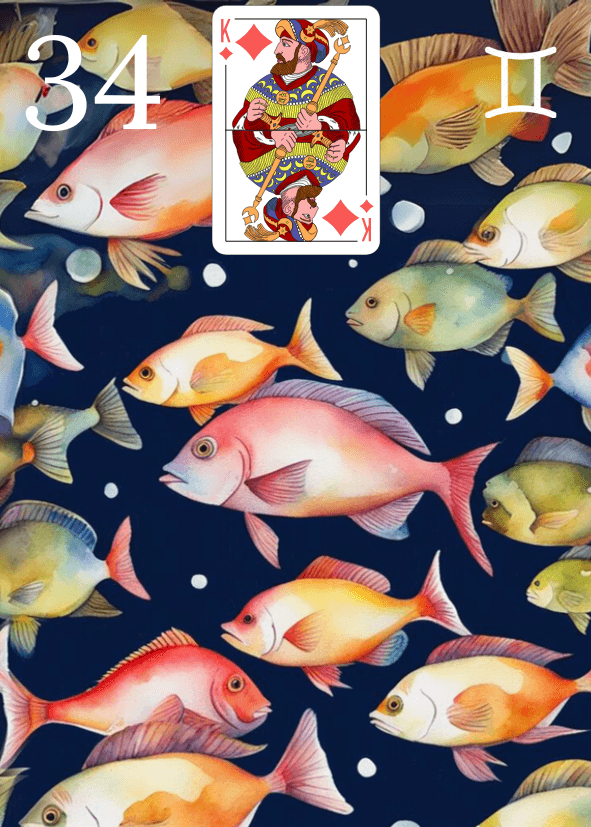
General meaning
⌄
A naive beginning confronts the concrete reality of flows, prices, and exchanges.
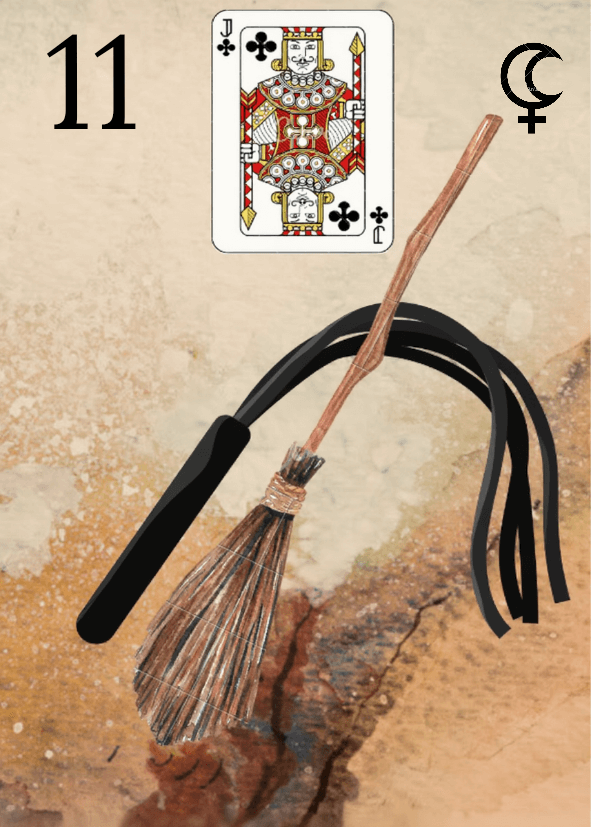
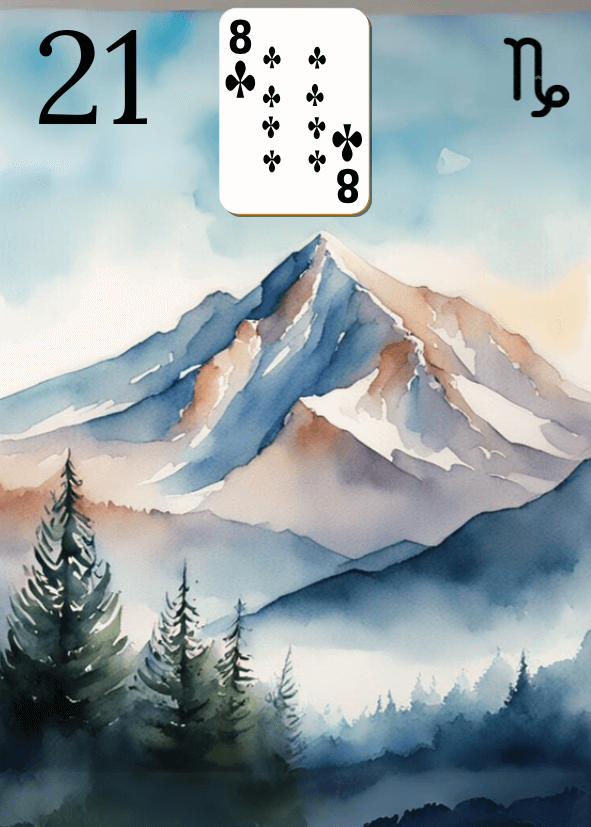
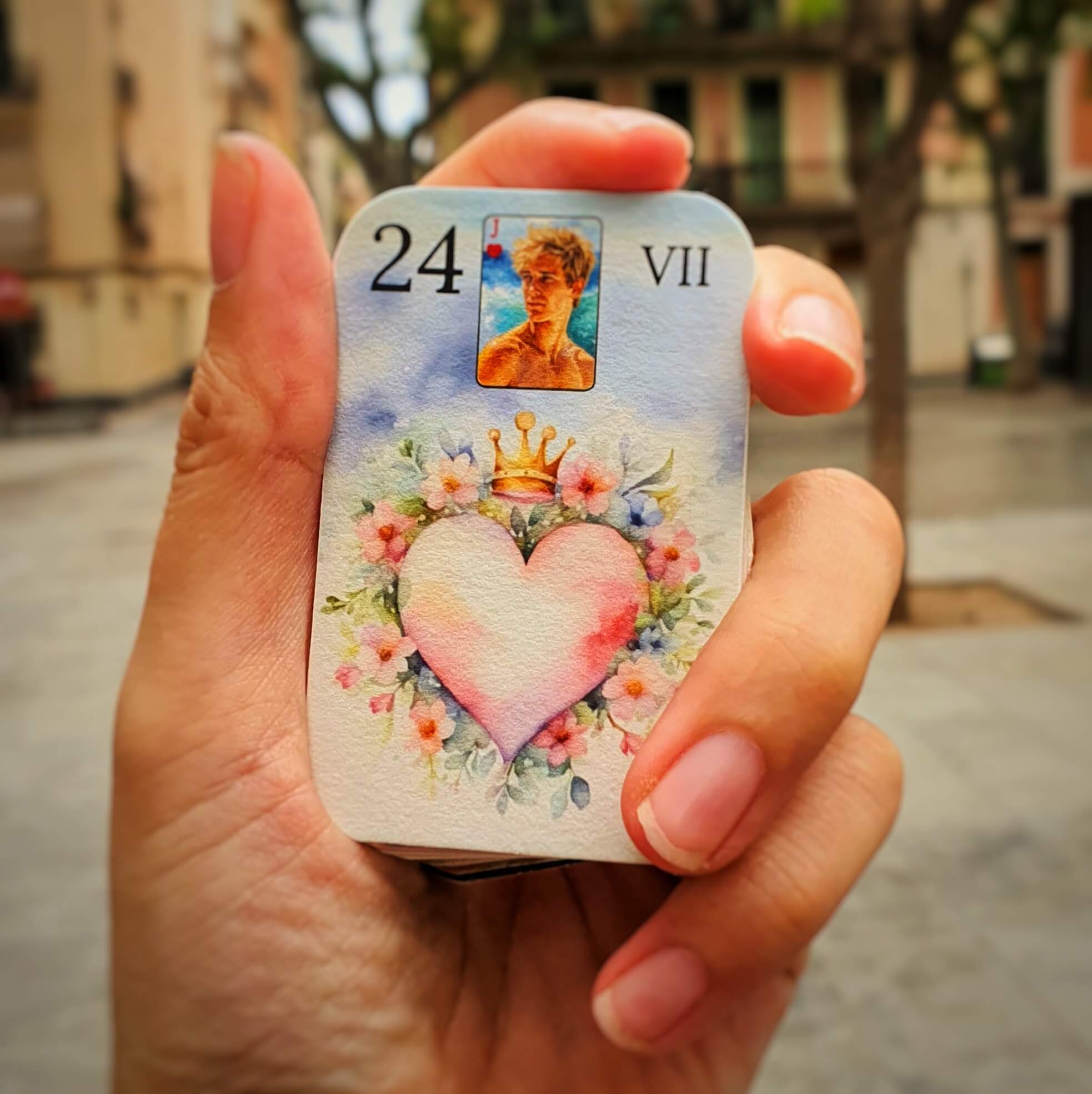
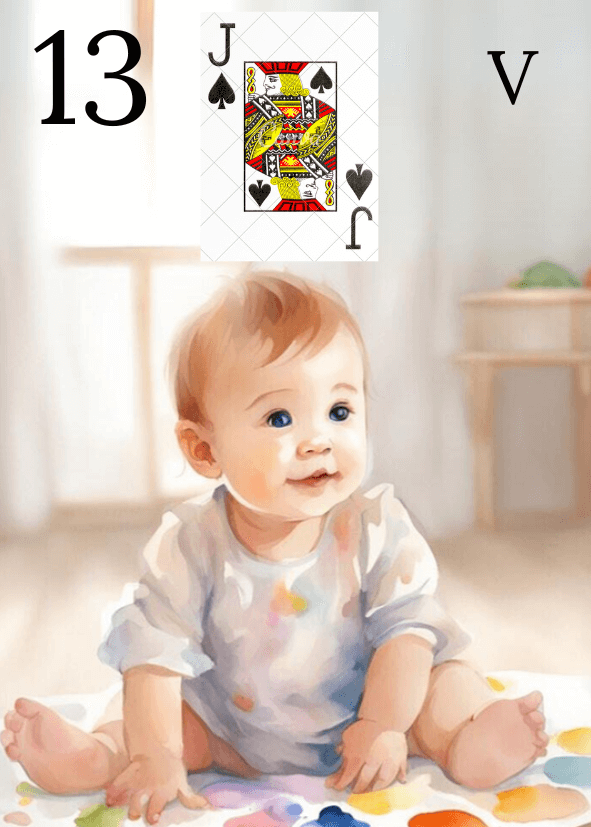
When Child meets Fish, the scene highlights the beginning of an activity, management, or relationship with money that remains very experimental. It concerns first gains, small transactions, and simple services offered in exchange for modest remuneration. The situation requires moving from comfortable innocence to a more structured awareness of value, rates, and costs. Whip, in quintessence, reminds us that this transition does not happen overnight and that it will be necessary to repeat attempts, correct, and insist for actions to become mastered. In the background, Mountain signals the existence of frameworks, rules, or external constraints that slow down progress but can also solidify it if one accepts to understand them.
Love and relationships
⌄
In the romantic domain, a simple bond crosses material or practical issues to be tamed.
Sentimentally, Child and Fish can indicate a relationship that is still young or light where issues of money, shared expenses, or material sharing begin to appear. It may involve a couple discovering what it means to pay together, organize a budget, or undertake a first project together. Sometimes, it evokes a meeting in a professional or commercial context where one of the two is in a position to learn. Whip, in quintessence, shows that repeated adjustments will be necessary for the bond not to reduce to a relationship of financial dependence. Mountain, in occult, suggests external constraints such as heavy rent, debts, or a rigid family framework that weigh on the couple's freedom.
Work and vocation
⌄
In work, a beginner's role opens directly to flows, clients, or transactions.
On the professional side, this combination speaks of an internship, a first job, a career change, or a trial mission where one is quickly confronted with the reality of numbers and flows. One learns to invoice, manage stock, handle a cash register, and track money or goods movements. Whip, in essence, emphasizes the repetitive nature of these tasks which, through constant repetition, become a true skill. Mountain, in the hidden aspect, points to administrative burdens, strict procedures, or a difficult economic context that complicates the rise in power, but also forces one to develop rigor.
Money and material security
⌄
On the financial side, small amounts or a nascent activity already require careful management.
Financially, Child and Fish together evoke first revenues, a small margin of maneuver, or an activity that is still modest but real. One may receive pocket money, tips, micro-payments online, or the first sales of a creative project. Whip, in essence, reminds us that stability will come from the regularity of efforts rather than an isolated stroke of luck. As for Mountain, in the hidden aspect, it signals charges, ceilings, or access conditions (bank, status, country) that hinder expansion and require perseverance.
Health and energy
⌄
For health, the cards speak of a body or rhythm still learning to cope with excesses and flows.
For health, Child may represent a growing organism, a recovery, or a gradual return to activity. Fish adds the question of liquids, hormones, metabolism, or excesses (dietary, sensory). This combination may evoke the beginning of awareness regarding certain consumptions or habits, without everything being stabilized yet. Whip, in essence, shows the importance of repetition in care, hygiene, or physical activity routines. Mountain, in the hidden aspect, reminds us that there may be an underlying fragility, a chronic condition, or a family background constraining the pace of progress.
Objects
⌄
The associated objects show both the small scale of beginnings and the reality of material flows.
- Piggy bank, first bank card, or small wallet entrusted to a child or beginner
- Simple ledger to note basic income and expenses
- Market cash register, payment terminal, or online interface for small transactions
- Stocks of prepared products on a small scale to test a sales activity
- Basic documents to open an account, declare an activity, or frame a first income
Places
⌄
The mentioned places evoke small activity spaces where one discovers the value of what is exchanged.
One can evoke here a neighborhood market, a small shop, a corner stand, or a café where one does their first services, or a shared space where one tests a micro-activity. These places remain human-sized, accessible, and suited for trial and error. Whip, in essence, ties these spaces to the idea of repeated gestures, helping hands, and constant back-and-forths. Mountain, in the hidden aspect, refers to a broader and more rigid environment that frames these places like regulations, fixed costs, or geographical limits.
Personality
⌄
The represented personality learns to move from spontaneity to a clearer awareness of value and exchanges.
The personality described by Child and Fish can be generous, curious, and ready to dive in even without fully understanding the material stakes. They gradually discover prices, margins, charges, and begin to link their time or skills to concrete amounts. Whip, in essence, emphasizes that this person needs a repetitive framework to integrate the rules of the economic game. Mountain, in the hidden aspect, shows that they sometimes encounter institutions, status limits, or fears of failure that slow them down, while also forcing them to strengthen their inner structure.
Profession
⌄
The associated professions accompany the first steps in managing flows or concrete activities.
- Tutor in a company to train newcomers in the reality of flows and procedures
- Professional in micro-enterprise, craftsmanship, or small-scale sales
- Youth advisor on themes of money, orientation, and entering the workforce
- Manager of a discovery workshop or an initiation program to the economic world
- Facilitator in structures supporting first professional or creative projects
Archetype
⌄
The archetype is that of the apprentice who first puts their hands in the cash register.
On a symbolic level, Child illustrates the fresh perspective, curiosity, and absence of acquired codes. Fish represents the flow of exchanges, circulating money, and services rendered. Together, they compose the figure of someone discovering the movement of material flows in real time, and who must learn to swim without losing their freshness. Whip, in essence, reminds us that this knowledge is built through repetition, trial, and correction. Mountain, in the hidden aspect, shows that this learning path encounters obstacles that invite one to gain patience and maturity.
Shadow work
⌄
The shadow aspect points to the risks of naivety, dispersion, or financial dependency.
In its delicate aspect, this combination can speak of money handled without true awareness, of small amounts easily wasted, of services rendered without knowing how to value them, or of dependence on others' resources. One can get caught up in dynamics where one gives a lot without measuring the cost, or conversely seeks easy gain without repeated effort. The Whip, in essence, warns against sterile agitation where one is active without method. The Mountain, in the hidden aspect, reminds us that reality will eventually impose its limits if the structure is not built.
Calibration questions
⌄
The questions highlight how you enter the very concrete world of flows and prices.
- In which area are you taking your first steps with money or with a concrete activity?
- What repeated actions could you implement to stabilize this beginning instead of relying on a single stroke of luck?
- What external obstacles or rules seem heavy to you, but ultimately structuring for the future?