Petit Lenormand combinations

Child and Book

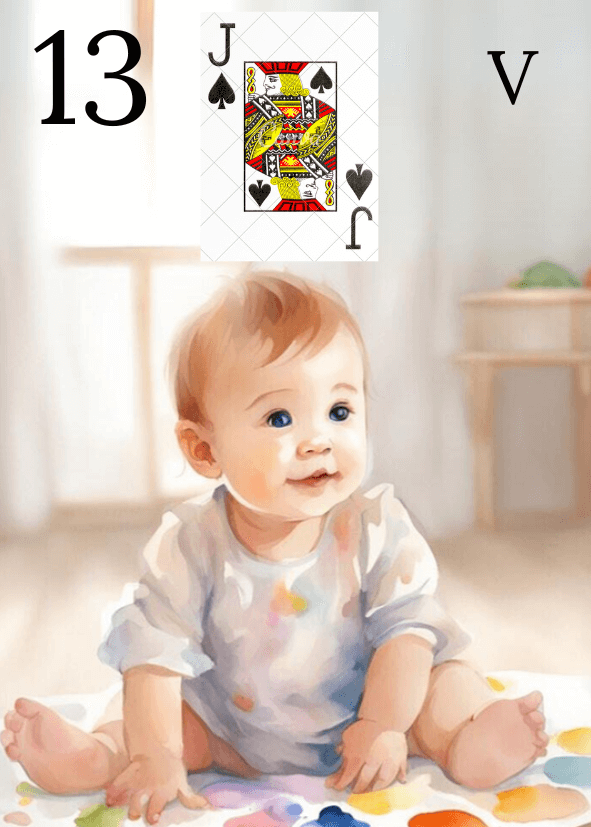
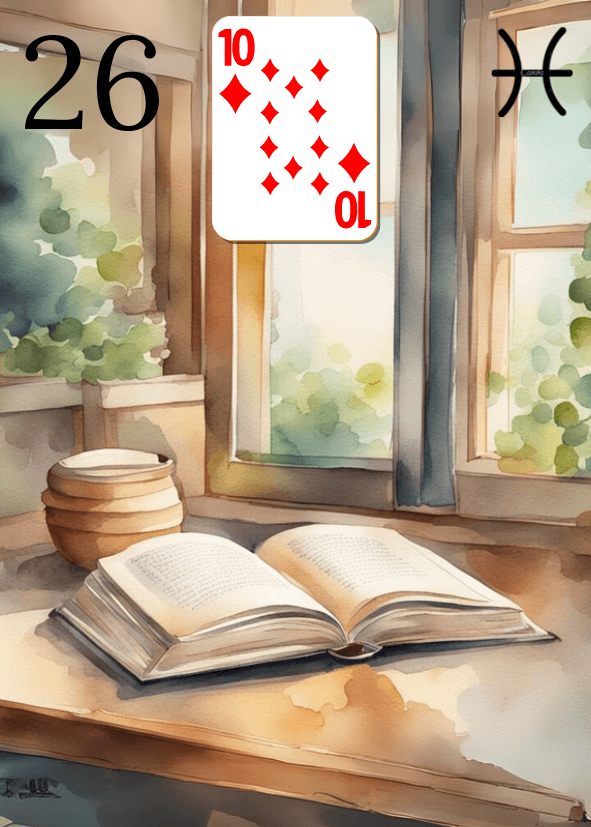
Here you see the two possible orders of the pair Child and Book. On the left, Child acts on Book. On the right, Book sets Child in motion. The concrete scenes help you feel what shifts as soon as the order shifts.

Combination
13 Child → 26 Book

General meaning

A simple and fresh momentum finds a framework of knowledge, method, or documentation to grow.

The Child represents the beginning, spontaneous curiosity, the phase where one experiments without knowing everything. The Book adds the dimension of structured content, a secret to uncover, knowledge formalized in files, notebooks, or archives. Together, these cards describe a situation where a naive desire to discover channels into more serious learning. It may involve studies that begin, a school or administrative file in the name of a child, or a first approach to a still mysterious field. The Ship, in quintessence, emphasizes the idea of a journey: it is not just a simple piece of information, but an exploration that will extend over time. The Child, in occult, reminds us that this path remains conditioned by the ability to learn through play, to stay humble, and to accept not understanding everything immediately.

Love and relationships

In love, the combination evokes a budding relationship that one begins to understand or frame better.

On the sentimental level, the Child and the Book can speak of a story at the stage of first steps, still innocent, where one now seeks to articulate clearer words on what is being experienced. It may involve getting to know the other's past better, revealing certain important information, or sharing confidences that have remained closed until now. The Child shows freshness, clumsiness, the desire to play together. The Book indicates what remains to be discovered, the shadowy areas, but also the deep discussions that structure the bond. The Ship, in quintessence, suggests that this relationship can become a true inner and outer journey if one accepts to genuinely share their story. The Child, in occult, reminds us that the way to approach sensitive topics should remain simple, accessible, almost pedagogical, without jargon or unnecessary drama.

Work and vocation

At work, the combination emphasizes a structured entry framed by procedures, notes, or training.

In the professional field, Child and Book often evoke a recent job position, an internship, a phase of integration where one learns the rules by flipping through manuals, protocols, or databases. Child symbolizes the position of a beginner, the right to make mistakes, the still raw curiosity. Book represents internal documents, contracts, regulations, all the written information that must be assimilated to feel comfortable. Ship, in essence, shows that this is not just simple onboarding: it is the beginning of a true skills journey that can lead further. Child, in the hidden aspect, reminds us that we will benefit from adapting pedagogy, breaking down learning into small steps, and keeping a space for questions where nothing is ridiculous.

Money and material security

On the financial side, the association speaks of modest beginnings that require being framed by reliable information.

On the financial level, Child can represent small incomes, still limited expenses, or beginner management. Book refers to contracts, statements, savings accounts, and legal documents that frame money. The combination can thus indicate the opening of a savings account for a child, the first steps in more conscious budget management, or learning basic financial concepts. Ship, in essence, suggests that these efforts, even modest, will set in motion a better long-term stability. Child, in the hidden aspect, reminds us that it is preferable to simplify information, to ask for clear explanations, to start with amounts or commitments suited to one's level rather than getting lost in overly complex arrangements.

Health and energy

From a health perspective, this combination points to a need for education, explanations, or written follow-up to better understand what is happening.

For health, Child often expresses a recent fragility, the beginning of a symptom, or a somewhat naive way of approaching one's body. Book adds the idea of a medical file, examination results, reports that clarify the situation. Together, the cards indicate that one is entering a learning phase: learning to read one's analyses, to follow a protocol, to note feelings in a notebook. Ship, in essence, shows that this educational approach can transform the relationship to health in the long term. Child, in the hidden aspect, reminds us to avoid jargon, to prefer clear and illustrative explanations, and not to hesitate to ask all necessary questions, even the simplest ones.

Objects

The associated objects link the beginning of a journey to written or recorded supports.

  • School notebook, correspondence notebook, or exercise book for a child
  • Registration file, form, or evaluation sheet at the beginning of a cycle
  • Method book, illustrated manual, or simplified guide for beginners
  • Binder or folder containing the first documents in the name of a child or novice
  • Personal notebook where one notes progress, discoveries, or first impressions

Places

The highlighted places are those where beginnings are supported by writings, sheets, or educational materials.

Schools, libraries, documentation centers, classrooms, media libraries, but also offices where explanatory brochures or reports are provided. These spaces embody the meeting between the innocence of Child and the structure of Book: one arrives with simple questions and leaves with supports that allow for continued learning. Ship, in essence, signals that these places can become starting points for a long training journey. Child, in the hidden aspect, reminds us that the atmosphere here benefits from remaining welcoming, caring, and adapted to people who still feel 'small' in the face of a mass of information.

Personality

The described personality advances with freshness in a world where written rules matter a lot.

This combination can represent someone curious, playful, who enters a highly codified universe without always mastering its usages. Child shows spontaneity, humor, sometimes impatience. Book indicates a more reserved, secretive dimension, or the necessity to learn to read between the lines. Ship, in essence, emphasizes that this person is made to evolve by training, documenting, and multiplying experiences. Child, in the hidden aspect, invites one to protect their capacity for wonder and the right not to know, even when faced with more erudite or technical interlocutors.

Profession

The associated professions lie at the junction between pedagogy and file management.

  • Primary school teacher, specialized educator, or child support worker
  • Documentalist, librarian, or person in charge of an educational resource center
  • Professional managing school, orientation, or training files
  • Beginning trainer who designs their first course materials
  • Mediator between families and institutions regarding schooling or learning

Archetype

The archetype is that of the little student discovering the library.

Symbolically, Child and Book evoke that moment when one enters for the first time a place of knowledge and understands that not everything will be given orally. One will have to open pages, flip through, return, and start again. Ship, in essence, shows that this experience is not limited to a homework assignment or an exam: it is a whole relationship to knowledge that is set in motion. Child, in the hidden aspect, reminds us that we learn better when we maintain a beginner's spirit, capable of wonder, play, and simple questions.

Shadow work

The shadow appears when naivety meets opaque knowledge, kept under lock, which can make one feel small or inadequate.

In its difficult polarity, this combination can speak of school or administrative files that label the child, of information kept secret about their history, or of a beginner who is denied access codes to 'true' knowledge. The Child may then feel judged, tested, evaluated on criteria they do not understand. The Ship, in essence, reminds us that there is a risk of launching them on a path where they will advance with a feeling of inferiority or delay. The Child, in the hidden position, emphasizes the need to restore an atmosphere of trust and play, to give back the right to ask questions without shame, so that learning can become possible again.

Calibration questions

The questions invite you to clarify how you enter this new field of knowledge.

  • On what subject do you today need to consider yourself a true beginner?
  • What written materials would help you feel better supported in this learning?
  • What information kept secret about a child or a beginner would benefit from being explained more clearly?
Combination
26 Book → 13 Child

General meaning

Dense, secret, or technical content is meant to be made accessible to someone who is just starting out.

The Book in the first position speaks of archives, in-depth knowledge, written rules, or well-kept secrets. The Child in second place indicates that it is time to translate this structured world into simpler, more playful, and more accessible language. This may involve explaining to a child what adults were content to record among themselves, but also popularizing a complex field for a beginner audience. The Ship, in quintessence, signifies that this transmission is not a one-time act: it is a process that unfolds over time, with back and forth, questions, and adjustments. The Child, in occult, suggests that a part of you, or the person opposite, receives this knowledge with the sensitivity of an inner child who has long awaited this kind of explanation.

Love and relationships

In love, the combination speaks of stories, experiences, or secrets that need to be explained without dramatization or jargon.

In the sentimental realm, the Book and the Child can evoke a heavy romantic past, complex or painful experiences that must be shared with a partner who does not share the same background. The Book symbolizes the chapters already written, the inner files, sometimes the secrets or the unspoken. The Child embodies the way the other, or a part of oneself, receives these narratives: with naivety, curiosity, and sometimes apprehension. The Ship, in quintessence, shows that the couple is invited to go through a period of sharing and clarification together. The Child, in occult, encourages the use of simple words, telling without overwhelming, and explaining without infantilizing, so that these confidences can become a foundation for understanding rather than an additional burden.

Work and vocation

At work, this association highlights the need to make procedures, data, or know-how more pedagogical.

On a professional level, the Book and Child can represent a highly documented environment governed by standards and protocols, which must now welcome less experienced individuals. The Book refers to manuals, databases, and specifications. The Child indicates that integration steps, tutorials, and onboarding training need to be created. The Ship, in essence, emphasizes that this transition towards more pedagogy is part of a broader movement of workplace culture transformation. The Child, in the hidden position, reminds us that behind every recruit or new collaborator is someone who does not always dare to ask questions: the way knowledge is transmitted will determine their confidence and sense of legitimacy.

Money and material security

On the financial side, the combination suggests a need to make financial information much clearer for a novice.

In the realm of money, the Book can refer to accounting documents, complex contracts, clauses, and general conditions written in technical language. The Child, in second place, shows that these elements concern or impact someone who does not master all these codes, whether it is a child in the strict sense or an adult who is poorly trained in these subjects. The Ship, in essence, suggests that the goal is to lead this person towards greater financial autonomy through a pedagogical journey. The Child, in the hidden position, invites us to regain patience and empathy in the face of basic questions, to explain terms, and to use concrete examples rather than abstract formulations.

Health and energy

For health, the focus is on translating medical or technical language into understandable words.

In terms of health, the Book can represent medical records, reports, protocols, and sometimes a difficult diagnosis to pronounce. The Child suggests that these elements must be explained to a child, a teenager, or a part of oneself that has no medical training. The Ship, in essence, shows that understanding the treatment or situation will be an integral part of the healing or adaptation process. The Child, in the hidden position, reminds us that there may be a fear of being scolded, judged, or infantilized if one admits not to understand. It then becomes essential to create a space for open questions, where one can ask 'can you explain it to me simply?' without feeling diminished.

Objects

The highlighted objects connect already formalized content to simplified materials for beginners.

  • Important file accompanied by an illustrated explanatory booklet
  • Technical book available in a simplified version or in a children's collection
  • Educational brochures created to explain rights, procedures, or care
  • Communication notebook between an institution and a family, where key information is translated
  • Memo sheets, cards, or visual aids designed to make knowledge more digestible

Places

The associated places are those where expert language is translated for a novice audience.

Institutions, administrations, offices, care centers, and educational structures where complex written information is first received, then where one meets someone who takes the time to explain it. The Book evokes offices, counters, archives, and shelves. The Child points to waiting rooms, family corners, and reception areas where efforts are made to reassure and simplify. The Ship, in essence, shows that these places can become bridges to greater confidence and skills. The Child, in the hidden position, reminds us, however, that if pedagogy is lacking, they can also be experienced as intimidating and excluding.

Personality

The described personality possesses knowledge but must learn to convey it with gentleness and clarity.

This combination can describe a very informed, cultured person, sometimes an expert in their field, but who does not always have the reflex to simplify. The Book shows depth, rigor, and seriousness. The Child signals a growth path towards more simplicity, play, and relatable metaphors. The Ship, in essence, indicates that their life mission may consist precisely of transforming their knowledge into a pedagogical journey for others. The Child, in the hidden position, emphasizes that this movement can awaken their own story as a student, a beginner sometimes left alone in the face of overly complex content, and that today it is about doing things differently.

Profession

The associated professions are situated at the interface between expertise and initiation.

  • Teacher specialized in a subject known to be difficult
  • Trainer who translates institutional requirements for a transitioning audience
  • Healthcare, legal, or administrative professional sensitive to pedagogy
  • Author of manuals, popular science books, or children's collections
  • Family liaison in an institution, responsible for explaining decisions and procedures

Archetype

The archetype is that of the librarian who agrees to open the shelves to children.

Symbolically, the Book and the Child embody the scene where one decides no longer to keep knowledge in an ivory tower. The guardian, once focused on preservation, becomes a facilitator, guide, and storyteller. The Ship, in essence, shows that this gesture opens a journey for two: the one who transmits and the one who receives transform into a path. The Child, in the hidden position, reminds us that the key to this transformation lies in the ability to rediscover one's own curiosity, to remember what it feels like not to understand, in order to teach with patience.

Shadow work

The shadow appears when knowledge remains closed or is transmitted in an infantilizing manner.

In its darker polarity, this combination can speak of information deliberately withheld from someone considered too young, too fragile, or not intelligent enough. The Book can become a symbol of power, exclusion, or harsh authority. The Child, in second place, then shows the position of the one who suffers, who must trust without having access to explanations. The Ship, in essence, warns that this dynamic creates trajectories of distrust, disengagement, or revolt in the long term. The Child, in the hidden position, invites one to ask where they themselves reproduce this pattern: whether by refusing to explain, or conversely by persuading themselves that they will never understand and that it is better to remain in ignorance.

Calibration questions

The proposed questions help you reflect on your relationship with knowledge and its transmission.

  • What area of your life remains locked in expert language that you dare not question?
  • Who could you explain something you know well to, using simple words and concrete examples?
  • Which real or inner child would today need you to finally tell them what happened, with honesty and gentleness?
A wink for advanced readers

Quintessence and the hidden card of the pair

Each combination is carried by a Quintessence that gives the overall direction, and a hidden card that works in the background. These two cards illuminate the scene without replacing the main reading.

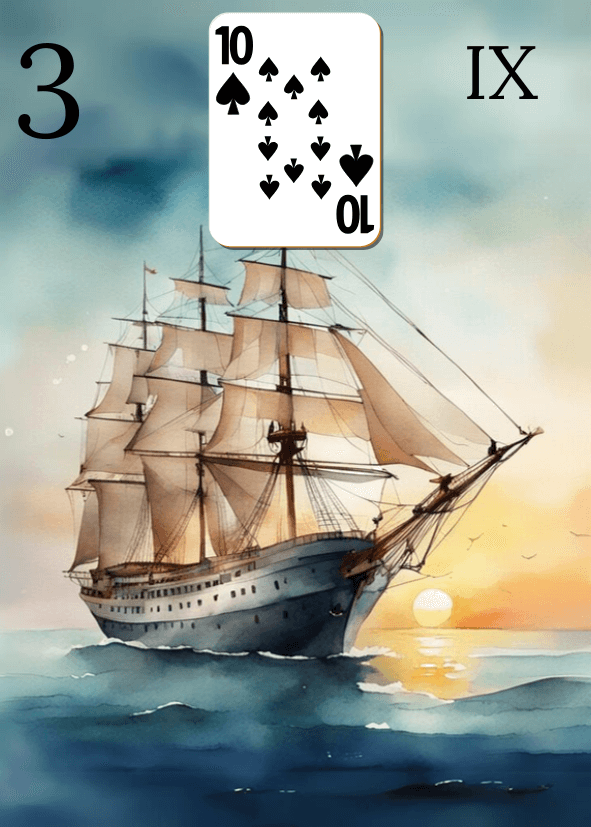
Lenormand card 03 Ship
Quintessence

03 Ship

The combination sets in motion a study or exploration journey that will endure over time.

intellectual journey learning path gradual progression
Lenormand card 13 Child
Hidden card

13 Child

A part of naivety, play, or vulnerability influences the way this knowledge is received.

candid perspective need for pedagogy desire to play