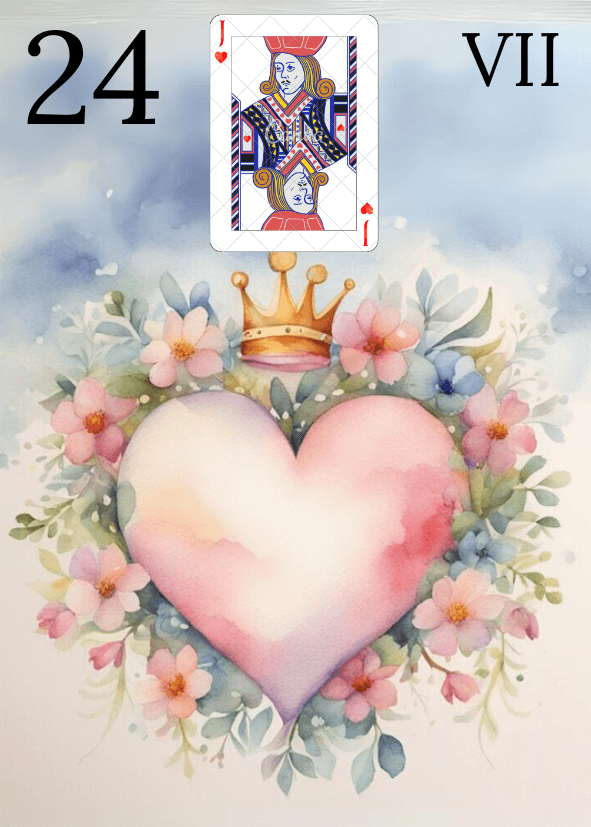
General meaning
⌄
An intense emotional bond marked by recurring tensions.
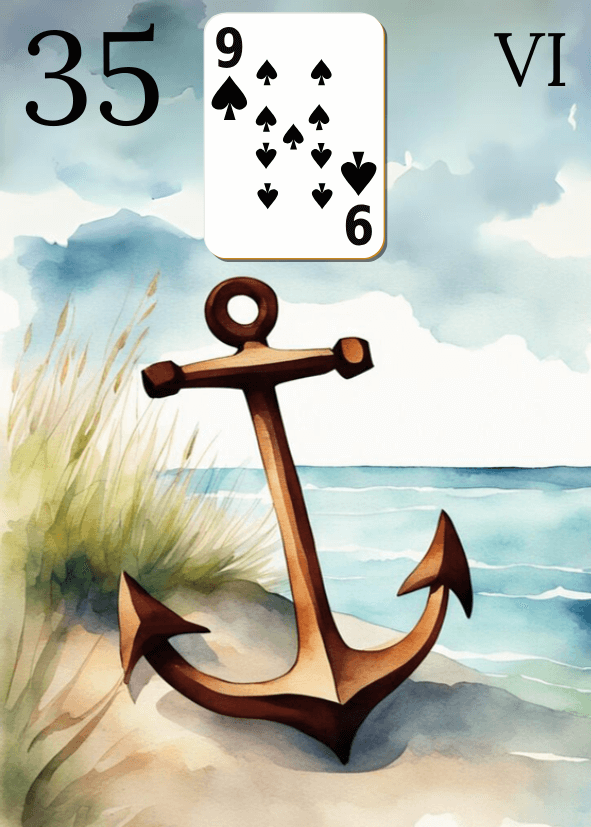
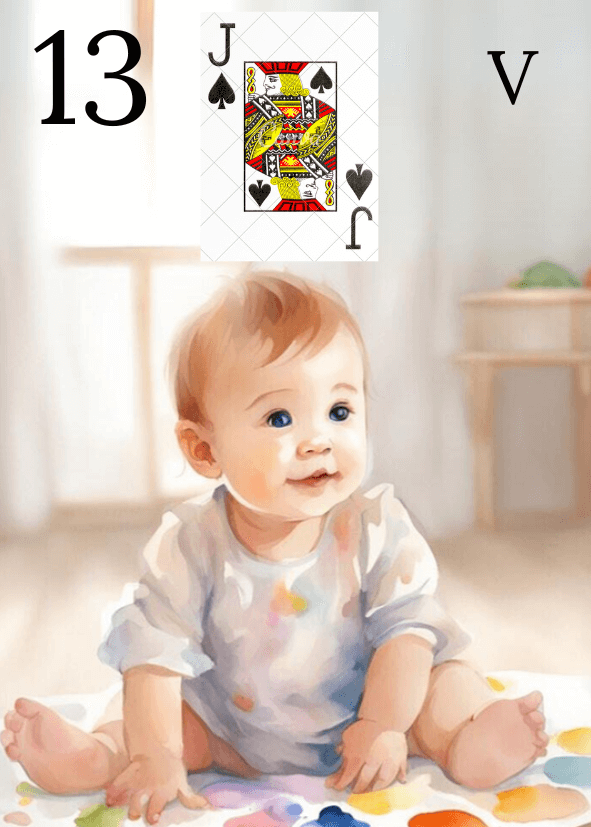
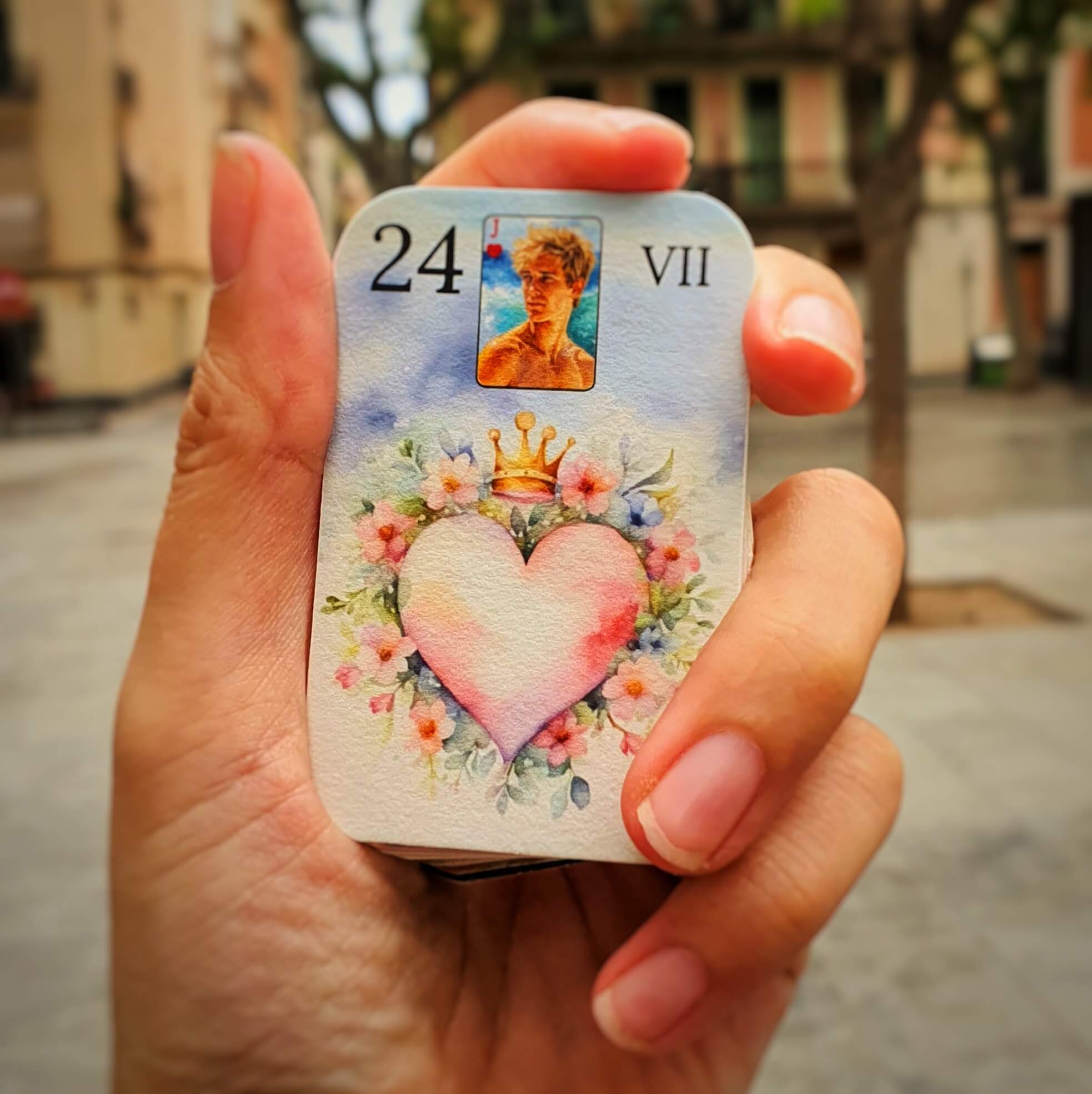
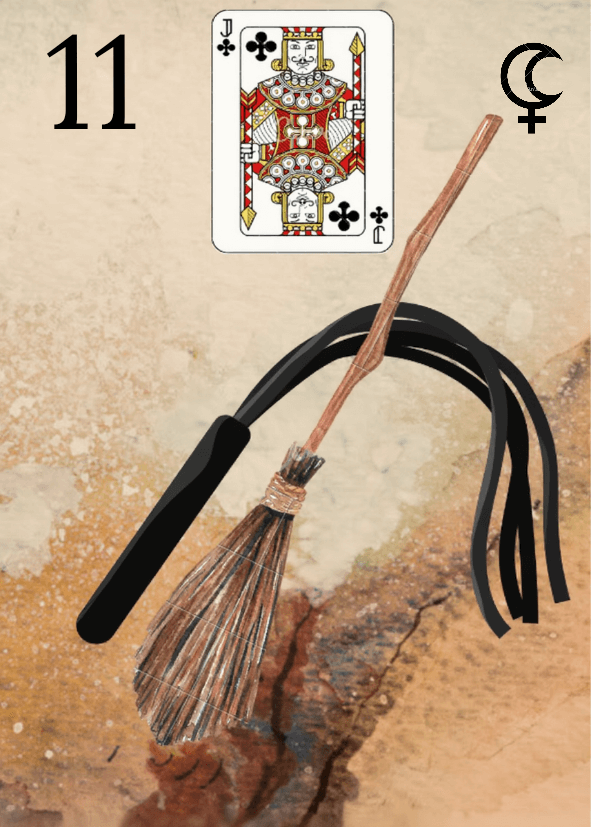
The Whip highlights a dynamic of repetition, confrontation, or emotional pressure. Associated with the Heart, it does not imply cold detachment, but rather a strong attachment where every word and gesture resonates deeply. This combination evokes a relationship or emotional situation where love exists, but where hurt also arises, sometimes unintentionally. The quintessence with the Anchor emphasizes a fundamental need for security and stability: behind the conflicts often lies the fear of losing the other or witnessing the bond unravel. The Child, in the hidden position, reveals a raw sensitivity, a vulnerable aspect that reacts strongly whenever it feels threatened.
Love and relationships
⌄
A passionate relationship where love fosters both joy and discord.
In romantic terms, the Whip and the Heart describe an intense, sometimes tumultuous relationship, where disputes can be frequent but rarely indifferent. Emotions run high, expectations are elevated, and every disagreement takes on significant emotional weight. It may involve a couple that genuinely loves each other but struggles to communicate without conflict. The Anchor encourages seeking what can solidify the bond over time: clear commitments, reassuring markers, and consistency in gestures. The Child reminds us that some excessive reactions stem from old wounds or a need for insecure love, which remains very sensitive.
Work and vocation
⌄
An emotional attachment to work that leads to repeated tensions.
In the professional realm, this combination can evoke a strong emotional investment in a project, a team, or a vocation, to the extent that conflicts become personal. The Whip highlights recurring disagreements, criticism, or pressure that repeats. The Heart indicates that these tensions are deeply felt, as work is not experienced as neutral, but as an extension of oneself. The Anchor shows the need to establish more solid foundations to avoid emotional exhaustion. The Child in the background speaks of a need for recognition and validation that, if unmet, can rekindle frustration and anger.
Money and material security
⌄
Money becomes a sensitive subject laden with emotion and tension.
Financially, the Whip combined with the Heart can indicate recurring disputes over money, often tied to emotional values rather than concrete figures. Expenses made out of love, conflicts over how to give or share, or financial stress that directly impacts emotional security. The Anchor emphasizes that the real issue is stability and long-term trust. The Child suggests that some financial fears are disproportionate to the actual situation, as they reactivate an older feeling of insecurity.
Health and energy
⌄
Emotional tensions directly impact physical well-being.
In terms of health, this combination highlights the effect of repeated emotional conflicts on the body. The Whip refers to stress, nervous tension, and sometimes psychosomatic pain. The Heart indicates that these tensions are rooted in the emotional sphere: sorrow, repressed anger, and hypersensitivity. The Anchor reminds us of the importance of stabilizing routines, rest, and a secure framework to regain balance. The Child evokes an emotional fragility that requires gentleness, listening, and sometimes a return to simple and fundamental needs.
Objects
⌄
Objects imbued with emotion and associated with emotional tensions.
- Messages, letters, or written exchanges reread during disputes
- Symbolic objects of the couple or emotional bond
- Gifts given in the heat of emotion, sometimes during reconciliations
Places
⌄
Places marked by intense emotional scenes.
This combination can refer to locations where love and tension coexist: shared home, bedroom, meeting place, or emotionally invested workspace. The Whip inscribes the memory of disputes or repeated confrontations. The Heart shows that, despite this, these places remain charged with attachment. The Anchor suggests that rearranging, redefining uses, or establishing calming rituals can help restore a sense of security. The Child invites bringing more simplicity and spontaneity back to these spaces.
Personality
⌄
A passionate, sensitive, and reactive temperament on an emotional level.
This combination can describe a person who is very emotionally invested, who loves intensely but reacts strongly when feeling hurt or misunderstood. The Whip shows a tendency to repeat the same conflictual patterns. The Heart reveals emotional sincerity and a deep need for love. The Anchor indicates that this person primarily aspires to a stable and secure relationship. The Child highlights a vulnerable inner part, sometimes childlike, that seeks protection and kindness.
Profession
⌄
Professions where emotional commitment is strong and a source of tension.
- Helping or caregiving professions involving a strong emotional charge
- Artistic professions where the expression of the heart is central
- Relational functions exposed to repeated interpersonal conflicts
Archetype
⌄
The combative lover, ready to fight to preserve the bond.
Archetypally, the Whip and the Heart represent the image of love that struggles, that fights to exist despite the wounds. It is the heart that strikes, not to destroy, but to be heard. The Anchor reminds us that the real challenge is to transform this struggle into stable commitment. The Child shows that behind the combativeness often lies a simple need: to be loved unconditionally and securely.
Shadow work
⌄
Confusing emotional intensity with proof of love.
In its shadow, this combination can lead to maintaining conflicts as if they validate the existence of the bond. One may believe that without tension, love fades, or accept hurtful exchanges in the name of passion. The Whip perpetuates repetition, while the Heart justifies through emotion. The Anchor reminds us that the duration and strength of a bond are not measured by the intensity of disputes. The Child questions the emotional maturity with which one lives and expresses love.
Calibration questions
⌄
The reading invites you to observe how you live and express love.
- What emotional conflicts repeat in your life without ever truly resolving?
- What does your heart genuinely need to feel secure?
- How could you transform emotional tension into a calmer dialogue?