General meaning
⌄
A repeated confrontation highlights how force is used in this situation.
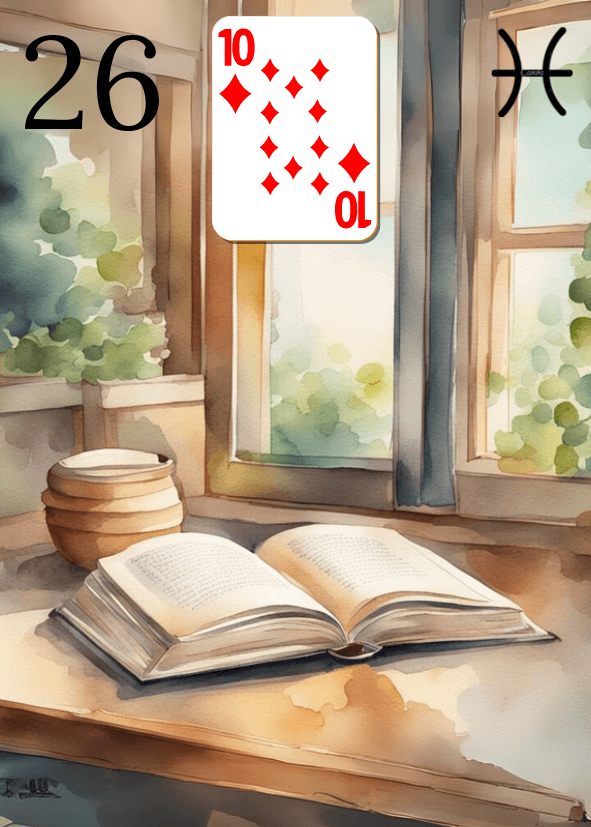
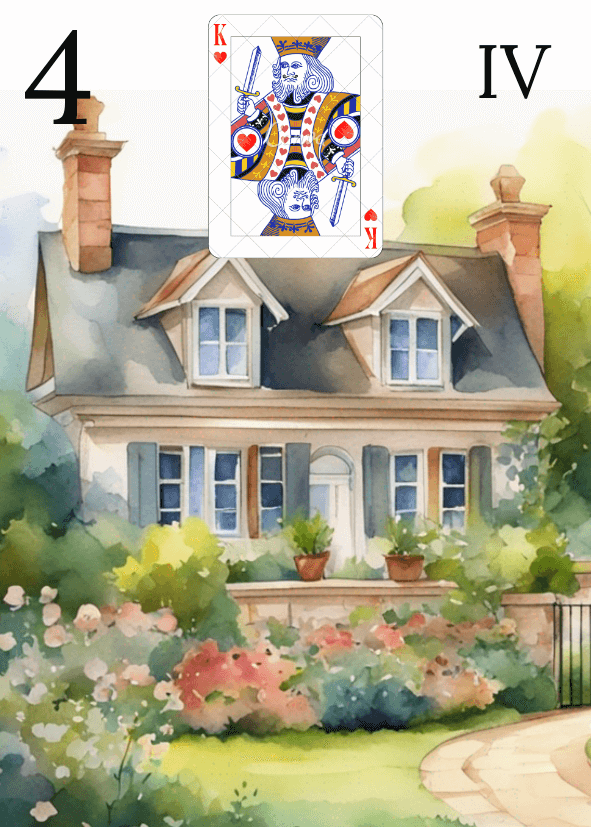
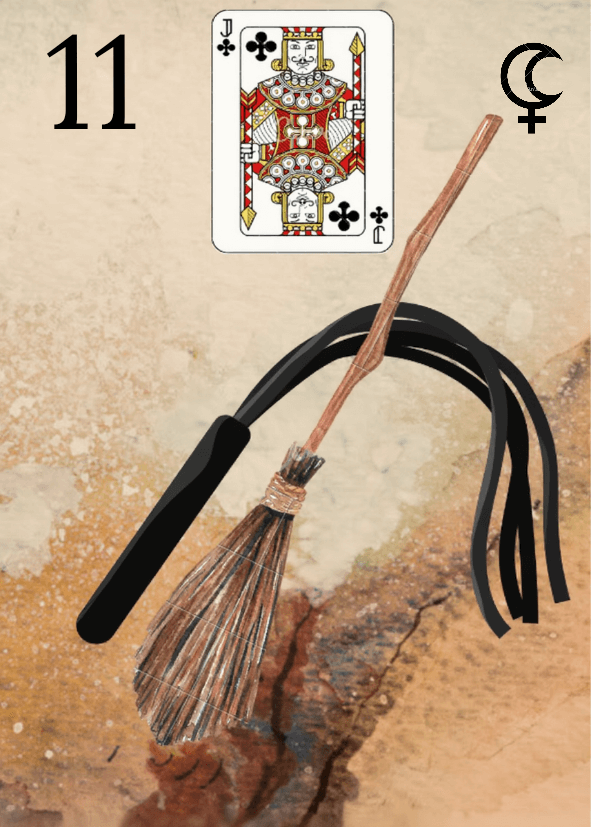
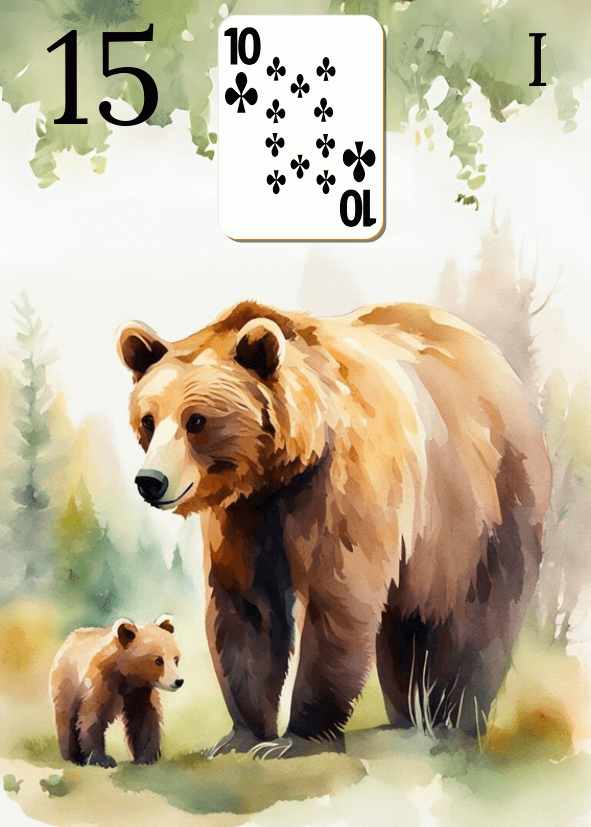
This combination reveals a climate where words can snap like whips. The Whip brings disputes, sharp retorts, and discussions that escalate into confrontations. The Bear, in front, represents raw power, protection, but also domination, whether financial, physical, or hierarchical. Together, they illustrate a power dynamic that is no longer concealed, where each tests the other's limits. The Book as quintessence suggests that a file, a secret, or withheld information fuels this standoff. The House in the background reminds us that the real issue touches on basic security: home, stability, territory, and essential needs. It is not merely a dispute over a detail, but over what fundamentally structures daily life.
Love and relationships
⌄
Tensions reveal a struggle between the need for protection and the desire to breathe.
In the emotional sphere, the Whip and the Bear can describe a couple where disputes erupt because one partner takes up too much space, monitors everything, or imposes themselves as the one who 'knows better'. This can range from hyper-protective jealousy to cutting remarks about managing money, food, body, or home. The Bear wants to protect, but it can suffocate; the Whip reacts with anger, reproaches, or even provocation. The Book suggests that an unresolved story, an old wound, or a hidden truth fuels this climate. The House reminds us that the terrain of conflict is often domestic life: who decides, who manages, and who has the final word in organizing daily life.
Work and vocation
⌄
A brutal reframe involves an authority figure or a question of power.
At work, this combination often speaks of a manager or supervisor exerting strong pressure. The Whip signals repeated criticisms, aggressive evaluations, and sharp remarks about performance. The Bear embodies heavy hierarchy, the 'big client', the shareholder, or the boss who weighs in with all their might. It may involve imposed goals without discussion, impressive outbursts of anger, or reframe sessions where one feels crushed. The Book as quintessence points to an internal regulation, a contract, a clause, or a specific email that serves as a reference in the dispute. The House in the background reminds us that behind the professional scene lie very concrete stakes: keeping one's job, paying rent, and ensuring home stability.
Money and material security
⌄
Money becomes the ground for a standoff between control and claim.
In financial matters, the Whip and Bear suggest arguments about budget, inheritance, savings, or material support. The Bear symbolizes substantial resources, capital, and the person who holds or manages money. The Whip shows accusations flying: one accuses the other of being stingy, too controlling, too extravagant, or abusing their economic position. This can refer to a parent who helps but constantly reminds what they have given, a partner who holds the purse strings, or a bank that exerts firm pressure. The Book refers to documents that crystallize the tension: contracts, statements, general conditions, and fine print clauses. The House in the background emphasizes that the real issue is the security of the home, not just the numbers on an account.
Health and energy
⌄
The body absorbs the shocks of a nervous, heavy, and sometimes intimidating atmosphere.
For health, this combination can point to significant muscle tensions, contractures, migraines, or pain related to stress and pressure. The Whip translates the repetition of efforts, irregular schedules, and excesses of sport or work. The Bear refers to the physical body in its dimension of strength: weight, mass, power, and load to bear. It may involve taking everything on one's shoulders, pushing beyond limits to remain 'strong'. The Book indicates that a diagnosis, a medical report, or health information that is still poorly integrated plays a role in this picture. The House reminds us that lifestyle, domestic environment, and how one rests at home are central to the issue.
Objects
⌄
Concrete supports materialize the issues of power and security.
- Employment contract or amendment mentioning objectives or conditional bonuses
- Financial file, bank statement, or insurance document used as a means of pressure
- Sports equipment, weight training instruments, or heavy work tools used intensively
Places
⌄
Spaces where control, authority, and latent tensions replay.
One may find themselves in an executive office, a closed meeting room, an accounting firm, or at the heart of a home where the presence of a strong figure is felt. The Whip speaks of places associated with reframing, animated discussions, and anger. The Bear evokes spaces where goods are stored, protected, or managed: safe, archive room, or the main room of the dwelling. The House in the background reminds us that these places refer to the notion of territory: who dominates here, and on what do they exert their power?
Personality
⌄
A reactive person in the face of any attempt at domination, or conversely, very little aware of their own strength.
This combination can describe someone who has a hot temper, reacting strongly whenever they feel crushed, infantilized, or controlled. It can also refer to a powerful, protective personality, but one who does not realize the impact of their words or actions when they raise their voice. The Bear provides strength, presence, and sometimes physical charisma; the Whip brings nervousness and the repetition of tense scenes. The Book calls for a better understanding of personal history, family patterns, and what the person has learned about power and security. The House suggests that many of these reactions stem from what was experienced very early in the original home.
Profession
⌄
Professions confronted with managing tensions, resources, and authority.
- Manager or team leader in a high-pressure results sector
- Security manager, guard, or person responsible for protecting a place or goods
- Sports coach or body professional who can push hard on others' physicality
Archetype
⌄
The protector who sometimes forgets they hit too hard.
The archetype here is that of strength wanting to 'do good', but which goes through pressure, correction, and tight control. The Whip seeks to rectify and set back on the right path; the Bear wants to ensure security, survival, and material comfort. When these two energies combine without awareness, they can become intrusive, even violent. The Book reminds us that another path is possible: knowledge to integrate, pedagogy to invent, and a more mature way to transmit strength without crushing.
Shadow work
⌄
Using anger or force to impose one's truth, forgetting listening and nuance.
In its shadow, this combination pushes either to explode against anything resembling an authority figure, or to use one's own power to silence others. One may convince themselves that they act 'for their good' while being unable to tolerate them doing differently. The risk is to reproduce family patterns where the strongest or loudest was always right. The House invites questioning these internal models: from whom do you inherit this way of 'protecting' or 'correcting'? And what would your inner home truly want, deep down?
Calibration questions
⌄
The draw questions you about your intimate relationship with strength and security.
- In what situation do you feel that anger still serves as the main means to earn respect?
- Who holds the most material or symbolic power in this story today, and how do they use it?
- What would you like to see recorded in black and white to truly feel secure in this context: what limits, what rules, what commitments?