Petit Lenormand combinations

Whip and Child

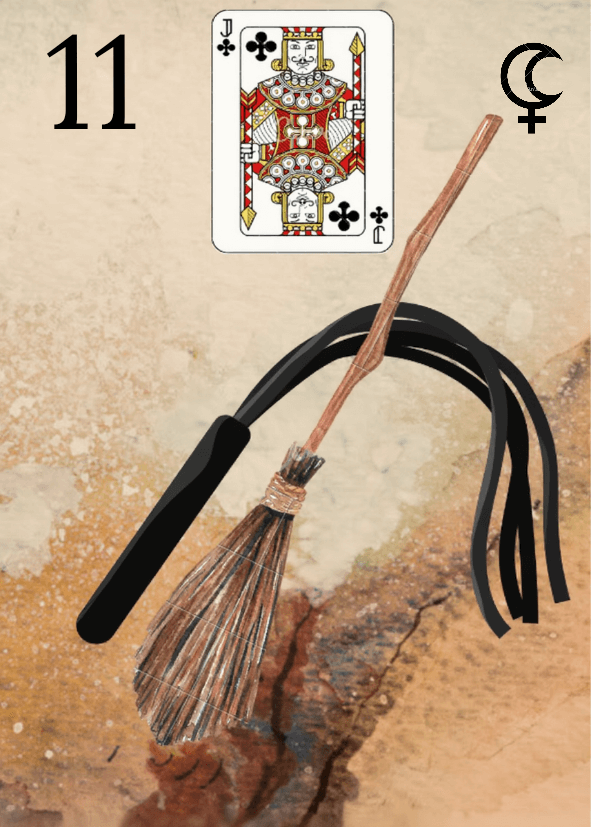
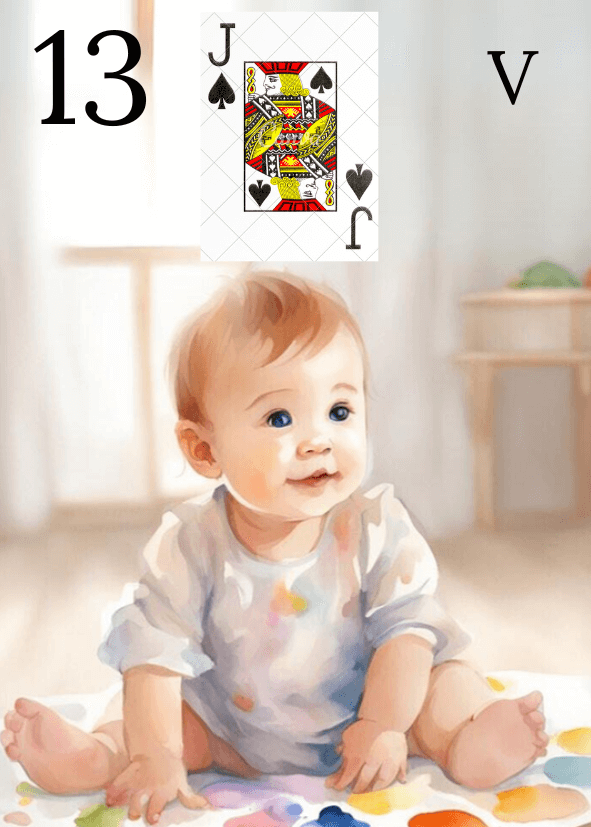
Here you see the two possible orders of the pair Whip and Child. On the left, Whip acts on Child. On the right, Child sets Whip in motion. The concrete scenes help you feel what shifts as soon as the order shifts.

Combination
11 Whip → 13 Child

General meaning

A dynamic of recurring criticism clashes with something new and vulnerable.

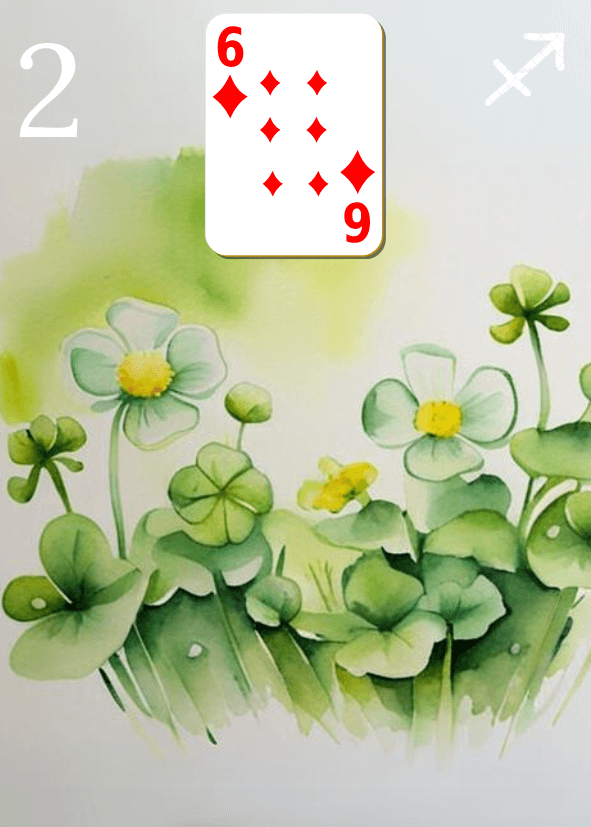
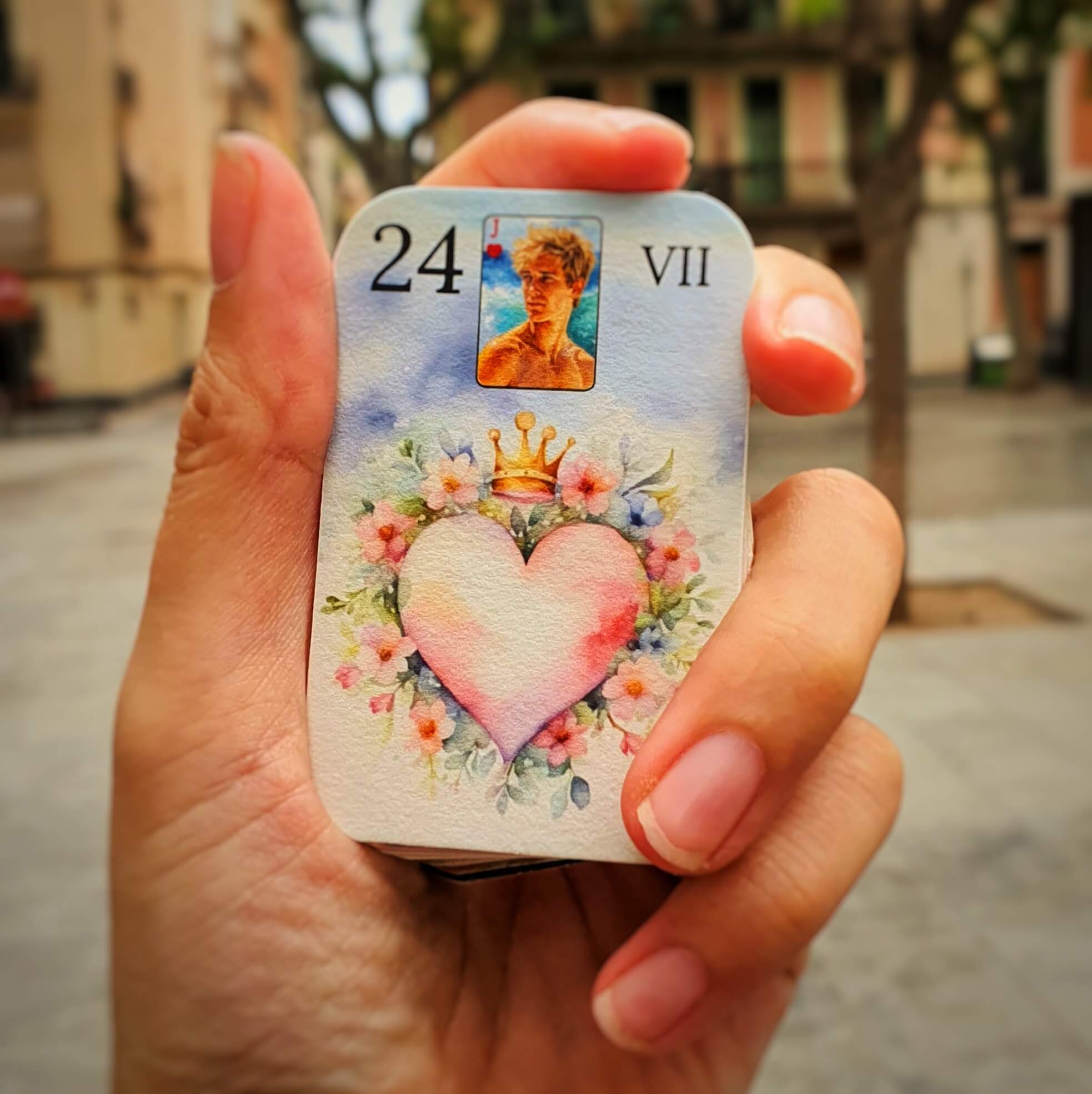
The Whip indicates a climate of tension, repeated reproaches, and remarks that persistently resurface. The Child, positioned second, reveals that these blows target a beginning, a novelty, or a person in a learning phase. This may involve a real child, a nascent project, a new role, or a first attempt. The combination describes a pattern where much is expected from something that is only taking its first steps. Deep down, the Heart signals that the issue is not solely disciplinary but also emotional: a need for recognition, encouragement, and trust. The Clover in the hidden position suggests that a small gesture of luck, an opportunity, or a touch of humor can transform a climate of pressure into a lighter space for experimentation.

Love and relationships

The relationship tightens around a new beginning or a still fragile joint project.

In matters of love, the Whip and the Child together can indicate repeated disputes about the onset of a relationship, a baby project, a blended family, or a new stage of shared life. One partner may criticize the other for not being serious enough, not involved enough, or not 'adult' enough, while the other feels judged while barely navigating the situation. The combination can also refer to disagreements over child-rearing, with remarks that resurface incessantly: schedules, rules, screen time, homework. The Heart reminds us that behind these tensions often lies a deep sensitivity and a genuine desire to do well. The Clover hints at moments of play, spontaneity, or shared joy that, if embraced, can ease the ground and breathe new life into the bond.

Work and vocation

A climate of constant correction weighs on the beginnings of a mission or role.

In the workplace, this association speaks of recurring criticisms directed at an intern, an apprentice, a new collaborator, or at oneself in a position being discovered. The Whip emphasizes the reprimands, the comments on mistakes, and the repeated instructions delivered in a harsh tone. The Child shows that the ground is new, that not everything is mastered yet, and that learning is ongoing. This may involve a very demanding manager overseeing a training team, or an environment where it is forgotten that initial attempts cannot be perfect. The Heart in essence invites a more human perspective on the progress made, while the Clover suggests valuing small successes, strokes of luck, and opportunities that arise along the way.

Money and material security

Expenses related to a child or a new project are at the center of tense discussions.

On a material level, the Whip and the Child can signal disputes about school fees, activities, childcare, or any investment related to a child or a new stage: starting a micro-enterprise, enrolling in training, or purchasing equipment to begin. The Whip points to reproaches regarding budget management, sometimes accompanied by a feeling of 'spending too much for so little result.' The Child, however, indicates that we are discussing a testing phase, a start that requires a margin for trial. The Heart emphasizes that money touches on a question of support and trust: do we genuinely want to support what is being born, or do we constantly check its immediate profitability? The Clover reminds us that some small, wise expenses can open up greater opportunities than they may seem.

Health and energy

A nascent lifestyle faces sometimes overly rigid demands.

In terms of health, this combination can evoke a program just begun: physical activity, rehabilitation, a new diet, or gradual weaning. The Whip shows the tendency to judge oneself harshly at the slightest deviation, to impose repeated and strict instructions, and even to punish oneself when not meeting a goal. The Child, however, reminds us that we are starting, that the body and habits need time to integrate new reflexes. The Heart highlights the importance of establishing a gentler relationship with oneself, based on respect and encouragement rather than self-flagellation. The Clover suggests that a small victory, a positive sign, or an encouraging result can reignite motivation without resorting to harshness.

Objects

Objects symbolize both learning and imposed rigor.

  • Exercise book or children's manual covered in corrections and remarks
  • Tools or equipment intended for a sport or beginner activity, used in a very demanding context
  • Enrollment documents, internship or training materials accompanied by strict and repeated instructions

Places

Learning or play spaces are marked by a strong dimension of control.

School, rehearsal room, sports field, training center, but also a child's room or an office where a new activity begins. These places should encourage exploration, trial, and the right to make mistakes, but the Whip indicates that they can be experienced as spaces of intense pressure. The Child, however, reminds us that it is through trial and error that we grow, whether it is a real child or the beginner part in each of us.

Personality

A critical figure faces what is beginning, often convinced of 'doing for the good.'

This personality may be that of a parent, teacher, coach, or a superior who is very demanding with younger or less experienced individuals. They repeat instructions, correct mistakes, and reframe with a certain harshness, convinced that rigor shapes character. The Heart, however, reveals a sensitivity behind this facade, a genuine attachment to the other's progress. The challenge is to transform the whip into a supportive structure, inventing a framework that encourages rather than crushes.

Profession

Jobs that oscillate between discipline and support for beginners.

  • Trainer or sports coach supervising children or beginners
  • Teacher, educator, or tutor responsible for laying solid foundations
  • Corporate trainer for newcomers or interns

Archetype

The 'strict teacher' facing the student who is starting.

This archetype stages the encounter between strong demands and a beginner level. The Whip wants 'it to sink in,' that the rules be integrated, and that the gesture be correct. The Child, on the other hand, discovers, experiments, makes mistakes, and starts over. The combination questions how we transmit: through the fear of punishment or through trust in natural progression?

Shadow work

Breaking the momentum of what is being born by subjecting it to standards that are too high.

In its shadow aspect, this combination can lead to discouraging a child, a student, or oneself from the very first attempts. We repeat the same reproaches, highlight what is wrong, and forget to acknowledge the progress. The Child ends up associating novelty with tension, trial with failure, while the Heart calls for a warmer approach. The risk is to stifle fragile talents in their infancy.

Calibration questions

The draw invites you to examine how you treat what is beginning.

  • When do your demands become stronger than the desire to learn or play?
  • Which child, real or symbolic, feels judged in this situation?
  • How could you introduce more lightness and encouragement where you mostly repeat criticisms?
Combination
13 Child → 11 Whip

General meaning

A fresh impulse meets a wall of criticism, creating a clash between spontaneity and rigor.

With Child in the first position, the reading highlights the attempt, curiosity, and novelty. Something begins, sometimes awkwardly, but with genuine goodwill. Scythe then shows how this beginning is received: dry remarks, corrections, repeated criticisms, and a feeling of being scolded. The overall dynamic resembles a 'you should have known' directed at someone who hasn't yet mastered everything. Heart in quintessence reminds us that sincerity, generosity, or love are not absent from the story, even if the form leaves something to be desired. Clover suggests that a favorable circumstance, a helping hand, or a touch of humor can transform an embarrassing incident into true learning.

Love and relationships

A candid attempt can awaken dormant tensions in the couple.

On the emotional level, Child followed by Scythe can indicate a tender gesture, a surprise, or a small initiative that does not go as planned at all. An innocent phrase, a gift, or a light proposal can be received as immature, out of place, or unrealistic. The partner then responds in a reproachful tone, sometimes recalling past episodes. The situation may also refer to a younger or less experienced partner, judged harshly as soon as they make a misstep. Heart, however, emphasizes the presence of a sincere desire for closeness, a need to play, to laugh, and to be oneself without a mask. Clover indicates that an apparently failed scene could become a funny or touching memory if one accepts to ease the pressure a bit.

Work and vocation

The initiative spirit of a beginner clashes with a strong correction culture.

In the professional field, this combination highlights the fragility of the first steps in a particularly demanding environment. Child symbolizes the junior, the newcomer, the person in transition, or the launch of a new process. Whip then reveals the culture of immediate feedback, reframing, or even punishment when a mistake is made. One may feel that there is no room for trial or experimentation. Heart emphasizes the importance of preserving motivation and curiosity, which are true resources for the team. Clover in reverse indicates that a modest success, a constructive remark, or a supportive ally can change the experience of this delicate phase.

Money and material security

A naive financial expense or decision attracts repetitive criticism.

Regarding money, Child and Whip can illustrate an impulsive purchase, a contract signed too quickly, a small loan, or an expense 'just to see' that is later heavily criticized. The entourage or a financial partner may judge the decision as immature or reckless, and remind it regularly. Heart in essence shows that the intention behind it could have been good: to please, to give oneself a chance, or to test an idea. Clover reminds us that something positive can come out of this experience, such as useful learning, a small opportunity, or a better understanding of one's financial limits.

Health and energy

A new health behavior is judged too lightly and receives abrupt criticism.

For health, this combination may speak of a recent effort to feel better: a new activity, a change of habit, or a micro-decision to take care of oneself. Child shows something modest but real, like walking a bit more, cooking a bit better, or making a first assessment. Whip corresponds to how this is judged by oneself or by others: 'it's not enough', 'you should have started earlier', or 'you never stick to it'. Heart invites us to recognize the value of each small step, especially when starting from far. Clover suggests that an unexpected encouragement or a small positive result can help to continue without falling into self-criticism.

Objects

Beginner objects bear the mark of a very strict evaluation.

  • A notebook for trials, music, or drawing covered in remarks and red corrections
  • Beginner equipment (instrument, tool, sports outfit) used in an ultra-demanding setting
  • First communication supports or prototypes annotated with harsh comments

Places

Initiation spaces are experienced as places where one can be 'burned' right from the start.

Classroom, workshop, studio, gym, corporate integration hub, or any place where one takes their first steps. Child evokes the atmosphere of 'the first day', of discovery, and of curiosity. Whip shows that these places can also be associated with the fear of making mistakes, the dread of being judged, and the possibility of being 'called out' for a misstep.

Personality

A spontaneous, sometimes clumsy profile exposed to sharp reactions.

Here, the highlighted personality can be yours or that of someone you observe: a person who dares, proposes, and attempts, who sometimes makes blunders or lacks caution, but with a generally good-natured foundation. Whip shows that there exists an environment or interlocutors who react strongly, with words that can leave a mark. Heart invites us to recognize the value of this courage to try, rather than focusing solely on the failures.

Profession

Activities where one harshly corrects those who are starting out.

  • Teaching or coaching in highly competitive fields (arts, sports, performances)
  • Supervision of interns or apprentices in a demanding corporate culture
  • Professions where beginner mistakes are heavily penalized (security, health, sensitive finance)

Archetype

The 'first misstep' that attracts an excessive reaction.

This archetype represents the classic scene where someone makes a beginner's mistake and is responded to as if they had committed a serious fault. Child reminds us of the necessity of allowing room for growth. Whip shows the temptation to jump directly to judgment, reframing, or punishment. The reading raises the question of the pedagogy one adopts in response to the first steps of others or oneself.

Shadow work

Internalizing the voice that rumbles until self-censorship occurs.

In its shadow, this combination can lead to deeply integrating the criticisms received at the beginning, to the point of no longer daring to propose, create, or launch anything new. The Child within you remembers being reprimanded, and Whip becomes an internal voice that cuts off impulses before they even take shape. The risk is to reduce your field of experience out of fear of 'getting scolded' once again.

Calibration questions

The reading questions your way of reacting to first steps, both yours and those of others.

  • What recent, naive, or clumsy initiative triggered a disproportionate reaction?
  • What phrases heard in your childhood or at your beginnings still resonate in your way of judging today?
  • How could you turn a misstep into an opportunity to grow rather than a reason to censor yourself?
A wink for advanced readers

Quintessence and the hidden card of the pair

Each combination is carried by a Quintessence that gives the overall direction, and a hidden card that works in the background. These two cards illuminate the scene without replacing the main reading.

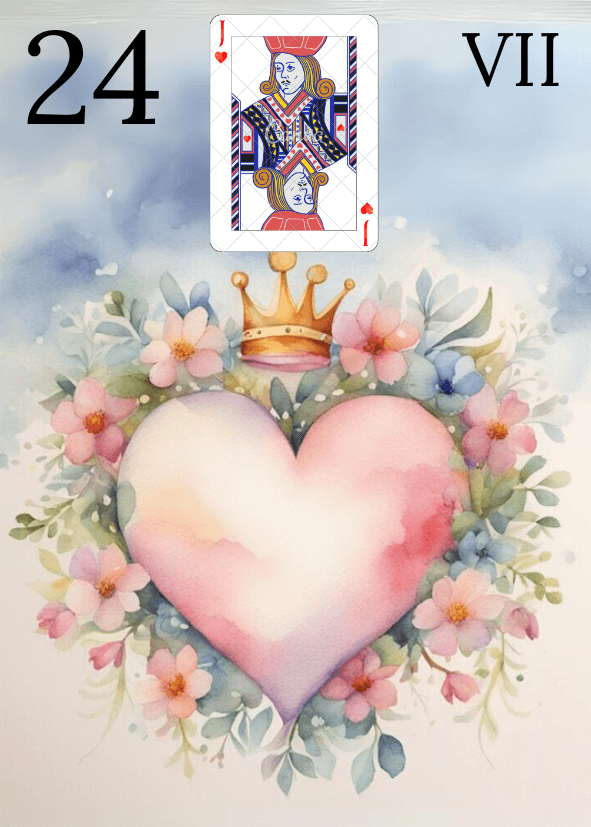
Lenormand card 24 Heart
Quintessence

24 Heart

The combination underscores a need for supportive encouragement where pressure prevails.

hurt affection need for support fragile momentum to protect
Lenormand card 02 Clover
Hidden card

02 Clover

A small chance or a moment of levity can alleviate the rigidity of conflict.

unexpected opening healing humor opportunity for reconciliation