General meaning
⌄
A point of no return opens the door to a trial that had to be faced sooner or later.
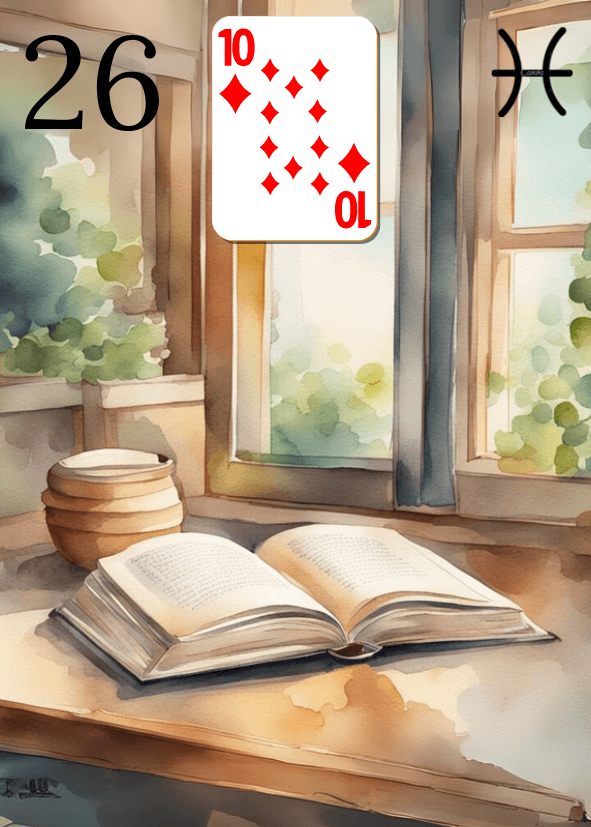
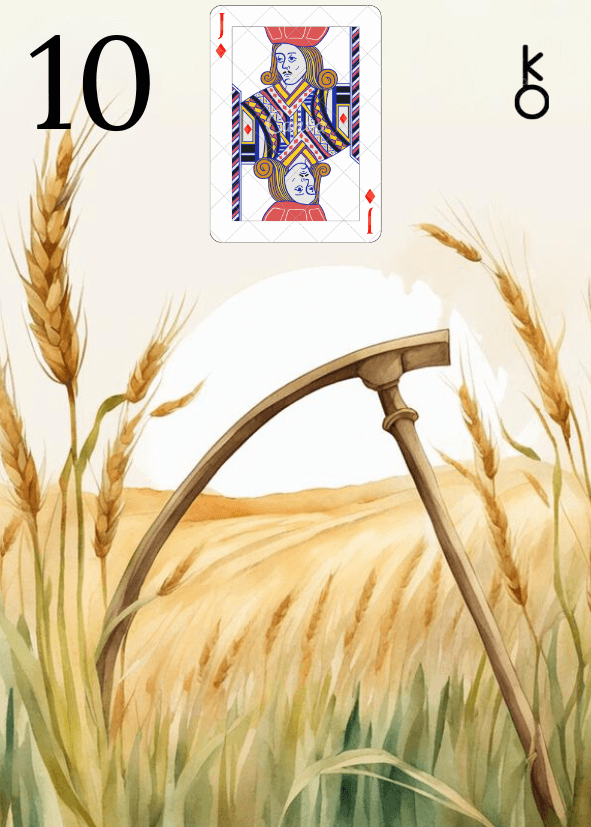
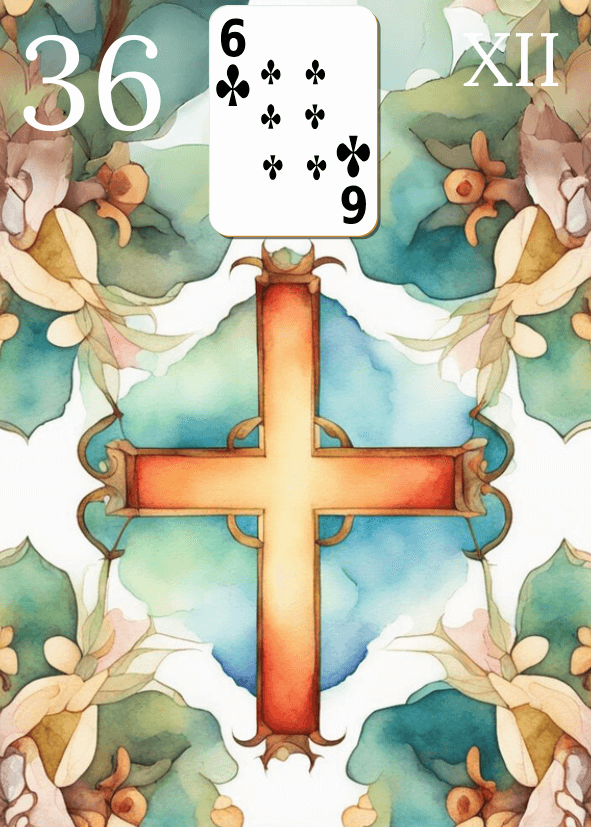
The Scythe intervenes here like a guillotine: there is a before and an after. It ends something without the possibility of returning exactly to the initial state. With the Cross, this gesture is not neutral; it triggers or crystallizes a heavy trial, sometimes perceived as inevitable or deserved. This combination speaks of a choice, an act, an announcement, or a decision that concentrates years of tensions, compromises, or fatigue. The Scythe shows the hand that acts, while the Cross represents the weight of consequences, whether moral, material, or emotional. In the background, the Book suggests that a file, an accumulation of facts, or a truth kept in reserve lends all its gravity to this moment of cutting.
Love and relationships
⌄
Cutting a relationship or an emotional dynamic triggers a painful but structuring journey.
On the sentimental level, the Scythe and the Cross evoke the break that one can no longer postpone. It may involve a worn bond, a triangular situation, a marriage drained of meaning, or an emotional dependence that has become unbearable. The decision to end the relationship or a mode of operation comes as a shock to at least one of the individuals involved. The Cross reminds us that this choice is not made without pain or guilt. One may feel that they alone bear the burden of the decision. The Book in the hidden suggests elements that remained concealed, feelings never expressed, and accumulated evidence that make continuation impossible. The quintessence of the Scythe emphasizes that this gesture, as difficult as it may be, constitutes a necessary cut to avoid losing oneself completely in suffering.
Work and vocation
⌄
A decisive decision ends a professional situation that was already burdensome.
In the field of work, this combination can indicate a dismissal decided to resolve a crisis, a closure of activity, a brutal restructuring, or the voluntary cessation of a position that no longer makes sense. The Scythe emphasizes the abrupt nature of the measure: there is a termination of a contract, sidelining, or a clear end to a project. The Cross shows that this decision is made against an already heavy context: old tensions, exhaustion, latent conflicts, and excessive responsibilities. The Book in the background may refer to a disciplinary file, written reports, legal obligations, or audits that necessitate this radical gesture. The essence of the Scythe reminds us that cutting here sometimes means ending a slow professional agony.
Money and material security
⌄
Ending a shaky financial situation leads to a difficult but necessary reckoning.
On a material level, the Scythe and the Cross together can refer to debt forgiveness at the cost of a heavy procedure, a declared bankruptcy, a seizure, or a contentious division. It may also involve stopping a toxic source of income, an expense that maintained a vicious cycle, or a dubious financial arrangement. The decision to cut causes losses, costs, penalties, or a period of significant restriction. The Book in the background indicates that contracts, clauses, or written evidence frame the situation and limit the margin for maneuver. The essence of the Scythe emphasizes the necessity of putting a final point, even if the bill is heavy, to stop perpetuating a pattern that would have cost even more in the long run.
Health and energy
⌄
A medical act, a radical decision, or a change in behavior becomes unavoidable despite fear.
In health, this combination can signal a major operation, an invasive treatment, the forced cessation of a harmful habit, or a radical decision recommended by caregivers. The Scythe symbolizes the precise gesture, the surgical act, the clean cut with a lifestyle that harms the body. The Cross reminds us that this step is accompanied by pain, convalescence, or a feeling of being tested. The Book in the background represents the medical file, accumulated results, and examination reports that leave no room for doubt. The essence of the Scythe insists that, even if the decision is difficult, it is often the only way to avoid future deterioration.
Objects
⌄
Concrete supports make visible the cut and the trial it entails.
- Registered letter of termination, cancellation, or dismissal
- Report of intervention, official decision, or judgment
- Thick file gathering evidence, exchanges, and procedural documents
Places
⌄
Turning points mark the moment when one can no longer go back.
Court, hearing room, notary's office, operating room, human resources office, or any space where a decision is made that heavily engages the future. These are places where one signs, where one cuts, where one formalizes an end. The Scythe acts at the precise moment of the act, while the Cross settles in the feelings of the days and months that follow, when one measures the weight of what has been decided.
Personality
⌄
A person ready to take on the responsibility of a difficult gesture to stop a downward spiral.
This personality may appear harsh or inflexible, but it often carries an old fatigue and acute lucidity. It understands that continuing as before would cost even more, even if the current decision makes it seem like the 'bad one' or the one who breaks everything. The Scythe translates its ability to act, while the Cross shows the intimate price it accepts to pay to assume this gesture. The Book emphasizes that it does not decide randomly: it has observed, noted, and understood elements that everyone else has overlooked.
Profession
⌄
Roles exposed to the necessity of cutting in challenging situations.
- Magistrate, referee, or decision-maker called to pronounce irreversible decisions
- Human resources manager handling layoffs and social plans
- Healthcare professional involved in significant interventions or decisions
Archetype
⌄
The surgeon of destiny who cuts what can no longer be borne.
This archetype represents the force that intervenes when compromise is no longer possible. It does not concern itself with pleasing, but with stopping a dynamic that has become destructive. Under its symbolic scalpel, the Scythe removes what is festering in the situation, while the Cross reminds us that one does not emerge from this type of trial without a scar. The Book watches silently, depositing the memory of this moment in the archives of life.
Shadow work
⌄
Confusing the necessity to cut with the desire to punish, for oneself or for others.
In its shadow, this combination can encourage decisions made to 'make someone pay', to take revenge, or to condemn oneself. The Scythe then becomes an instrument of sanction rather than liberation, while the Cross maintains suffering instead of assuming it to move on. The risk is to remain stuck in a logic of guilt or sacrifice, without using this radical moment as a true turning point.
Calibration questions
⌄
The act taken invites you to clarify what you now accept as a limit.
- What situation have you decided to cut off sharply, even knowing the price would be high?
- What information, evidence, or truths kept silent make this decision inevitable?
- Do you truly wish to free yourself or punish yourself through this radical gesture?