General meaning
⌄
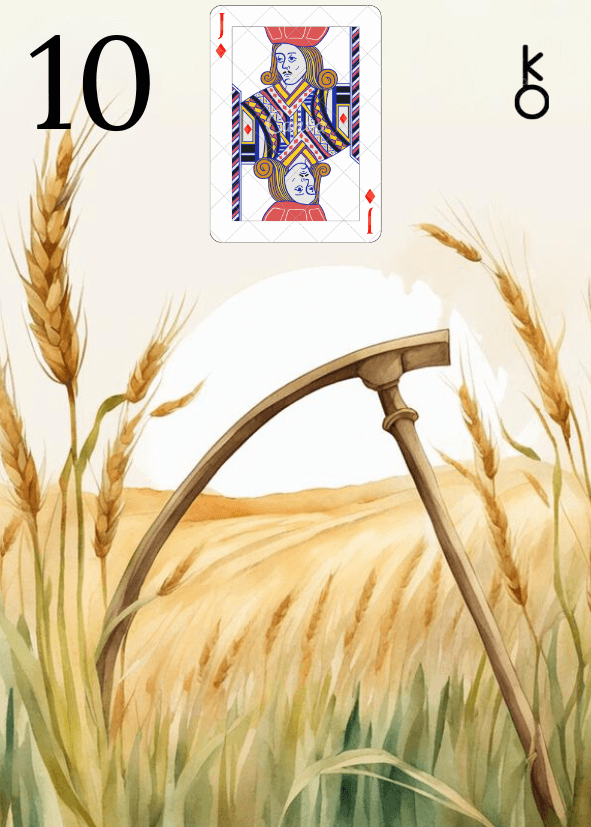
A scythe strike cuts through a material flow to close one phase and open another.
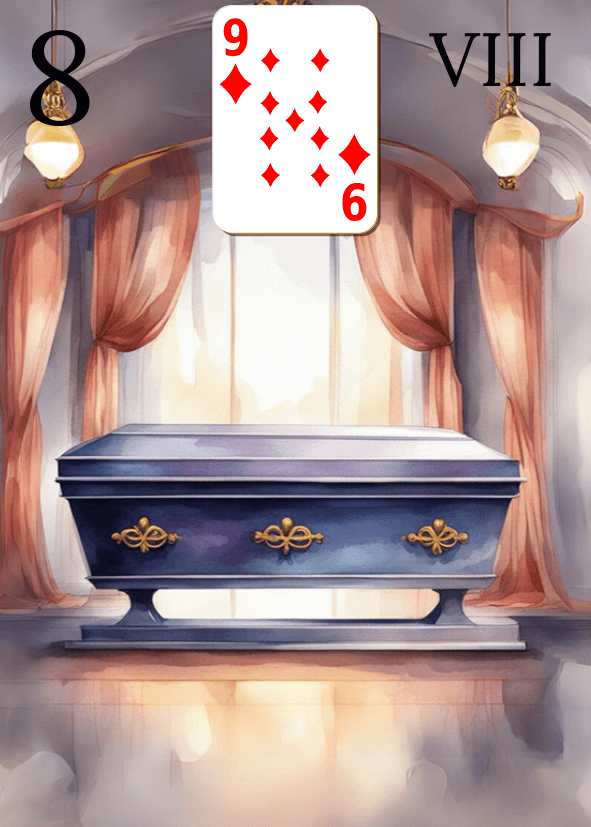
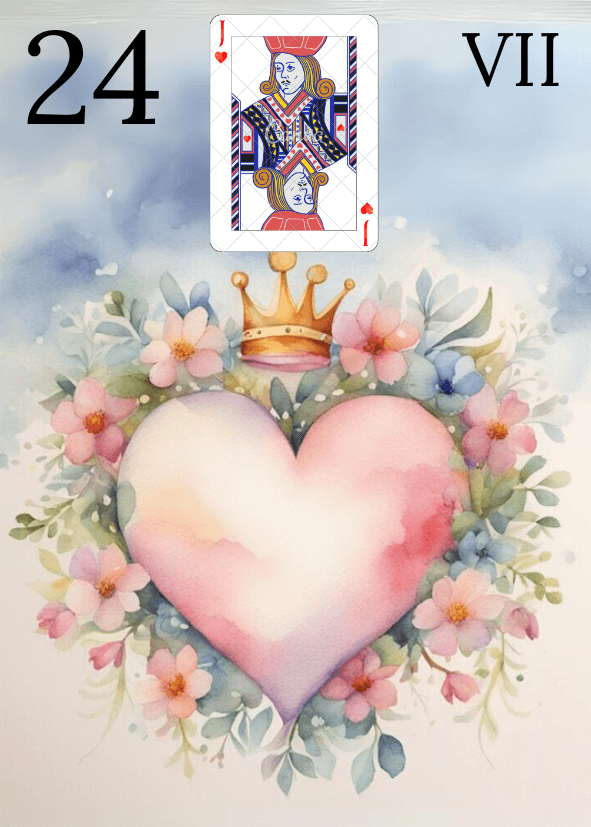
The Scythe, in the first position, emphasizes the act: to cut, to stop, to withdraw suddenly what had been circulating until then. With the Fish behind, this cut directly affects money, income, liquidity, or anything related to trade and exchanges. It can be experienced as an economic wound or conversely as a liberating gesture to end a drift. The Coffin, in quintessence, indicates that a financial cycle is coming to an end: the old model no longer holds. In the occult, the Heart shows that this decision, even if it seems cold on a material level, is rooted in what truly matters to you: preserving what you love, stopping selling yourself against your will, or realigning with your deep desires. The situation imposes a clear stop, but this stop carries within it the promise of a healthier recomposition of flows.
Love and relationships
⌄
Putting a stop to a way of managing money in the couple redistributes roles and desires.
On the sentimental level, the Scythe and the Fish can speak of a radical decision regarding the couple's finances: separate accounts, an end to material dependence, or stopping an expensive project that was putting pressure on the relationship. It may involve a household that gives up a certain standard of living, a loan, or a recurring expense to regain inner peace. The Coffin, in quintessence, highlights the end of a way of loving that relied too much on the material: buying to make amends, compensating with gifts for what was not said. The Heart, in the occult, reminds us that the decisive criterion is not the amount, but the coherence with what each feels is right. The cut sometimes reveals where the attachment really lay: to the relationship, or to what it allowed to finance.
Work and vocation
⌄
A sharp professional gesture suddenly alters the flow of money and business.
In the work sphere, this combination can evoke a dismissal, a breach of a commercial contract, a sudden halt in activity, or the closure of a service. Scythe signals the administrative or strategic act: an end-of-mission email, a decision to cut a budget, or the cessation of collaboration. Fish shows that this immediately impacts the flow of money: turnover, commissions, bonuses, influx of clients. Coffin, in essence, describes the end of a market segment, a way of invoicing, or a business model that has reached its limits. Heart, in the hidden, suggests that a vocal or passionate dimension was already seeking to carve a path: the need to find meaning in what you do, the desire to work differently, the aspiration for projects more aligned with your values. The cutting gesture, even if harsh, can then become the starting point for a more authentic career change.
Money and material security
⌄
The clean cut in financial flows ends the hemorrhage and prepares a new foundation.
On a strictly financial level, Scythe and Fish together speak of a hatchet blow to the budget: contracts are terminated, unnecessary expenses are cut, accounts are closed, and investments or systems that were too costly are exited. Scythe acts as a tool of budgetary surgery, sometimes in urgency. Fish reminds us that the goal remains to restore a viable flow, not just to dry everything up. Coffin, in essence, emphasizes that it is about closing a chapter where money flowed in the wrong direction, or too dispersedly. Heart, in the hidden, invites you to ask yourself: what do you really want to support with your resources? Once old habits are cut, it becomes possible to redirect your means towards what truly matters to you.
Health and energy
⌄
A sharp stop to a habit related to consumption or pleasure affects the body and morale.
In terms of health, this combination can indicate a brutal withdrawal: stopping alcohol, food excesses, or compulsive purchases that played the role of emotional compensation. Scythe marks the firm decision, sometimes imposed by a health professional or a shocking event. Fish shows that this cut touches habits related to fluidity, pleasure, and sometimes escape. Coffin, in essence, speaks of a body and psyche that need to close a cycle of overconsumption or escape into pleasures. Heart, in the hidden, reminds us that behind these habits often lies an attempt to fill an emotional void. Stopping abruptly can be difficult, even painful, but it is also a way to give the body space to regenerate and the heart the possibility to feel something other than numbness.
Objects
⌄
Objects mark both the cut and the end of a certain relationship with money.
- Cut bank card, torn contract, account closure or termination documents
- Resold work tools, liquidated stock, or goods removed from a sales circuit
- Withdrawal file, debt restructuring, or business closure procedure
Places
⌄
Certain places become the backdrop for a decision that cuts short an exhausting financial logic.
A bank agency, notary office, accounting firm, or management office can become the stage for a sharp announcement: end of financing, agency closure, or contract termination. Scythe is read in the signatures that end a commitment, in the acts that formalize the cut. Fish indicates that these places are also where money circulation is managed, classified, and negotiated. Coffin, in essence, reminds you that this scene is part of a broader process of closure or transformation. In the background, Heart emphasizes that there are other spaces – warmer, more human – towards which this cut could ultimately lead you.
Personality
⌄
A personality capable of radical decisions restructures their way of earning and spending.
This combination can describe someone who, after having long let things slip, suddenly becomes very sharp with money: a series of terminations, massive sorting, and a refusal to finance what no longer speaks to them. Scythe shows a capacity to say stop without detour. Fish emphasizes that this person no longer wants to be carried by flows they do not control. Coffin, in essence, translates a deep need to close a financial story: getting out of debt, a dependency, or a family model. Heart, in the hidden, hints at an intimate motivation: allowing oneself a more aligned life, no longer tying self-esteem to income levels or what they can materially offer to others.
Profession
⌄
Certain professions manipulate the sharpness to secure or redirect economic flows.
- Judicial liquidator, administrator in charge of closing or restructuring companies
- Financial advisor or budget coach helping to cut expenses and reallocate resources
- Purchasing manager or management controller imposing sharp cuts in budgets
Archetype
⌄
The harvester of finances who cuts so that something else can grow elsewhere.
The archetype here is one who accepts to harvest, even if the harvest also means the end of a field as we knew it. Scythe symbolizes the act that puts an end to a given economic flow. Fish represents the very matter of this flow: money, profits, circulation of resources. With Coffin in essence, the idea of a chapter ending is very present, but it is not an empty end: it is a fallow period that prepares another way to make your means fruitful. Heart, in the hidden, reminds us that true wealth is measured by what you do with your regained freedom, more than by the volume of what you cut.
Shadow work
⌄
In the shadow, the temptation is to slash out of fear rather than lucidity.
The dark side of this combination pushes to cut everything related to money as soon as anxiety rises: contracts are canceled, renunciations occur, and projects that could have borne fruit with a little adjustment are broken. Scythe, used this way, becomes a tool of impulsive defense. Fish shows that the fear of lacking can lead to completely drying up a flow instead of channeling it. Coffin, in essence, indicates the risk of freezing the situation in a logic of deprivation, leaving no room for financial rebirth. In the hidden, Heart emphasizes that as long as decisions are driven by the fear of losing love, recognition, or security, cuts will struggle to be truly liberating.
Calibration questions
⌄
Questions illuminate what this financial scythe really seeks to end.
- In which area have you recently made a radical decision that directly impacts your income or expenses?
- Does this cut end a mere discomfort, or a true cycle of financial wear?
- If you aligned your financial choices with what your heart truly desires, what would you decide to cut first?