General meaning
⌄
A cutting gesture ends a draining situation and opens a clearer passage.
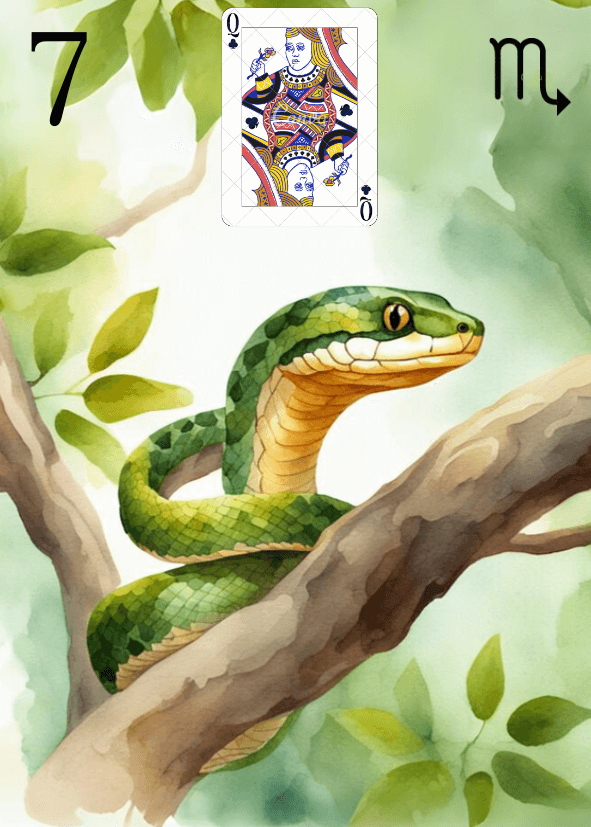
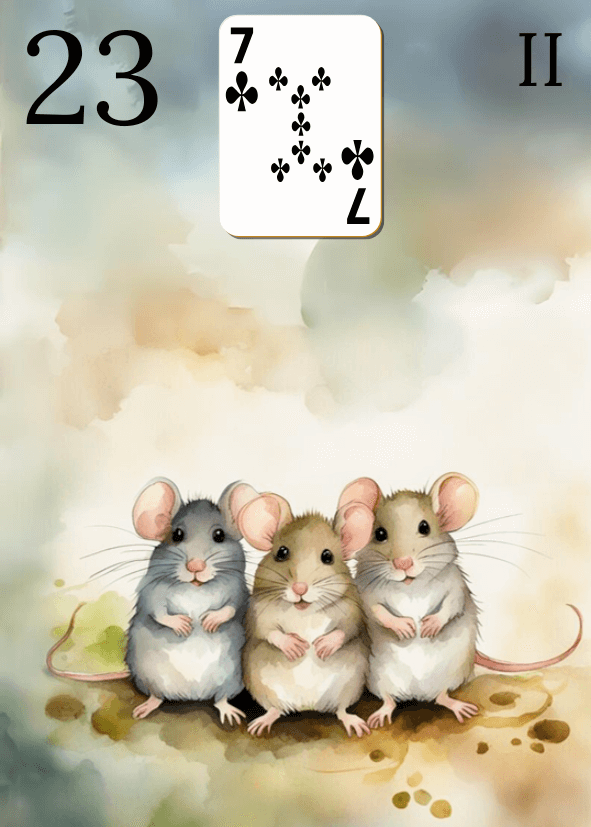
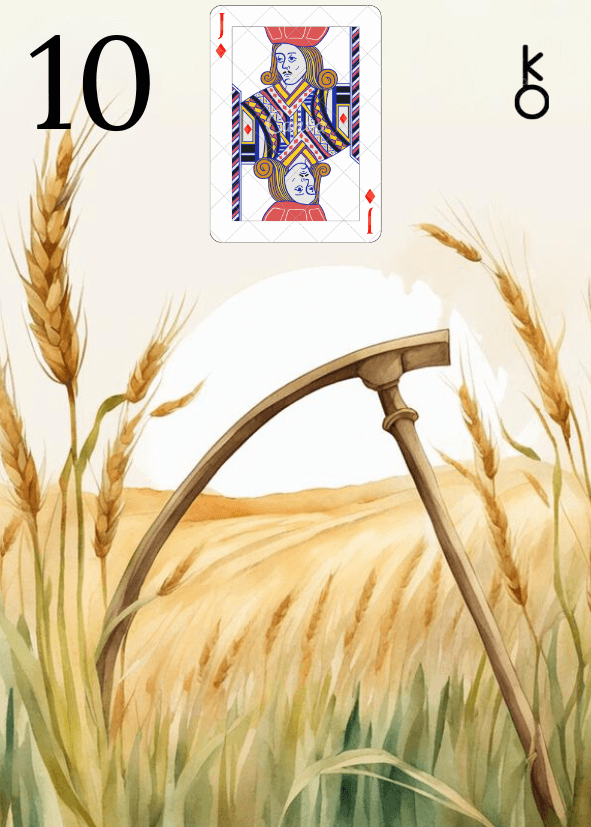
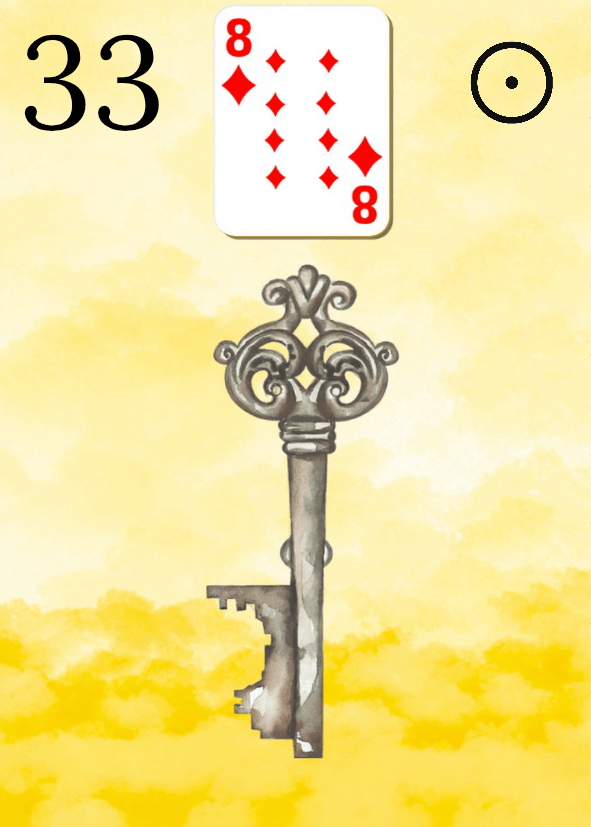
The Scythe in the first position shows the act: to cut, terminate, break, or remove something from the landscape. It may be a decision made in urgency or simply a choice that has been postponed for too long. The Key, in the second card, indicates that this gesture is not gratuitous: it reveals a solution, an access, a mechanism that clears the way forward. One leaves a ground already mined by small losses, repetitive worries, and creeping mistrust symbolized by the Mice in the hidden position. The Snake, in quintessence, reminds us that a complicated, even toxic, pattern was at the heart of the problem. The cut is not only punitive: it puts an end to a tangle of constraints to allow for a straighter advance, even if the moment of cutting can be harsh.
Love and relationships
⌄
Putting an end to a draining bond allows for the opening of a door to a healthier relationship.
In love, the Scythe associated with the Key evokes a clear decision: break, radical distancing, or end of an unlivable dynamic. The gesture can take the form of a clear message, a departure, or a firm refusal to continue as before. The background often shows a relationship where small disappointments, latent jealousies, and unfulfilled promises (the Mice) have eroded trust. The Snake, in quintessence, emphasizes that there could have been detours, triangles, half-truths, or power plays. Thus, cutting is not just a break, but a gesture that opens a lock: that of a new way to respect oneself, to set boundaries, or to choose more coherent relationships.
Work and vocation
⌄
A firm professional decision clarifies a terrain that has become too complex and eroded.
At work, this combination can signal the definitive end of a position, contract, partnership, or project. Scythe marks the administrative or managerial act: notification, termination signature, or closing of a file. Key shows that this leads to a structuring outcome, for example, a redeployment to a more suitable mission, access to decisive training, or the launch of a more aligned activity. Mice, in the hidden position, remind us that wear and tear, unrecognized overtime, small financial losses, or the slow degradation of the atmosphere were already preventing a peaceful work environment. Snake, in essence, highlights issues of strategy, intrigue, or underlying tensions: stepping out of this game requires a decisive cut.
Money and material security
⌄
A sharp cut in expenses or commitments unlocks a financial key.
In terms of finances, Scythe followed by Key often indicates a major cleanup: cancellation of unnecessary contracts, quick sale of an asset, cancellation of subscriptions, halting a loan, or a too costly project. At the moment, the cut may seem violent: one gives up certain comforts, an apparent safety margin, or a status. However, Key quickly reveals a concrete relief: a breathing budget, stabilizing debts, and the capacity to invest elsewhere. Mice show that the situation had already deteriorated due to small losses, hidden fees, or repeated unpleasant surprises. Snake, in essence, evokes complicated financial arrangements, unclear clauses, or shaky agreements from which it became necessary to exit.
Health and energy
⌄
A firm medical or hygienic choice stops a process of wear and opens a path to recovery.
Regarding health, Scythe points to a decisive medical action (intervention, stopping a treatment, decision for hospitalization) or a radical life measure (withdrawal, clear elimination of a harmful habit, forced pause). Key suggests that this decision, sometimes imposed, brings a real turning point: possible improvement, finally clear diagnosis, or a more effective protocol. Mice, in the hidden position, remind us that the body or morale were already being gnawed by stress, chronic fatigue, ignored small pains, or habits that erode vitality. Snake, in essence, may refer to a toxic environment: poisoning, side effects, or unhealthy surroundings. The cut aims to remove the thorn from the system to make the future healthier, even if the transition is abrupt.
Objects
⌄
Key objects materialize both the cut and access to something else.
- Keys returned or retrieved after a contract or lease termination
- Scissors, cutting tools, or sharp instruments used to destroy documents, cards, or badges that have become obsolete
- Terminated contract, registered letter, or confirmation email documenting the end of a commitment and the opening of a new file
Places
⌄
Places of clear decision become the space where one turns the key to a new chapter.
Certain rooms take on a special dimension: an office where one signs a termination, an agency where one cancels a contract, or a consultation room where one formalizes a protocol change. Scythe is present in the formal gesture, the signature, or the phrase that seals the cut. Key appears in the handover of a new badge, the opening of another file, or access to a new structure or a different service. Mice, in the hidden position, remind us that these places already housed discussions about recurring issues or latent wear. Snake, in essence, indicates that these spaces may have been marked by distrust or complex negotiations, making the clear act that takes place there all the more necessary.
Personality
⌄
A determined temperament cuts to no longer let slow erosion dictate the future.
This combination can describe a person who eventually grows weary of compromises and tacit small renunciations. They endure wear, insinuations, delays, and discreet losses for a long time, then, when a limit is reached, make a firm decision: cut a link, cease an activity, or refuse an arrangement. Mice show that they have multiplied efforts to hold on despite everything, sometimes to their detriment. Snake, in essence, suggests that they have learned to navigate amidst tensions or manipulations, but no longer wish to devote their energy to it. Their decisive gesture is not whimsy: it is a way to regain control and choose a less twisted environment.
Profession
⌄
Certain professions involve cutting sharply to secure access to a better solution.
- Lawyer or advisor specializing in terminations, conventional breaks, and contract exits
- Surgeon, dentist, or practitioner performing sharp actions to eliminate a source of suffering
- Consultant, auditor, or expert tasked with recommending the elimination of activities, expenses, or ineffective processes
Archetype
⌄
The knot cutter who finds the hidden lock behind the radical decision.
The archetype of this combination is one who dares to cut the rope where it has become too tangled, even if it shocks at the moment. Scythe symbolizes the courage to say "no" or "stop" to what silently gnaws. Key represents the structural understanding that accompanies this gesture: one does not cut randomly; one cuts at the precise point that frees a mechanism. Mice remind us of the accumulation of small losses suffered before this turning point. Snake, in essence, points to the resolution of a deeper problem, a recurring pattern that could no longer simply be circumvented.
Shadow work
⌄
The shadow pushes to cut too quickly, under the pressure of fatigue or fear.
In its dark side, this combination can incite one to cut brutally as soon as frustration or wear is felt, without leaving room for dialogue or nuance. One terminates, chases away, or pushes aside, sometimes to avoid confronting the true roots of the problem. Mice then show that the same worries resurface elsewhere, due to not having been addressed deeply. Snake, in essence, signals the risk of reproducing a pattern of sudden break whenever complexity increases. Key, however, reminds us that the right decision should open, clarify, and secure, not simply cut to get rid of.
Calibration questions
⌄
Questions emphasize what the cut is really trying to resolve.
- What situation have you decided to cut recently to no longer endure a slow erosion?
- Does this decision concretely open a new possibility, or does it mainly serve to relieve accumulated fatigue?
- What knot or recurring pattern does this ending finally bring to a clear conclusion?