General meaning
⌄
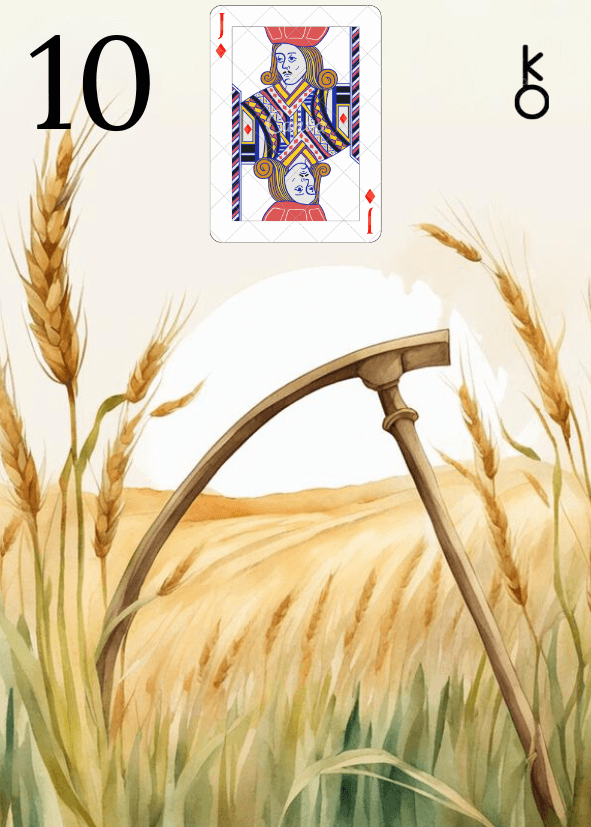
A scythe strike falls on a contractual link and cuts through the circle of obligations.
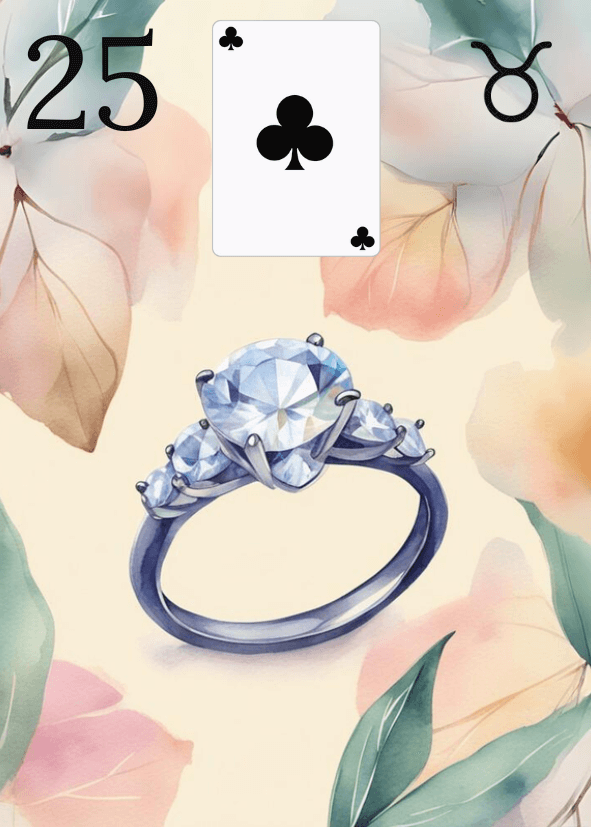
The Scythe, in the first position, introduces the idea of a clear gesture, without half-measures, that ends or abruptly interrupts a situation. With the Ring in the second card, this gesture clearly targets a commitment: contract, alliance, promise, partnership, moral or legal agreement. The combination describes the moment when one cuts through an official relationship, whether it be work, union, collaboration, or service. It can mark a liberating break after a long hesitation, but also a shock that forces an urgent reconsideration of the foundations on which you were bound. It is no longer the time to renegotiate endlessly; it is time to cut or suspend what no longer holds.
Love and relationships
⌄
A radical decision shakes up an official emotional bond.
On the emotional level, the Scythe combined with the Ring often speaks of couple breakup, de facto separation, or end of a romantic commitment. This can be the announcement of a divorce, the decision to break off an engagement, or to end a long-term relationship. Sometimes, the cut focuses on the formal aspect: ending the official framework while allowing time for emotions to reorganize. The Scythe shows a clear gesture, sometimes surprising or brutal, while the Ring reminds that this is a contractualized bond, recognized as a commitment. The combination can also indicate the need to break repeated dependency habits within the couple by cutting impossible promises.
Work and vocation
⌄
A contract or collaboration experiences a clear end or an anticipated breakup.
In the professional field, this association speaks of contract termination, end of trial period, dismissal, mutual termination, or abrupt departure. Scythe symbolizes the notification, the letter handed over, the decision to cut short, sometimes in the form of a formal interview. Ring reminds that it concerns a contractual framework: permanent contract, fixed-term contract, independent service, partnership, franchise. This reading can also evoke a project or mission interrupted while they were engaging over time. It highlights the tension between the expected commitment and the reality that imposes a break, often to avoid getting bogged down in a disadvantageous agreement.
Money and material security
⌄
A signature or financial agreement is broken to stop an unbalanced situation.
From a material perspective, Scythe and Ring together signal the end of a financial commitment: renegotiated or prematurely repaid loan, terminated insurance contract, subscription halted, commercial agreement denounced. It may involve a decision to cut recurring payments, stop a lease, or end a costly commitment that no longer aligns with your priorities. Bear in the background emphasizes the dimension of power and interest: behind the break, there is often a desire to regain control over your financial security or to exit an unfavorable economic power dynamic.
Health and energy
⌄
A burdensome link or habit must be cut to preserve your underlying balance.
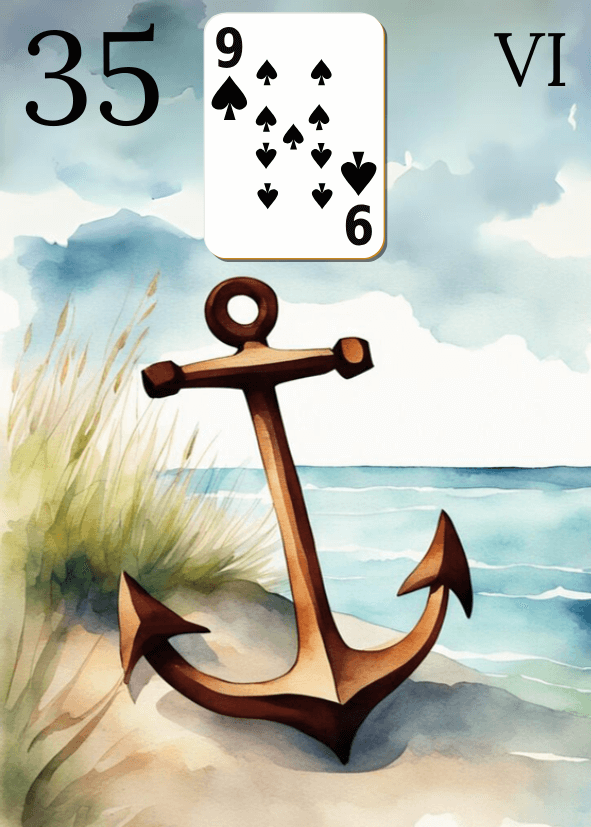
For health, this combination may reflect the necessity to cut a habit that kept you chained: dependence on a substance, attachment to a destructive work rhythm, engagement in an activity that wears down the body. Scythe indicates the act of stopping, sometimes imposed by a healthcare professional or by a sudden event. Ring signals that this habit was established, almost 'contractualized' with yourself or with others. Anchor in essence suggests that this gesture aims to rebuild a more stable foundation, even if the change seems harsh at first.
Objects
⌄
Objects concretely mark the end of a commitment.
- Employment, lease, or insurance contract with a termination mention
- Wedding ring or jewelry symbolizing a commitment set aside, removed, or sold
- Registered letter, official email, or signed document ending an agreement
Places
⌄
Certain places become the stage where agreements are cut.
Lawyer's office, notary's office, human resources department, office of a hierarchical manager, meeting room dedicated to a final negotiation: these places embody the formalization of the break. One might also think of a court or a conciliation body where one comes to formalize the end of a legal link. These are spaces where a dividing line is drawn between before and after in contractual or relational life.
Personality
⌄
A person decides to cut their commitments to no longer feel trapped.
This combination may illustrate someone who, after having long respected their obligations, feels an urgent need to disengage from what suffocates them. The concerned personality appears direct, sometimes abrupt, but seeks above all to regain their maneuverability. They may choose to break a contract, leave a structure, or end a promise they now deem untenable. Bear in the background evokes a protective instinct: the gesture may seem harsh, yet it is often about preserving personal power, health, or material security.
Profession
⌄
Roles intervene to frame or formalize the break of a link.
- Lawyer or legal expert specializing in contract breaks and separations
- Notary assisting in the dissolution of a matrimonial regime or association
- Human resources manager handling ends of collaboration or contracts
Archetype
⌄
The blade that breaks the circle to avoid endless wear.
The archetype of this combination is one that dares to break the cycle of a commitment that has become meaningless. Instead of going around in circles in a Ring that no longer nourishes, Scythe comes to open a breach to allow another type of link, healthier and more aligned. It reminds that respecting an agreement does not imply sacrificing oneself when conditions have radically changed.
Shadow work
⌄
The temptation to cut everything too quickly, at the risk of breaking what could be adjusted.
In its shadow aspect, this combination may push to abruptly break commitments at the slightest conflict, out of fear of negotiation or confrontation. One may use the break as a power weapon, threatening to stop everything to gain an advantage. There is also the risk of sabotaging solid agreements out of impulsivity, then regretting the loss of stability. The challenge is to distinguish what truly needs to be cut from what could be transformed.
Calibration questions
⌄
The gesture you are considering raises a real question about the value of your current commitments.
- What commitment are you reaching the end of your capacity to bear without losing yourself?
- Where have you already understood that a break would be healthier than a facade prolongation?
- What power dynamic or material interest influences your way of cutting ties or staying connected?