The Petit Lenormand deck is available now. Limited stock
Petit Lenormand combinations

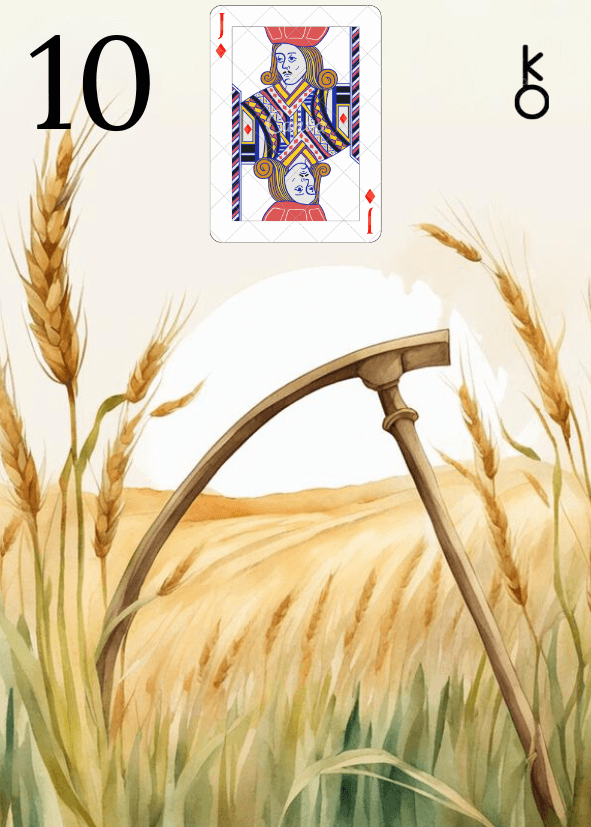
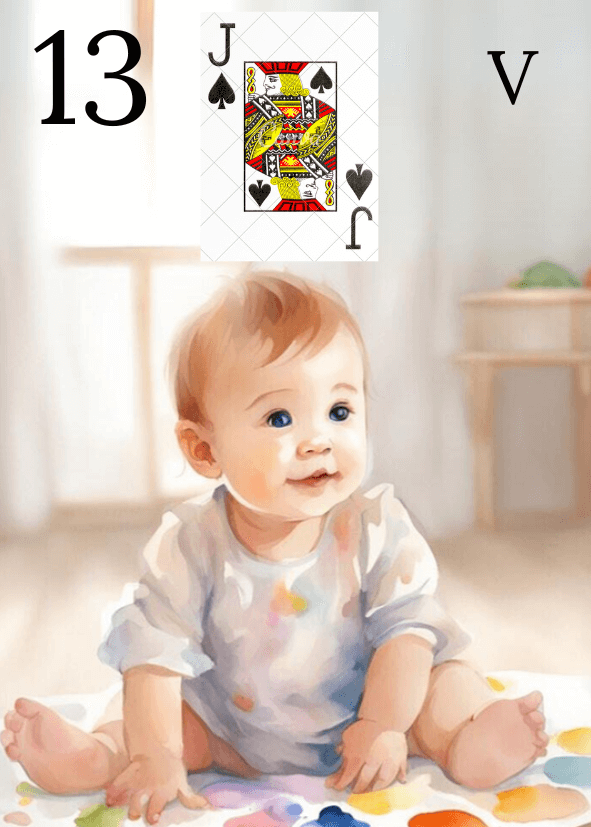
Scythe and Child

Here you see the two possible orders of the pair Scythe and Child. On the left, Scythe acts on Child. On the right, Child sets Scythe in motion. The concrete scenes help you feel what shifts as soon as the order shifts.

These interpretations are based on thousands of consultations.

Combination
10 Scythe → 13 Child

General meaning

A decisive intervention cuts short something that is just beginning.

The Scythe indicates a clear gesture, an unequivocal decision, sometimes imposed by urgency or the need to set a firm limit. The Child in the second position shows that this movement affects what is still in the startup phase: a child, a budding project, a learning experience, or a trial situation. This combination describes the moment when one chooses to quickly end something that has not yet had time to grow, either to protect it from danger or because one believes that the conditions are not right to allow it to develop.

Love and relationships

A radical adjustment cuts an emotional dynamic that is still immature.

On the sentimental level, this pair can refer to a relationship deemed too childish, unbalanced, or unreliable, which one partner decides to abruptly end. It can also signal a romantic break affecting a family with a child, for example, a separation decided to protect a younger one from repeated tensions. The Child emphasizes the dimension of vulnerability at play: it is not just about cutting for oneself, but about measuring the impact on what is still under construction.

Work and vocation

A test, trial, or learning period is abruptly interrupted.

In the professional sphere, Scythe followed by Child evokes the end of a trial period, an internship, training, or a pilot project that stops earlier than expected. A probationary contract may be terminated, a discovery position eliminated, or the start of a mission dismissed after a sufficient assessment. This combination emphasizes the need for clear decisions, even if the story is only in its early chapters.

Money and material security

An expense related to the start of a project or a child is cut short.

On the financial side, it may involve ending a subscription for a child’s activity, canceling a purchase intended for a new project, or stopping an investment in the launch phase. Sometimes, one decides to forgo expenses for a start deemed weak, or to cut back on 'gadget' expenses related to the desire to try something new. Scythe here protects the budget by setting a clear limit around what was still experimental.

Health and energy

An early intervention prevents a problem from taking root.

For health, this combination may refer to a medical gesture or a radical decision made quickly to prevent a fragility from settling in: early treatment, immediate cessation of a harmful substance, or enforced change of habit at the first signs. Child emphasizes that action is taken at the initial stage, before the situation becomes serious. Scythe, on the other hand, reminds that the action must be clear, decided, and accepted, even if it seems harsh at the moment.

Objects

Objects mark the end or removal of an initial experience.

  • Letter or contract confirming the end of a trial period or an internship
  • Unsubscription form for a school or extracurricular activity
  • Initiation material stored or resold after abandoning a project

Places

Places where one ends a trial, a registration, or early support.

School, daycare, leisure center, pediatrics office, service welcoming new employees or interns, structure for sports or artistic initiation: these places may be associated with a decision to withdraw, change establishments, or end a test. Scythe symbolizes the cut, while Child reminds that what is at stake remains fragile and modifiable.

Personality

A person cuts to protect what is young or vulnerable.

This combination may describe someone who does not hesitate to say stop to defend a child, the start of a project, or a learning process. The person may seem harsh at the moment, but their intention often aims to prevent future damage. In the shadow, this profile may also cut too quickly, out of impatience or fear of letting something grow that they do not fully control.

Profession

Roles that impose clear limits in beginnings and trial phases.

  • HR manager handling the ends of trial periods
  • Educator or supervisor who ends an experience deemed dangerous for a child
  • Pilot project referent responsible for deciding on the termination or continuation of a test

Archetype

The gardener who prunes to prevent the young shoot from deforming.

The archetype showcases an energy that cuts early, not to destroy what is beginning, but to prevent it from growing in a risky direction. It reminds that certain decisions made at the start can prevent greater suffering later on, even if they initially leave a bitter taste.

Shadow work

Cutting too early what could have grown otherwise.

In its shadow, the combination may evoke a tendency to sabotage beginnings, to fear commitment or responsibility, especially when it comes to children or new projects. One may break off before giving a real chance, interrupt a learning process at the first difficulty, or refuse to assume a symbolic fatherhood or motherhood of a project.

Calibration questions

The way you cut today will have effects on what could have grown.

  • What recent situation did you interrupt before it really had time to develop?
  • In what area does a child, a student, or a beginner need firm protection rather than unlimited tolerance?
  • Which emerging project would benefit from a clear adjustment rather than a radical cut?
Combination
13 Child → 10 Scythe

General meaning

A promising start is confronted with a sudden stop or a reality sharper than expected.

The Child symbolizes the momentum of the beginning, curiosity, and the trial without apparent heavy stakes. The Scythe, in the second position, reminds us that a limit exists, that a framework is imposed, or that an event abruptly cuts short this carefreeness. This combination describes the moment when what seemed light, fun, or simply experimental encounters a clear constraint: rules, decisions, material limitations, or the necessity to say stop.

Love and relationships

A light romance meets a harsh reality.

On an emotional level, the Child and the Scythe can evoke a story that began carelessly, almost like a game, which ends abruptly when one of the two ends the relationship or sets a non-negotiable limit. This combination can also signify an awakening: what was experienced as a fleeting moment or a flirtation can no longer continue in this manner, due to a commitment elsewhere, a family to respect, or a personal framework to uphold.

Work and vocation

A professional trial concludes sooner than expected.

In the professional realm, this pair often refers to a trial period, an internship, a short contract, or a test mission that does not lead to the anticipated continuation. The experience may have been formative, but a decision is made: end of collaboration, non-renewal, or a change of direction that cuts off potential continuity. The Child reminds us of the importance of learning from this initial experience, even if the Scythe closes the chapter more quickly than expected.

Money and material security

Light or impulsive spending necessitates a clear cut.

From a financial perspective, the combination may indicate purchases made 'just to see', small indulgent expenses, or naive investments in fledgling projects that now require a definitive stop. One decides to turn off the tap, eliminate repetitive micro-expenses, or withdraw support from a project deemed too immature. The Scythe compels one to confront the illusion that 'it's not serious' as the amounts accumulate.

Health and energy

A phase of carefreeness or experimentation ends due to a reminder from the body.

In terms of health, the Child often evokes the idea of 'trying out', testing a lifestyle, an activity, or even neglecting certain rules out of lightness. The Scythe signals the moment when the body or the doctor imposes a limit: stopping an unsuitable sport, ending an improvised diet, or breaking a habit deemed harmful. This combination encourages one to take warning signals seriously to avoid turning play into lasting injury.

Objects

Initiation or play supports are put away, cut, or abandoned.

  • Learning or leisure materials set aside after an incident
  • End-of-contract documents for an internship, a trial, or a short registration
  • Tools, toys, or beginner equipment stored or resold following a decision to stop

Places

Places related to initiation transform into a setting of closure.

Schools, training centers, coworking spaces, initiation workshops, or clubs for beginners can become the stage for an announcement of the end of a journey, non-renewal, or a change of path. The Child symbolizes the starting environment, while the Scythe marks the moment when it is acknowledged that this step is finished or no longer suitable.

Personality

An enthusiastic person learns to set or accept a clear stop.

This combination can describe someone who eagerly rushes into new experiences without always considering the consequences, only to find themselves faced with a decisive decision from the outside. It can also represent a person who, despite their gentleness, learns to establish firm boundaries to avoid being treated as an eternal beginner. The lesson focuses on maturity and respect for frameworks.

Profession

Roles that accompany the conclusion of a trial or discovery phase.

  • Tutor or mentor called upon to provide a decisive opinion on continuation
  • Career advisor assisting in closing one path to open another
  • Internship or trial supervisor who decides on continuation or not

Archetype

The end of recess.

The archetype illustrates the transition from a time of play, testing, or innocence to a more structured framework where certain things are no longer possible. The symbolic bell rings: this is not the end of everything, but the conclusion of a light-hearted approach to this specific situation. It is a call to grow without renouncing what has been learned through exploration.

Shadow work

Remaining upset by the cut instead of recognizing the lesson.

In its shadow, this combination can lead to feelings of punishment, rejection, or a broken momentum, without perceiving the useful aspect of reality in the imposed limit. One may become trapped in complaint, lamenting the interrupted play, instead of integrating what this experience has taught. The danger lies in repeating the same type of naive departure, destined to encounter successive Scythes.

Calibration questions

This abrupt end contains an invitation to grow.

  • What recent beginning was halted earlier than you hoped?
  • What imposed limit can you view as protection rather than punishment?
  • How can you leverage this shortened experience to choose a next departure that is more aligned?
A wink for advanced readers

Quintessence and the hidden card of the pair

Each combination is carried by a Quintessence that gives the overall direction, and a hidden card that works in the background. These two cards illuminate the scene without replacing the main reading.

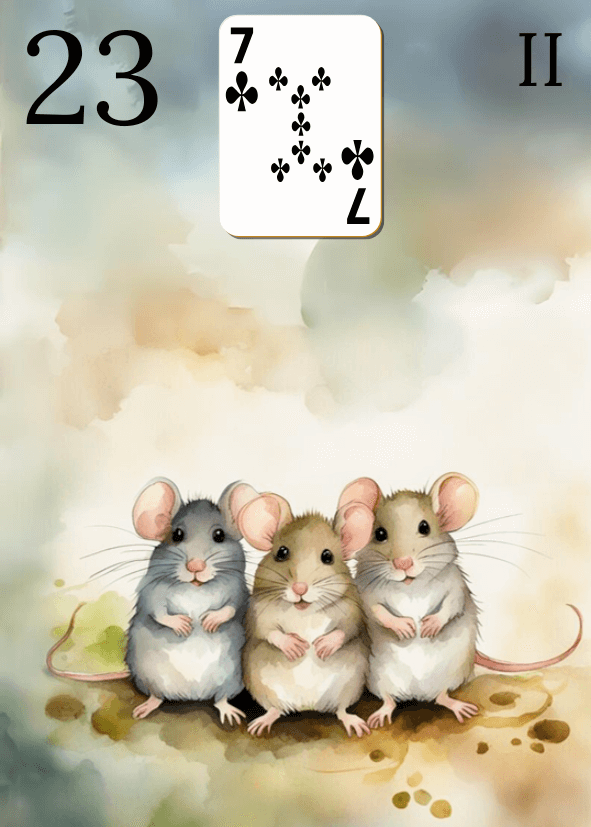
Lenormand card 23 Mice
Quintessence

23 Mice

The combination concentrates intense worry about something fragile that is threatened to be eroded or cut too soon.

erosion worry fragility under pressure
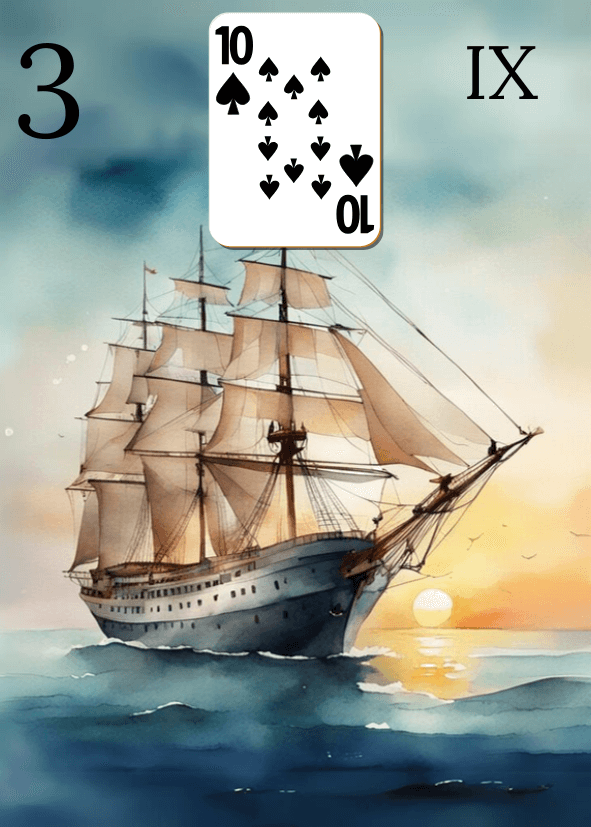
Lenormand card 03 Ship
Hidden card

03 Ship

A displacement, distance, or change of environment plays a hidden role in this break.

remoteness change of setting imposed transition