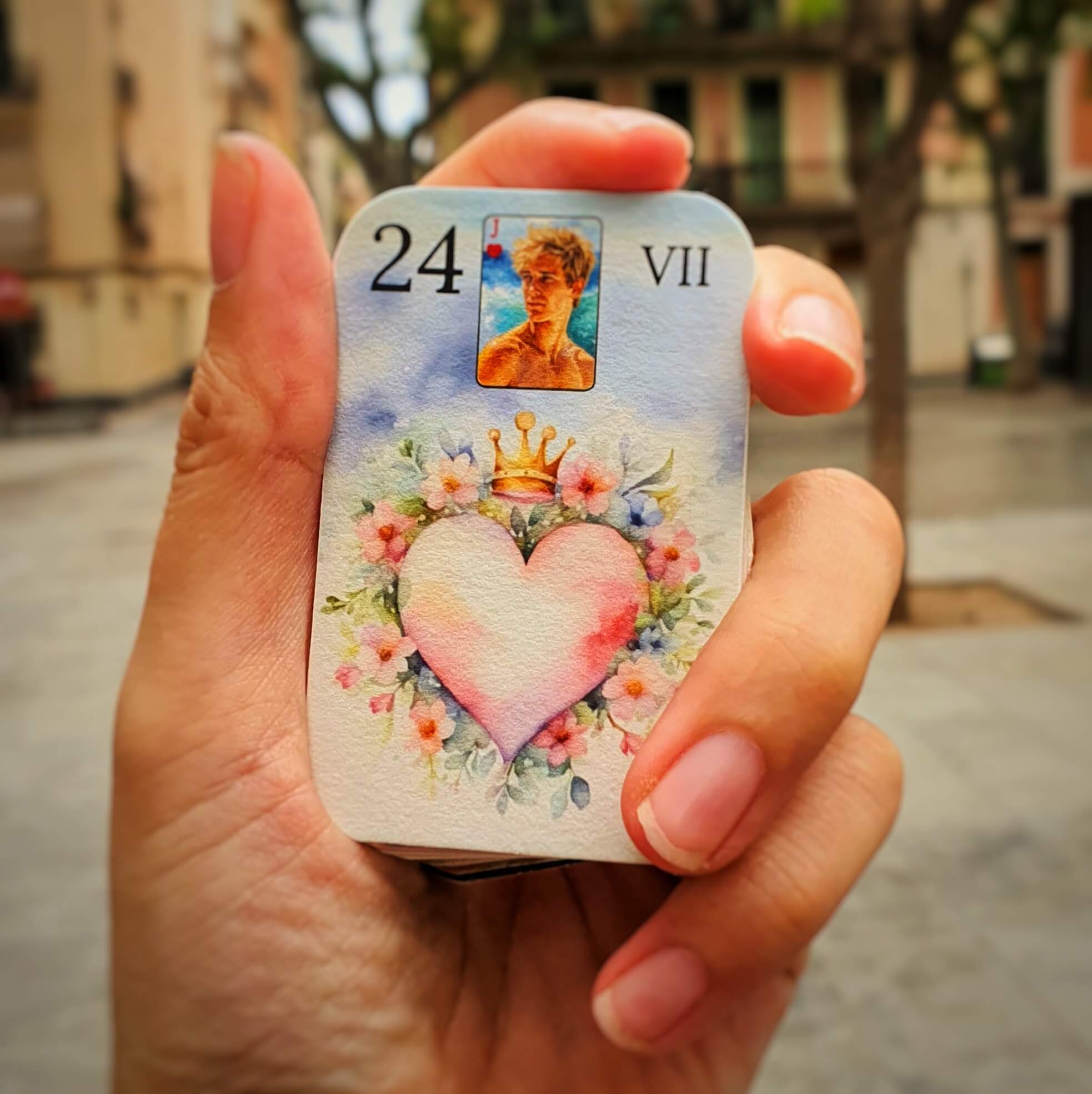
The Petit Lenormand deck is available now. Limited stock
Petit Lenormand combinations

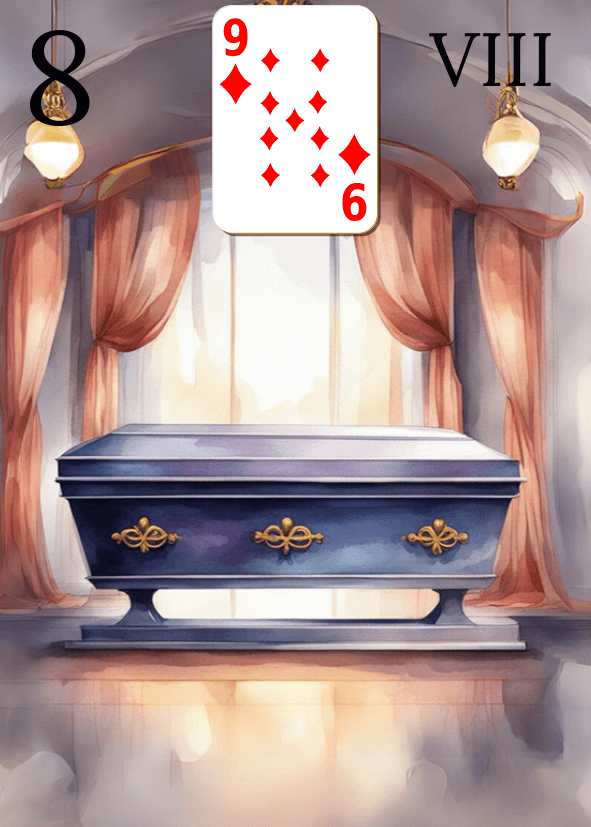
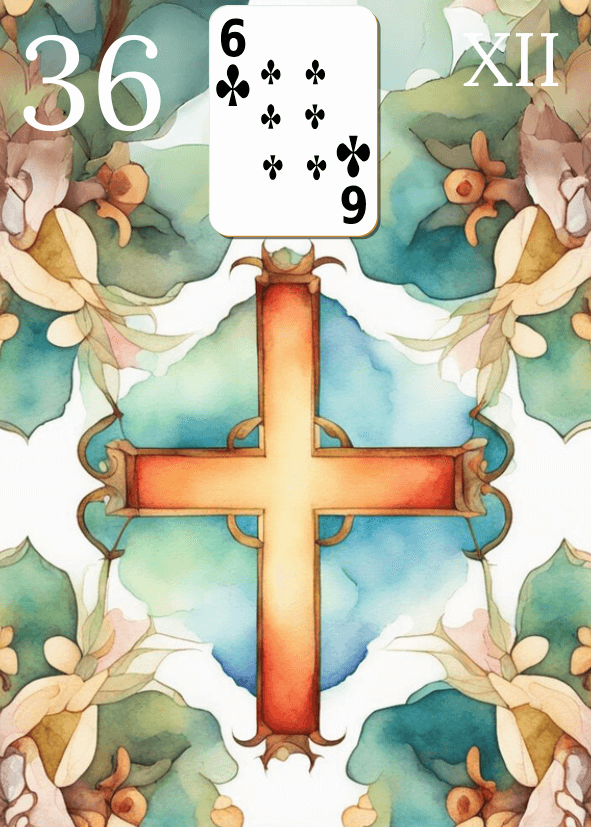
Coffin and Cross

Here you see the two possible orders of the pair Coffin and Cross. On the left, Coffin acts on Cross. On the right, Cross sets Coffin in motion. The concrete scenes help you feel what shifts as soon as the order shifts.

These interpretations are based on thousands of consultations.

Combination
08 Coffin → 36 Cross

General meaning

A situation that is already dying reaches its inevitable tipping point.

The Coffin signifies an ending, exhaustion, or a halt that has already been in progress, sometimes in silence. With the Cross in the second position, this ending takes on a trial dimension: it is no longer merely about turning a page, but about crossing a threshold that stirs consciousness and the sense of your trajectory. This duo describes the moment when one can no longer negotiate with reality, where the consequences of a long cycle present themselves as a whole. There may be a feeling of fatality, relentless justice, or a debt to settle, but also the possibility of recognizing that something truly needed to stop for your life to continue in a more coherent manner.

Love and relationships

A story comes to a painful end that can no longer be avoided.

On an emotional level, Coffin and Cross together evoke a relationship that has already experienced closures, silences, or a slow extinguishing of the bond, reaching a point of no return. This may refer to an inevitable breakup after a long period of suffering, a divorce that finally acknowledges what the heart has known for a long time, or a radical choice to no longer return to a painful bond. The Cross emphasizes the moral or spiritual weight of this decision: it is not merely a simple argument, but an important passage in your emotional history. The combination invites you to confront the pain of what is ending, without idealizing what was already causing you harm.

Work and vocation

A professional situation at the end of its life becomes a decisive trial.

In the work domain, this duo can indicate the closure of a department, the end of a contract, a dismissal, or retirement experienced as a tearing away. Coffin already indicated a dynamic of ending, deep fatigue, and blockage. The Cross signifies that this ending takes on a serious, sometimes dramatic character: financial stakes, identity impact, questions of vocation. The combination can also refer to the necessity of leaving a toxic work environment at the cost of an immediate sacrifice. The trial consists as much of losing a framework as it does of accepting to no longer define oneself solely by this role.

Money and material security

A financial cycle closes in an atmosphere of heavy settlement or karmic debt.

On the financial side, Coffin and Cross can announce the end of a scheme, a debt, a commitment, or a material dependency, but in a climate of tension. It may involve paying the price for past risky choices, settling arrears, or accepting a hard loss to escape an untenable situation. The Cross emphasizes the lesson aspect: this closure is not merely about numbers; it touches your intimate relationship with security, merit, and responsibility. The combination calls for a clear-eyed examination of what you no longer wish to reproduce.

Health and energy

A critical health phase requires a profound change in inner posture.

In terms of health, Coffin already speaks of stopping, convalescence, extreme fatigue, or symptoms that necessitate a pause. The Cross reinforces the idea of trial: difficult diagnosis, heavy treatment, the feeling of traversing a tunnel from which one does not emerge unscathed. It is not merely about treating a symptom, but about undergoing a stage that can transform your relationship with your body, time, and what you consider a priority. The combination reminds us that even in pain, a form of meaning can emerge, provided that this period is not reduced to a mere parenthesis to endure.

Objects

Documents or supports materialize a closure heavy with meaning.

  • Judgment, official decision, or letter marking the end of an important procedure
  • Certificate, attestation, or medical report that confirms a critical stage
  • Act of rupture (contract, lease, union) signed in an emotionally charged context

Places

Spaces where one confronts an ending or undergoes a trial.

This combination may refer to places such as a courthouse, a hospital room, a palliative care service, an expert's office, a place of worship, or a space for reflection. These are places where one comes because retreat is no longer possible: one must hear a verdict, sign a document, say goodbye, or seek meaning in the trial. Coffin emphasizes the definitive nature of what is happening there, while the Cross highlights the inner and spiritual dimension of the passage.

Personality

A person at the end of a cycle, confronted with a heavy inner responsibility.

This duo can describe someone who has carried a lot for a long time, who has accepted much, sometimes too much, and who reaches a moment in their life where they can no longer continue as before. Coffin reveals their need to cut ties, withdraw, and end certain dynamics. The Cross emphasizes their sense of duty, depth, but also the tendency to feel guilty or to bear more than their share. This personality is invited to distinguish what constitutes true responsibility from what is unnecessary sacrifice.

Profession

Roles in contact with endings of cycles and challenging passages.

  • Professionals accompanying grief, end of life, or major breakups
  • Legal or social advisors facing complex and painful cases
  • Spiritual companions or therapists specialized in existential crises

Archetype

The guardian of the threshold who closes a door to let another emerge further on.

The archetype here is that of someone who stands at the boundary between an old world and what will come after. Coffin symbolizes the door that closes, while the Cross represents the initiatory passage that this closure entails. It is not a role of comfort, but one of lucidity: accepting that something is truly finished, without yet knowing what will emerge from this vacancy.

Shadow work

Clinging to suffering to the point of defining oneself solely by the trial.

In its shadow, this combination can lead one to believe that life is nothing but pain, punishment, or successive losses. One remains fixated on what is ending, to the extent of forgetting that there will be an after. One can also maintain a permanent sense of guilt, as if each ending were proof of a personal failure. Coffin and Cross remind us that the end of a cycle, even a very heavy one, does not exhaust the entire story, and that it is dangerous to identify solely with this moment of transition.

Calibration questions

This heavy ending invites you to clarify what you no longer wish to prolong.

  • What situation that has reached its end do you continue to artificially keep alive?
  • What are you most afraid of if you fully accept that this cycle is over?
  • What deep meaning can you derive from this ordeal, beyond the immediate pain?
Combination
36 Cross → 08 Coffin

General meaning

A trial reaches its natural conclusion and calls for a clear closure.

The Cross first signals a phase of trial: moral weight, fatigue, and the feeling of carrying a heavy burden. With Coffin in the second position, the combination indicates that this phase is coming to an end, not gently, but with a conclusion that must be stated unequivocally. It is no longer about holding on a little longer, nor about enduring indefinitely, but about accepting that a chapter requires a true closure. This movement can bring relief in the long run, even if, in the moment, it requires courage and letting go of what you once knew.

Love and relationships

A bond marked by suffering must be ended so that each person can breathe.

In love, the Cross and Coffin can describe a relationship where you have long endured, hoped, and suffered, believing that love required this degree of sacrifice. The Cross has highlighted the aspects of trial, guilt, and emotional burdens that you carried. Coffin indicates that it is time to end the current form of this bond. This can manifest as a breakup, a radical distancing, a change in status, or a firm decision to no longer accept certain patterns. The combination does not invalidate what has been experienced, but it suggests that continuing on the same path would only prolong the pain unnecessarily.

Work and vocation

A very challenging professional period is coming to an end through a decisive decision.

In the work domain, this duo can announce the closure of a difficult file, the end of a conflict, or leaving a position that has been experienced as a burden. The Cross has shown the weight of overwhelming responsibilities, moral pressure, or the feeling of constantly needing to prove your worth. Coffin arrives as the conclusion of this scenario: stopping, breaking, changing roles, or confirming departure. It is no longer about surviving in this framework, but about finishing it properly. The combination invites you to honor what you have learned while leaving behind the conditions that no longer need to exist.

Money and material security

A heavy financial situation is coming to a close, sometimes at the cost of a clear renunciation.

On the financial side, the Cross and Coffin can illustrate the end of over-indebtedness, a dispute, a burdensome commitment, or a material burden that has followed you for a long time. The Cross highlighted the emotional and moral cost of this situation. Coffin represents a closure: a final agreement, partial erasure, sale, abandonment of a project, or acceptance of losses to regain some breathing room. It is a moment when one understands that it is better to accept losing a part than to continue to burn out completely in this narrative.

Health and energy

A health trial now requires a time for closure, integration, and deep rest.

In terms of health, the Cross speaks of a period of suffering, heavy treatments, chronic pain, or moral fatigue. Coffin indicates that a phase is ending: the conclusion of a protocol, discharge from hospitalization, stopping a treatment, or deciding to cease fighting in the same manner. This combination does not deny the severity of the journey; it emphasizes that it is necessary to mark a closure, to rest, and to give the body and psyche time to integrate what they have just experienced. The message is to stop living in a state of permanent alert.

Objects

Concrete items mark the end of a challenging journey.

  • Final report, last letter, or last summons related to a long procedure
  • Final settlement document or closure of a burdensome commitment
  • Items sorted, archived, or deposited to signify the end of a struggle

Places

Places marked by trial transform into spaces of closure and exit.

This association can refer to the hospital where one comes for the last time in a given context, to the office where one signs the final papers, to the court where one hears the final judgment, or to the place of worship where one celebrates a closure ceremony. The Cross has imbued these places with strong emotional intensity. Coffin indicates that one comes there to mark a clear end, to establish a ritual, to recover what remains, and to leave the rest behind.

Personality

A person who has been deeply tested finally chooses to put an end to what was crucifying them.

This duo can represent someone who has long held on by principle, loyalty, faith, or fear of letting go, and who now feels that continuing would mean renouncing themselves. The Cross shows the depth of what they have endured, their values, and their capacity to persevere. Coffin places them face to face with a choice of ending: setting a limit, saying no, turning the page, and accepting to no longer be the one who carries everything. This person is invited to recognize that putting an end to a trial is not an escape, but sometimes an act of dignity.

Profession

Professions related to the closure of trials and the exit from crisis.

  • Mediator or conciliator intervening at the end of a heavy conflict
  • Professional in justice or social work who accompanies the final stage of procedures
  • Therapist, coach, or specialist in post-crisis support and reconstruction

Archetype

The bell ringer who announces the end of a challenging service.

The archetype here is the one who declares: it is over. Not to minimize what has been experienced, but to recognize that one cannot remain eternally in the same ritual of suffering. The Cross represents the service, the time of trial, the plunge into difficulty. Coffin corresponds to the moment when one closes the book, turns off the lights, and accepts that this chapter is no longer to be repeated. This role opens the door to another type of narrative, one that is lighter, even if its contours are not yet visible.

Shadow work

Closing a trial only by severing ties, without integrating what it has taught.

In its shadow, this combination can push one to do everything to 'finally put it behind', by abruptly cutting off from the situation, but also from one's emotions. One wants to forget, to close off, to never think about it again, at the risk of not integrating the profound lessons learned. The danger then is to recreate a similar scenario later, due to not having understood its meaning. The Cross and the Coffin invite one to close, yes, but while allowing space for a form of intimate understanding of what has been experienced.

Calibration questions

The end of this ordeal also depends on how you choose to close the door.

  • What challenging situation are you finally reaching the point of truly closing?
  • What do you need to acknowledge or ritualize to feel that this chapter is truly over?
  • What patterns do you never want to replay now that this ordeal is coming to an end?
A wink for advanced readers

Quintessence and the hidden card of the pair

Each combination is carried by a Quintessence that gives the overall direction, and a hidden card that works in the background. These two cards illuminate the scene without replacing the main reading.

Lenormand card 08 Coffin
Quintessence

08 Coffin

At the center of the dynamic, the closure of a cycle asserts itself at the moment when the trial reaches its peak, and it is through a clear act of ending that deep change opens a new beginning that is more aligned.

end of a cycle new beginning deep change personal evolution
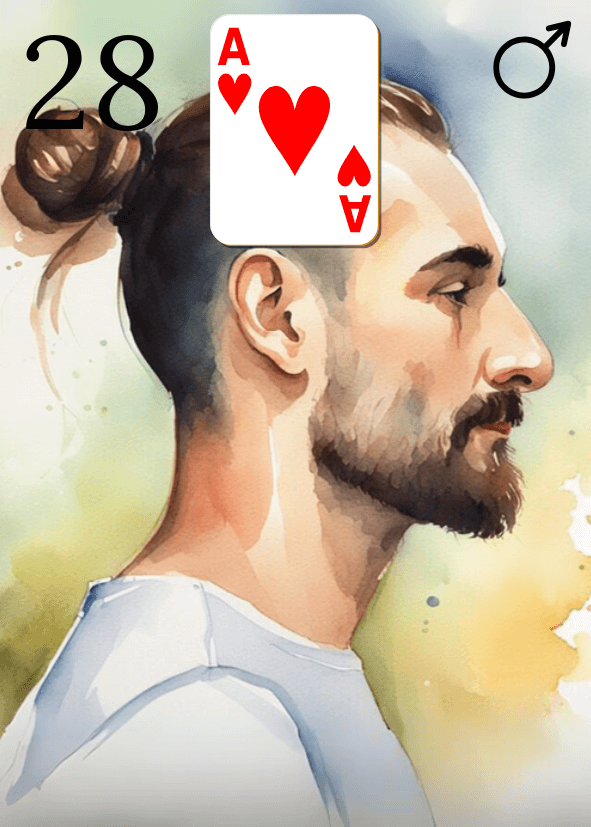
Lenormand card 28 Man
Hidden card

28 Man

In the background, a man silently bears the burden and, caught between inner reflection and resistance, either delays or prepares for the inevitable by seeking ways to navigate this ending without breaking.

end of a cycle trial inner reflection resilience personal evolution