General meaning
⌄
A man finds himself at the end of the line and must close a door, sometimes against his will.
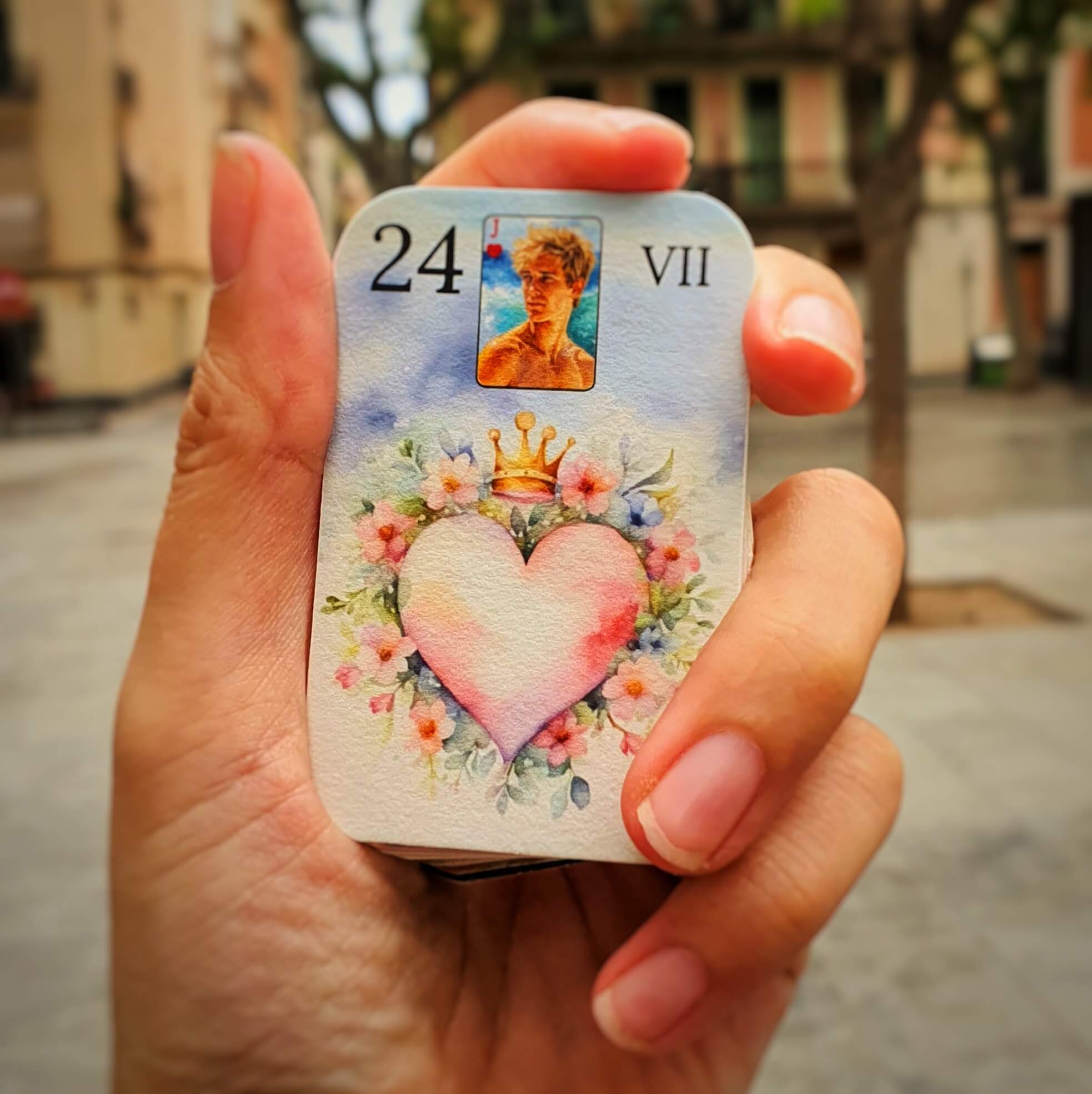
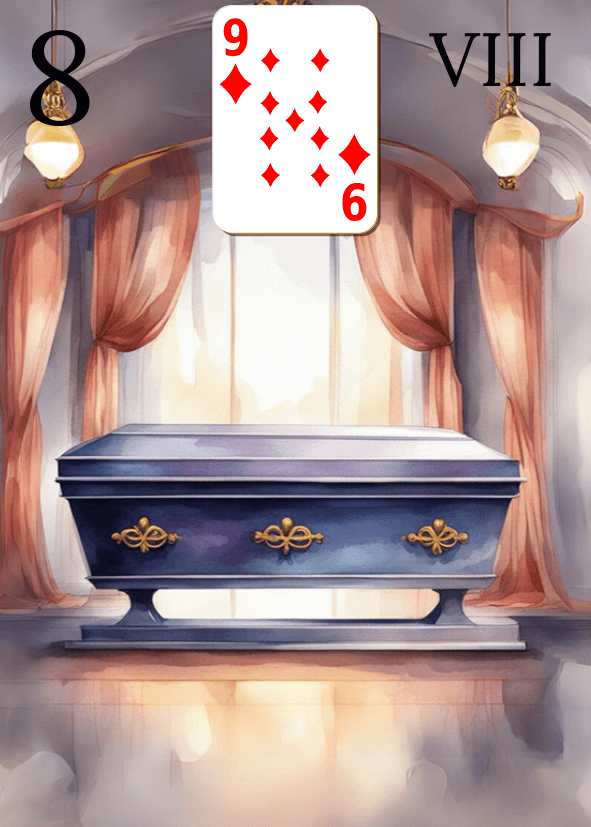
Coffin emphasizes an ending, a halt, or a phase of great fatigue. In encountering Man, this energy focuses on a specific male figure, often central to the situation. It may be a partner, a close friend, a colleague, or the consultant himself if he is a man. We witness a moment where this man can no longer continue as before: a break, withdrawal, project halt, or the need for a radical cut. The combination speaks of both a concrete closure and a time of latency, where the man switches to off mode to process what is ending.
Love and relationships
⌄
A man withdraws, closes himself off, or fades emotionally.
In terms of love, Coffin followed by Man evokes a male partner who is shutting down, ending the relationship, or cutting all contact. It may be a decided breakup, but also a more gradual emotional closure: a decrease in desire, absence of signs of interest, prolonged silence indicating that something has faded. The combination may signal the end of a bond with a man still physically present but less involved, or conversely, a clear departure. This reading invites one to confront the reality of this closure, rather than artificially maintaining a narrative that has already reached its conclusion.
Work and vocation
⌄
A man finds himself at the end of a professional phase and stops.
In the professional realm, this combination can describe a man who is leaving a position, taking a long leave, retiring, or being forced to stop. It may indicate a superior who no longer supports the project, a colleague who gives up, or a partner who ends the collaboration. Sometimes, it also symbolizes the exhaustion of a male consultant: he can no longer keep up, and his body or the circumstances impose a break on him. The Coffin reminds us that stopping is not necessarily a failure, but rather the logical consequence of a phase that is already worn out.
Money and material security
⌄
A man ends a financial commitment or material support.
In terms of finances, this combination can announce the end of assistance provided by a man, the cessation of a payment, a pension, or concrete support. It may describe a male partner who no longer wants to bear certain expenses, a guarantor who withdraws, or a contact who closes a file. On the other hand, it could refer to a man who stops a way of managing his money, closes accounts, or withdraws from an investment. The overall dynamic speaks of a cut, a redistribution of roles, and a period where one must cope without this usual male pillar.
Health and energy
⌄
A male body demands a deep pause and sometimes a true convalescence.
In terms of health, the Coffin associated with the Man highlights fatigue, illness, or a delicate passage for a man. This can be a need for complete rest after a period of overwork, a work stoppage due to exhaustion, or a phase of convalescence where energy is at its lowest. Sometimes, the card signals the end of a treatment, a habit, or a behavior harmful to the male body. This combination invites respecting the signals of slowing down, rather than forcing it at the risk of worsening the situation.
Objects
⌄
Objects signify what this man is finishing, closing, or abandoning.
- Keys returned after a separation or departure from a shared home with a man
- Badge, uniform, or professional equipment returned at the end of a contract
- Personal belongings of a man packed in boxes or set aside after a breakup
Places
⌄
Spaces where the presence of a man is interrupted or diminished.
This combination can refer to places that evoke a man's absence: an emptied office, an unoccupied room, a workshop that is no longer used, a location where his belongings are stored while waiting to turn the page. One might also think of places marking the end of a cycle, such as a hospital service or a care space where a man undergoes a difficult passage. These settings speak as much of what is ending as of the trace he leaves behind.
Personality
⌄
A man withdraws, by choice or by constraint.
On a psychological level, this combination can describe a man who reaches saturation and no longer has the strength to continue. He may appear distant, absent, or closed off, as if he is isolating himself from the world to survive what he is experiencing. Sometimes, it is someone who makes a radical decision: he closes off, he leaves, he turns the page, even if it costs him. The challenge is to distinguish between a pure escape and a true necessity to end something that has become unlivable.
Profession
⌄
Masculine roles confronted with endings, mourning, or cessation.
- Male professional in funerals, end-of-life support, or managing file closures
- Advisor or expert called upon when it is necessary to put an end to an activity or structure
- Male figure playing the role of 'last link' before closure or dissolution
Archetype
⌄
The man who closes the door to avoid further exhaustion.
This archetype embodies the moment when a masculine figure accepts that something has reached the end of what it could provide. It is no longer about proving, holding on, or saving, but recognizing the necessity of a stop. This energy may seem harsh, but it paves the way for a possible rebirth later, once the mourning phase has been traversed.
Shadow work
⌄
Allowing oneself to die inside instead of transforming the situation.
In its shadow, this combination can refer to a man who resigns himself, who allows himself to slide into apathy, depression, or complete withdrawal rather than seeking an evolutionary passage. He may close all doors, including those of dialogue, and lock himself into a position of 'everything is over.' The risk is to confuse a necessary end with renouncing any perspective of new life.
Calibration questions
⌄
How this man experiences the end of a cycle is at the heart of the reading.
- Which man in your life seems to be at the end of his strength or at the conclusion of a story?
- What in this man or in you, if you are concerned, needs to be allowed to die to enable a renewal later?
- How could you accompany this ending without denying the pain but without dramatizing the entire future?