General meaning
⌄
A chapter ends and requires closing sensitive information.
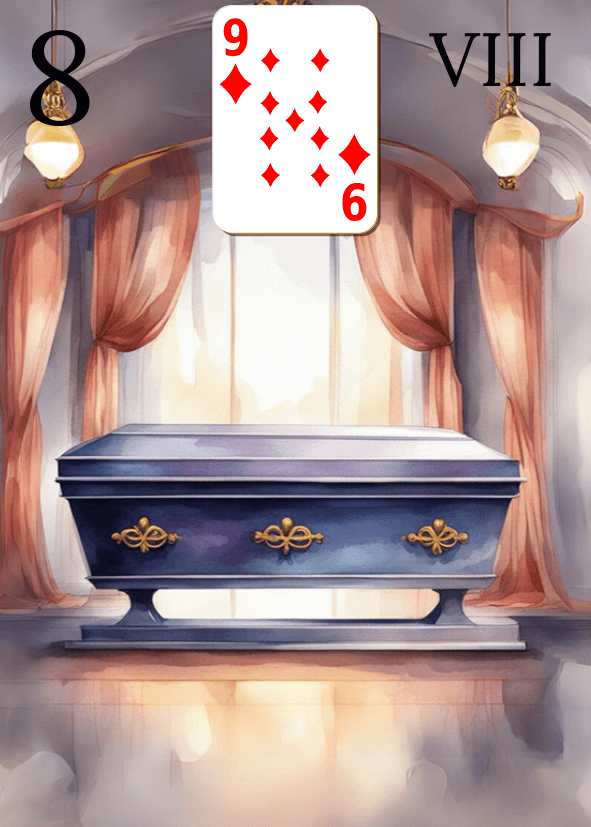
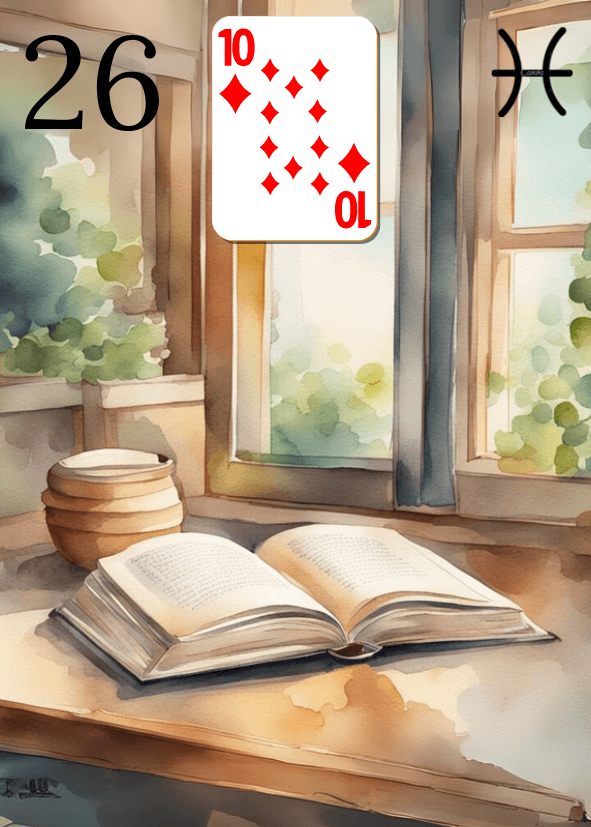
Coffin indicates that a phase of life is clearly coming to an end: no more room to continue as before, energy is withdrawing. With Book in the second position, this ending concerns everything that is written, recorded, archived, or kept secret. It may involve a file that one closes for good, a secret that one decides to lock away, or a subject of study that one abandons. The combination also suggests a time of silence: one stops digging, analyzing, or questioning, because it is time to let the facts rest. What is at play is not necessarily shared out loud, but the closure is real.
Love and relationships
⌄
A romantic story imposes silence on certain chapters.
On an emotional level, Coffin and Book can describe the end of a relationship that is little talked about, or not talked about at all. It may involve a hidden story that is interrupted and mentally stored in a taboo zone, or a painful episode that one prefers to archive rather than continue to expose. This combination can also show a couple that stops stirring the past: after a crisis, certain subjects become definitively classified, not by denial, but because revisiting them would unnecessarily reopen the wound. The question then becomes: what do you choose to keep written in your story, and what do you let rest in your emotional archives?
Work and vocation
⌄
A project, a file, or an investigation closes for good.
In the professional field, this combination often speaks of a case that comes to an end after a long period of investigation or monitoring: case closed, audit completed, study finished, research project halted. Coffin marks the end of the active phase, Book symbolizes the documents, reports, data that are now filed away. This may involve the massive archiving of information, the closure of a documentation service, or the removal of access to certain resources. Sometimes, it is simply the understanding that one has explored a subject enough and that there is nothing more alive to be drawn from it in this specific context.
Money and material security
⌄
Financial or administrative data are closed and sealed.
Financially, Coffin and Book can indicate the end of a control, an investigation, or an administrative follow-up: final report, account closure, approval of results. It may concern a banking or tax file that is closing, a dispute that finds an administrative conclusion, or old papers that are sorted to keep only the essentials. This combination also draws attention to money that is not spoken of, unspoken flows, accounting information kept under the rug. A final point is put, but it remains to be decided whether this silence protects or maintains a gray area.
Health and energy
⌄
A phase of diagnosis or follow-up ends, conclusions are set.
In terms of health, this association can reflect the end of a series of exams, tests, or analyses. The results are recorded, the medical file stabilizes around a diagnosis or conclusion. Coffin shows the end of a stage, Book highlights what remains written in the reports. Sometimes, it also shows a refusal to continue searching: a final point is put on repeated investigations, either out of weariness or the need to rest. The vigilance consists of not burying an important health question too quickly out of simple fatigue from the procedures.
Objects
⌄
Documents and materials signify the closure of a subject.
- Legal, tax, or administrative file classified as closed
- Notebooks, course notes, or manuscripts stored at the back of a cupboard
- Archiving of emails, reports, or investigation documents
Places
⌄
Archive or confidentiality spaces become the guardians of a closed story.
One might think of an archive room, a service for closed files, an office where one comes to sign the end of a procedure, or a storage place for documents that are rarely consulted anymore. Internal library, documentation service, locked back room: the atmosphere is often calm, almost frozen. Life continues elsewhere, but these places preserve the memory of what is now finished.
Personality
⌄
A person chooses to remain silent and close their inner files.
This energy can describe someone discreet, who decides to keep certain information, memories, or knowledge to themselves, because they believe that not everything needs to be said. He or she may go through a phase of intellectual or emotional withdrawal: reading less, analyzing less, cutting off from certain sources of information to let an inner cycle die. The person may also be one who closes files on behalf of others, playing the role of guardian of secrets.
Profession
⌄
Jobs related to archiving, closure, and confidentiality.
- Archivist or manager of sensitive documents that have reached the end of monitoring
- Lawyer or clerk handling classified or prescribed files
- Professional responsible for the secure destruction of data or documents
Archetype
⌄
The guardian of closed archives.
This archetype embodies the moment when one accepts to no longer feed a subject, a file, or a narrative. It is not about denying what has happened, but about finding a stable place for it in memory. This guardian of archives closes what must be closed, so that life can flow elsewhere, rather than remain stuck in endless analysis.
Shadow work
⌄
Burying truths instead of integrating them.
In its shadow, this combination can encourage hiding, locking away, or censoring information out of fear of what it might trigger if it comes out. Evidence is stored away, facts are silenced, the file is closed without having truly made peace with it. The risk is that what is buried in this way continues to act underground, in the form of suspicion, unspoken truths, or diffuse discomfort.
Calibration questions
⌄
Will what is closing now remain forever silent or can you make it a resource?
- What subject do you continue to archive in your mind instead of truly addressing it?
- What information have you decided not to share anymore, and why now?
- What are you protecting yourself from by closing this file, and what does it also prevent you from receiving?